Comparison of Audiovisual and Paper-Based Materials for 1-Time Informed Consent for Research in Prison: A Randomized Clinical Trial
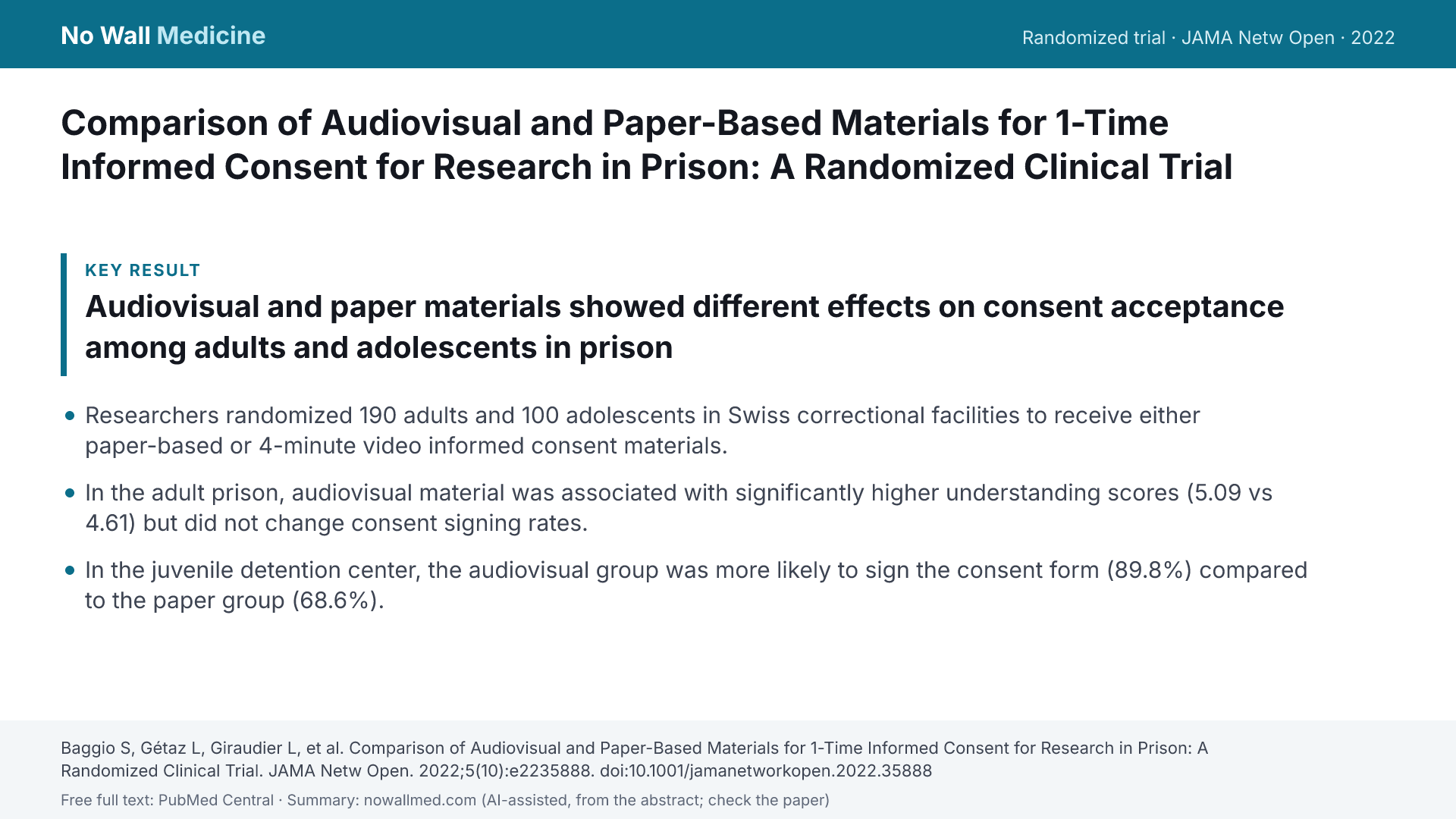
Key result: Audiovisual and paper materials showed different effects on consent acceptance among adults and adolescents in prison
Key points
- Researchers randomized 190 adults and 100 adolescents in Swiss correctional facilities to receive either paper-based or 4-minute video informed consent materials.
- In the adult prison, audiovisual material was associated with significantly higher understanding scores (5.09 vs 4.61) but did not change consent signing rates.
- In the juvenile detention center, the audiovisual group was more likely to sign the consent form (89.8%) compared to the paper group (68.6%).
Why it matters: It is unclear whether audiovisual materials improve understanding and consent acceptance compared to traditional paper documents for research participants in prison settings.
Discussion prompts
- Would these patients look like yours? Who was left out?
- Is the main outcome one that matters to patients?
- Is the difference large enough to change what you do?
Cite: Baggio S, Gétaz L, Giraudier L, et al. Comparison of Audiovisual and Paper-Based Materials for 1-Time Informed Consent for Research in Prison: A Randomized Clinical Trial. JAMA Netw Open. 2022. doi:10.1001/jamanetworkopen.2022.35888
Free full text: PubMed Central · Summary and visual abstract: nowallmed.com/a/comparison-of-audiovisual-and-paper-based-materials-for-1-time-2mryay/ (AI-assisted from the abstract; check the paper before relying on it).