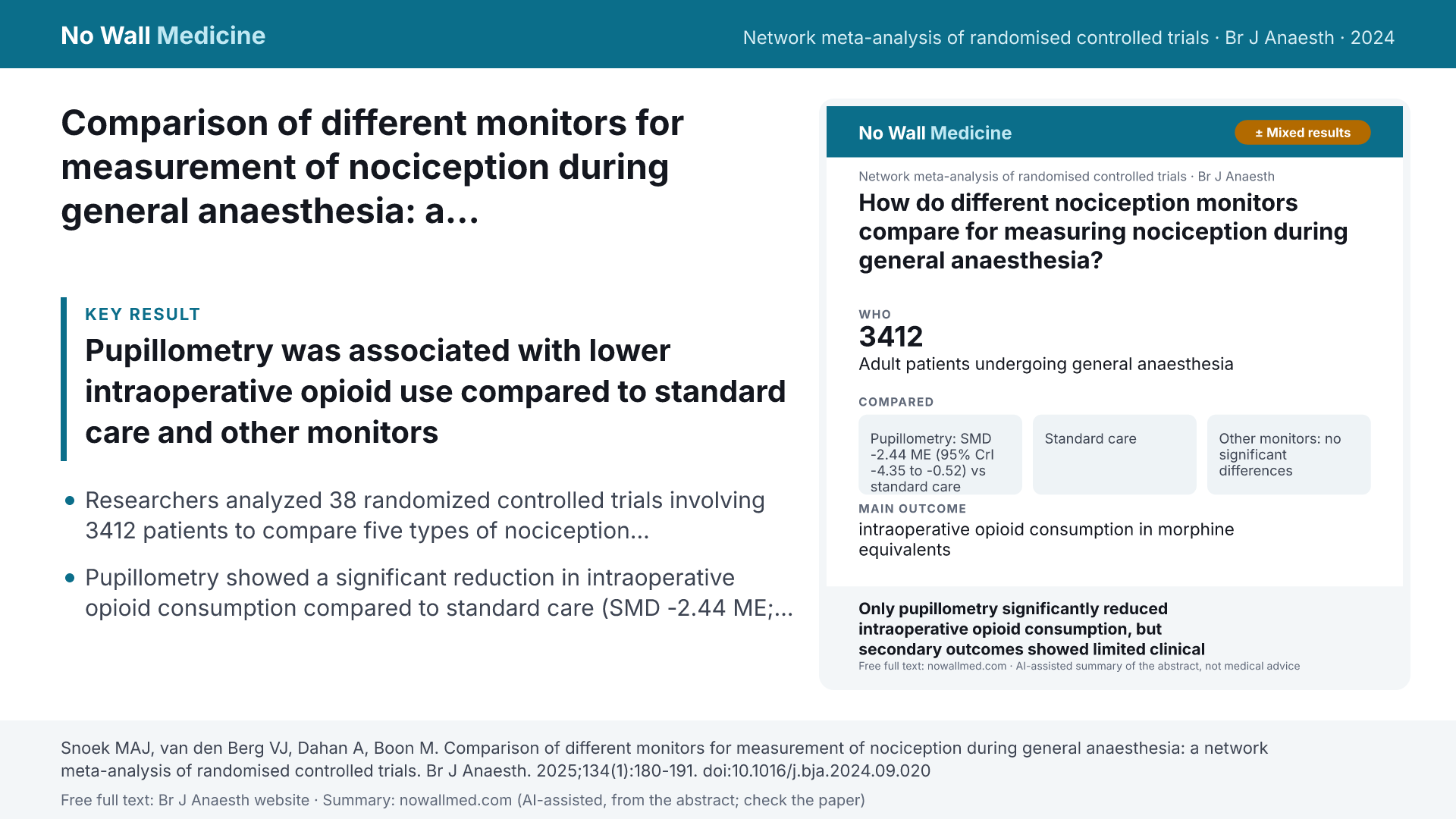
Pupillometry was associated with lower intraoperative opioid use compared to standard care and other monitors
Comparison of different monitors for measurement of nociception during general anaesthesia: a network meta-analysis of randomised controlled trials
Network meta-analysis of randomised controlled trialsMixed results
How do different nociception monitors compare for measuring nociception during general anaesthesia?
Who
3412
Adult patients undergoing general anaesthesia
Compared
Pupillometry: SMD -2.44 ME (95% CrI -4.35 to -0.52) vs standard care
Standard care
Other monitors: no significant differences
Main outcome
intraoperative opioid consumption in morphine equivalents
Result: SMD -2.44 ME (95% CrI -4.35 to -0.52) for pupillometry vs standard care
Bottom line: Only pupillometry significantly reduced intraoperative opioid consumption, but secondary outcomes showed limited clinical benefit.
Br J Anaesth · 2024-11-28 · Save PNG
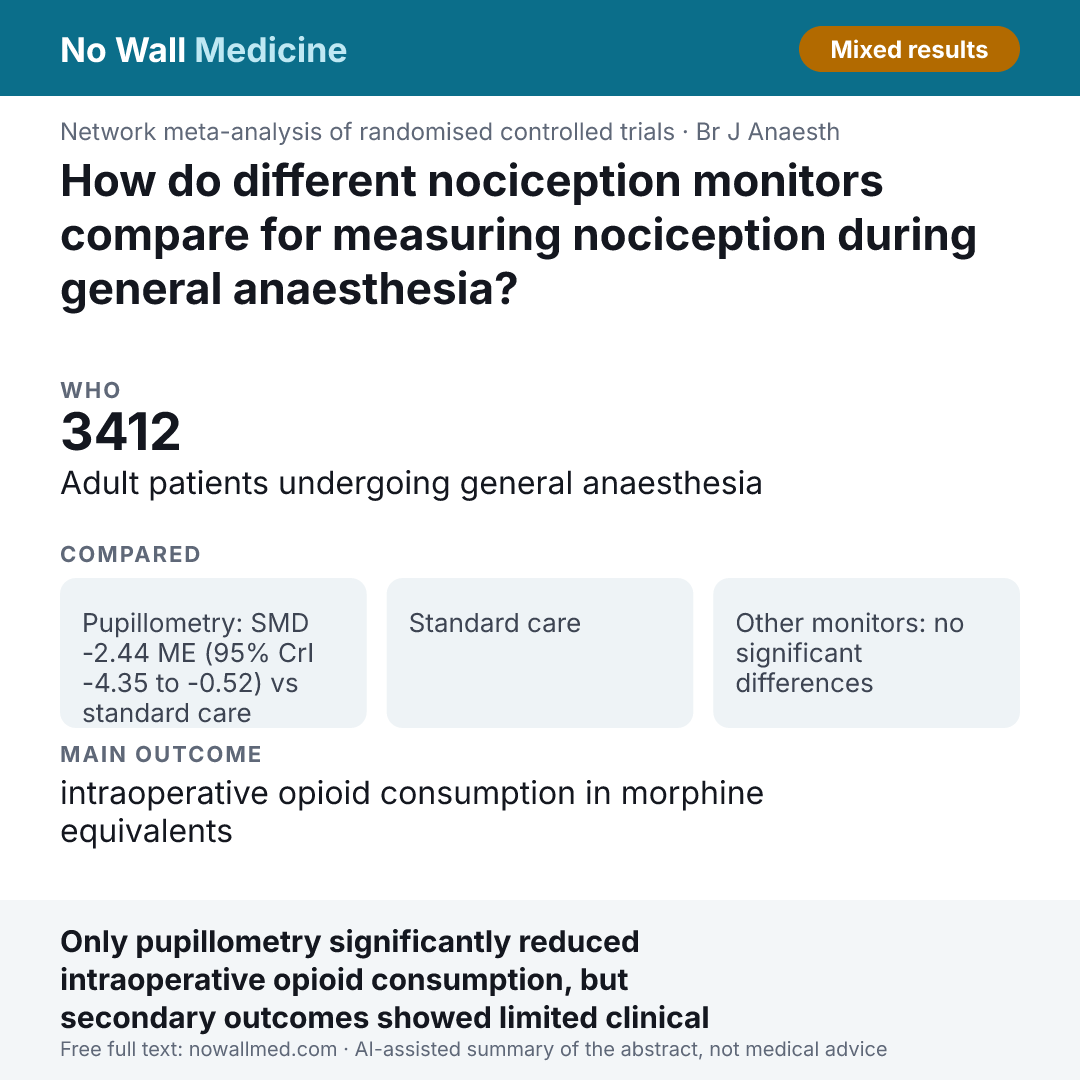
Clinical question: How do different nociception monitors compare for measuring nociception during general anaesthesia?
Why it matters: Previous meta-analyses compared nociception monitors to standard care but did not provide data comparing different monitoring devices to one another.
Key points
- Researchers analyzed 38 randomized controlled trials involving 3412 patients to compare five types of nociception monitors, which are devices used to measure pain during general anesthesia.
- Pupillometry showed a significant reduction in intraoperative opioid consumption compared to standard care (SMD -2.44 ME; 95% CrI -4.35 to -0.52) and compared to the Surgical Plethysmographic Index (SMD -2.99 ME; 95% CrI -5.15 to -0.81).
- Pupillometry was associated with a longer time to discharge readiness from the post-anesthesia care unit, while the Nociception Level Monitor was associated with shorter extubation times.
Headline and key points written with AI from the paper’s abstract, with every number checked against it. Read the paper before relying on them.
Was this summary helpful?
Subject terms
Headline, design, result, key points, caveat and citation as plain text.
Cite this article
Snoek MAJ, van den Berg VJ, Dahan A, Boon M. Comparison of different monitors for measurement of nociception during general anaesthesia: a network meta-analysis of randomised controlled trials. Br J Anaesth. 2025;134(1):180-191. doi:10.1016/j.bja.2024.09.020
Spotted a mistake? Suggest a correction