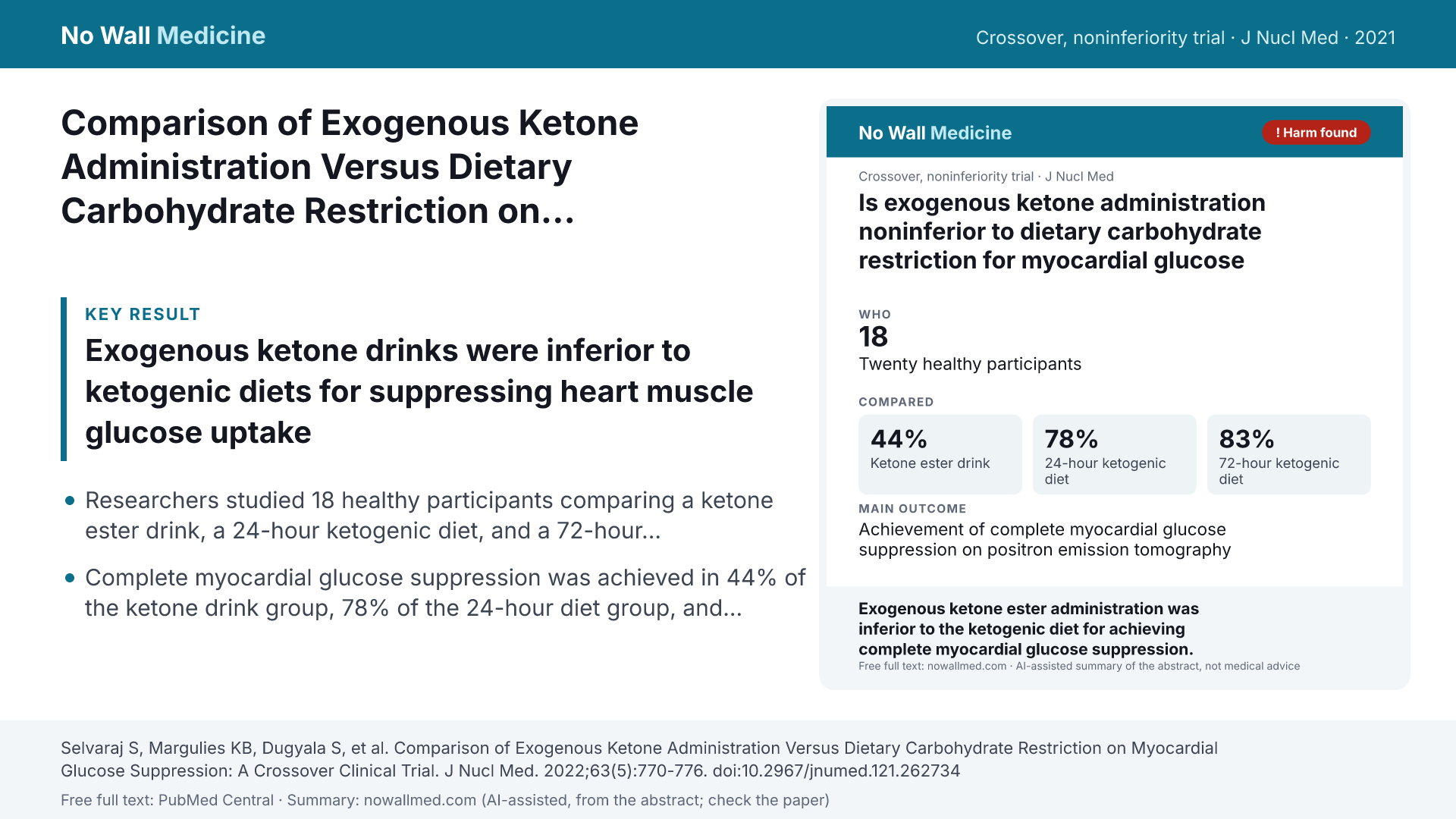
Comparison of Exogenous Ketone Administration Versus Dietary Carbohydrate Restriction on Myocardial Glucose Suppression: A Crossover Clinical Trial
Key result: Exogenous ketone drinks were inferior to ketogenic diets for suppressing heart muscle glucose uptake
Key points
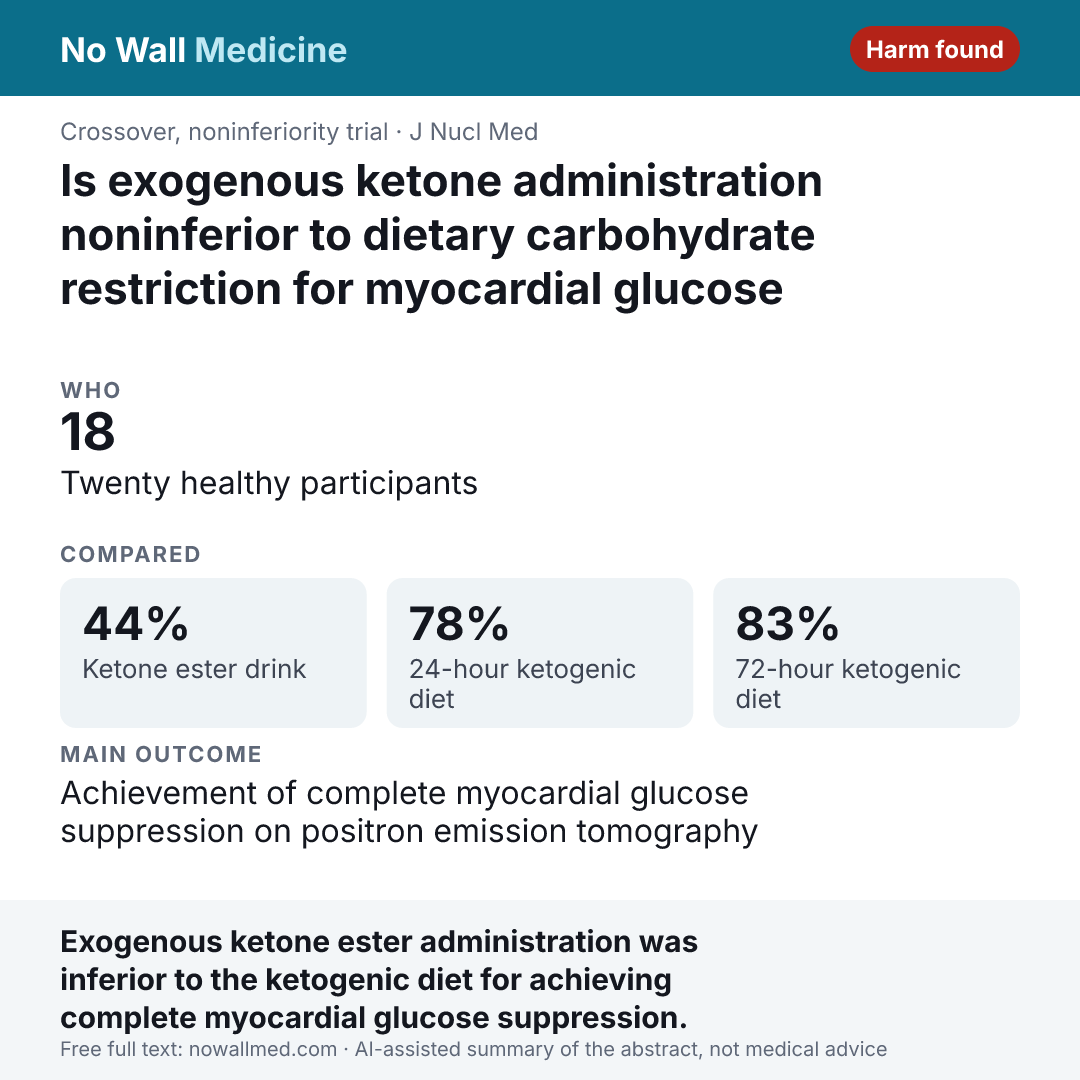
- Researchers studied 18 healthy participants comparing a ketone ester drink, a 24-hour ketogenic diet, and a 72-hour ketogenic diet.
- Complete myocardial glucose suppression was achieved in 44% of the ketone drink group, 78% of the 24-hour diet group, and 83% of the 72-hour diet group.
- Serum beta-hydroxybutyrate levels, a type of ketone body, were associated with predicting glucose suppression with an area under the receiver-operating-characteristics of 0.88.
Why it matters: Failure to suppress physiologic glucose uptake in the heart remains a significant diagnostic barrier when using 18F-FDG PET scans to assess inflammation.
Discussion prompts
- Would these patients look like yours? Who was left out?
- Is the main outcome one that matters to patients?
- Is the difference large enough to change what you do?
Cite: Selvaraj S, Margulies KB, Dugyala S, et al. Comparison of Exogenous Ketone Administration Versus Dietary Carbohydrate Restriction on Myocardial Glucose Suppression: A Crossover Clinical Trial. J Nucl Med. 2022;63(5):770-776. doi:10.2967/jnumed.121.262734
Free full text: PubMed Central · Summary and visual abstract: nowallmed.com/a/comparison-of-exogenous-ketone-administration-versus-dietary-16uvwv0/ (AI-assisted from the abstract; check the paper before relying on it).