Two different methods for setting ventilator pressure resulted in different levels for most patients
Comparison of two transpulmonary pressure-based positive end-expiratory pressure titration strategies in acute respiratory distress syndrome: a randomized crossover study
Randomized crossover physiological studyNo clear difference
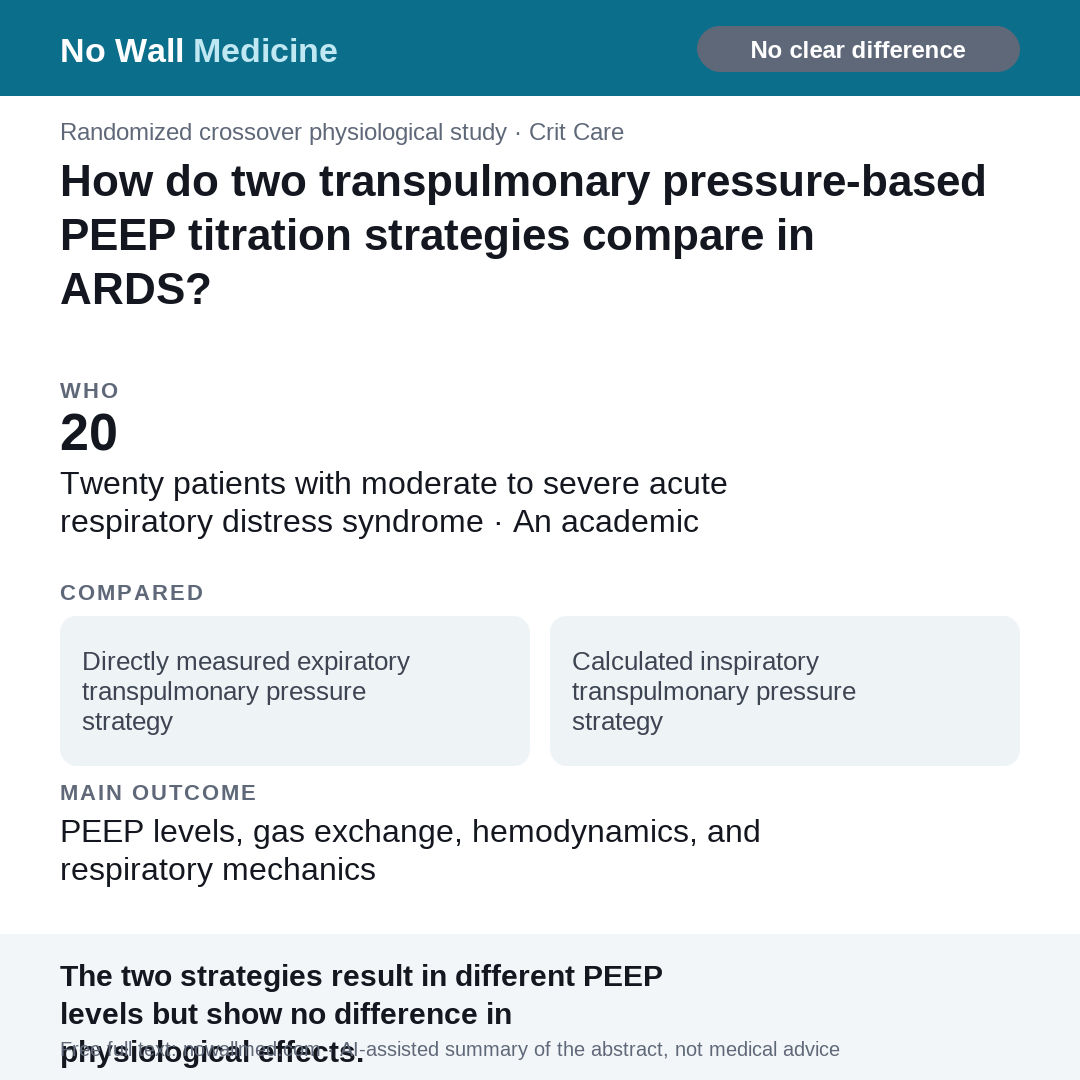
How do two transpulmonary pressure-based PEEP titration strategies compare in ARDS?
Who
20
Twenty patients with moderate to severe acute respiratory distress syndrome · An academic intensive care unit
Compared
Directly measured expiratory transpulmonary pressure strategy
Calculated inspiratory transpulmonary pressure strategy
Main outcome
PEEP levels, gas exchange, hemodynamics, and respiratory mechanics
Bottom line: The two strategies result in different PEEP levels but show no difference in physiological effects.
Crit Care · 2025-09-29Download image
Clinical question: How do two transpulmonary pressure-based PEEP titration strategies compare in ARDS?
Why it matters: It was unknown how two different methods of using esophageal pressure to set positive end-expiratory pressure compare in their physiological effects.
Key points
- Researchers studied 20 patients with moderate to severe acute respiratory distress syndrome using a randomized crossover design to compare two pressure-based ventilator settings.
- While median pressure levels were similar, 14 (70%) patients had individual pressure differences of at least 3 cmH2O between the two methods.
- The two strategies showed no difference in gas exchange, blood flow, or lung recruitment for the entire group or when separated by obesity status.
Headline and key points written with AI from the paper’s abstract, with every number checked against it. Read the paper before relying on them.
Topics
Cite this article
Chean D, Courtais A, Pavlovsky B, Yvin E, Desprez C, Taillantou-Candau M. Comparison of two transpulmonary pressure-based positive end-expiratory pressure titration strategies in acute respiratory distress syndrome: a randomized crossover study. Crit Care. 2025. doi:10.1186/s13054-025-05626-x
Spotted a mistake? Suggest a correction
Top studies every Monday
The week’s key trials and guidelines in your specialties, by email. Free.
Get the weekly digest