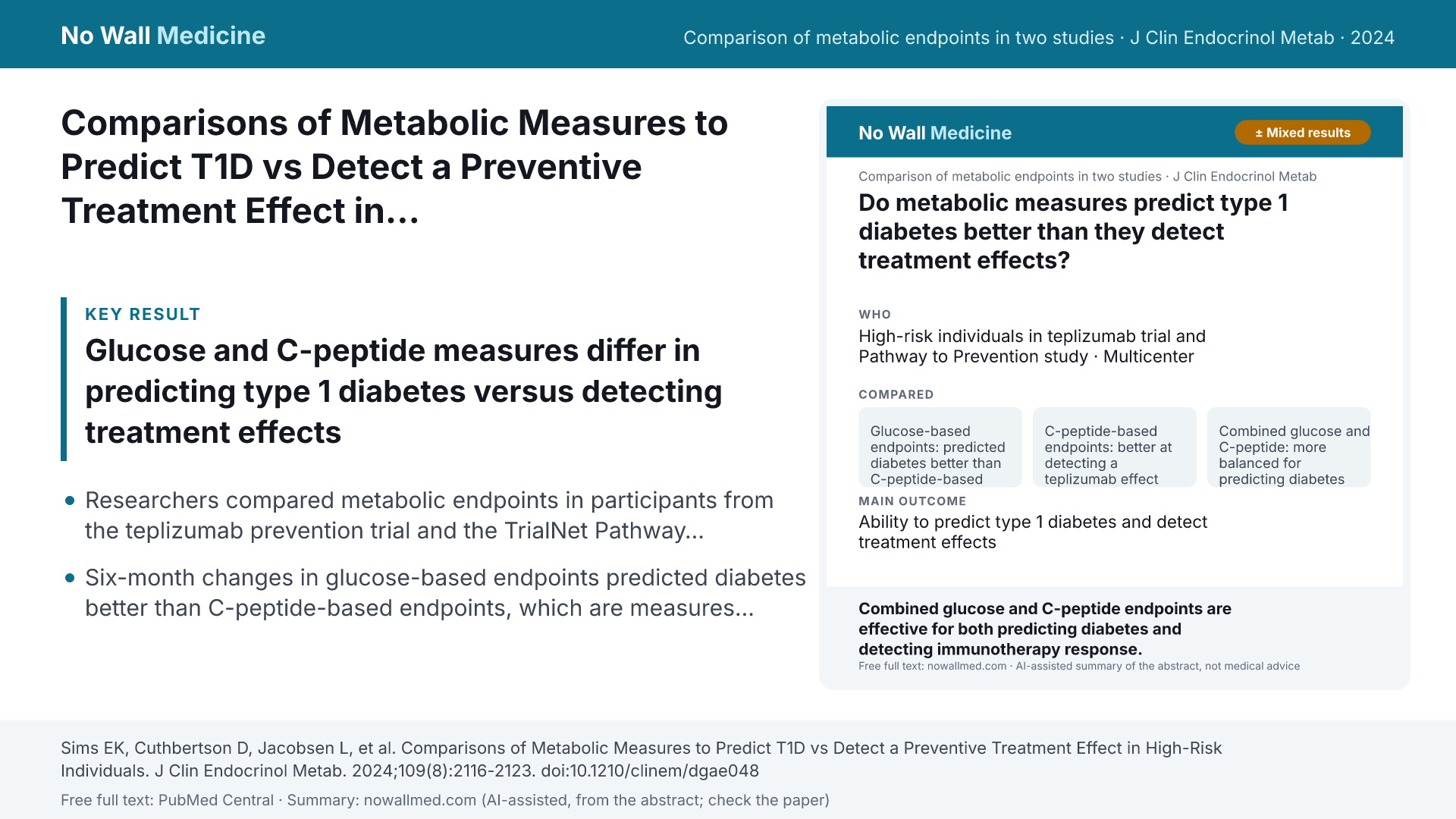
Comparisons of Metabolic Measures to Predict T1D vs Detect a Preventive Treatment Effect in High-Risk Individuals
Key result: Glucose and C-peptide measures differ in predicting type 1 diabetes versus detecting treatment effects
Comparison of metabolic endpoints in two studiesMixed results
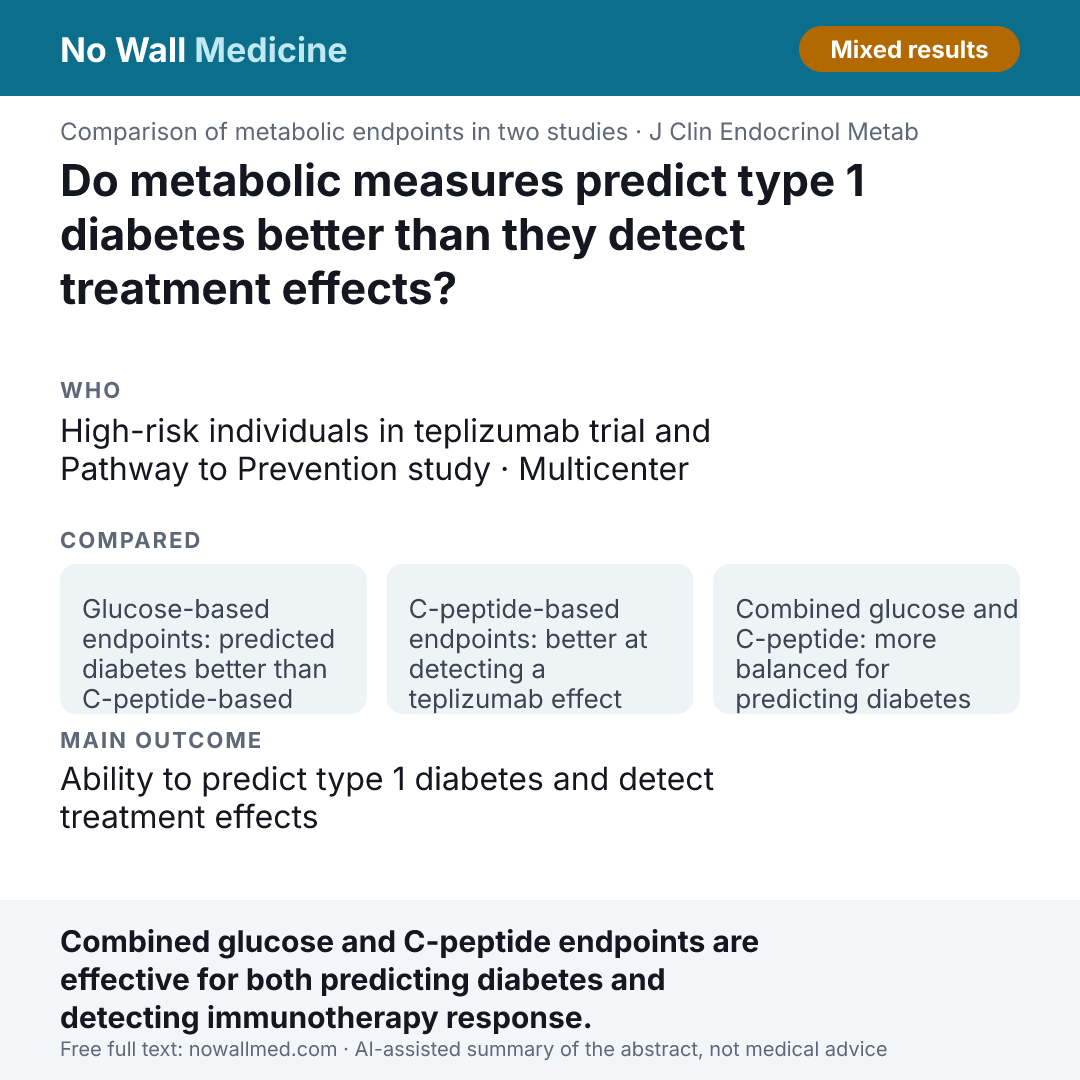
Do metabolic measures predict type 1 diabetes better than they detect treatment effects?
Who
High-risk individuals in teplizumab trial and Pathway to Prevention study · Multicenter clinical trial and natural history study
Compared
Glucose-based endpoints: predicted diabetes better than C-peptide-based endpoints
C-peptide-based endpoints: better at detecting a teplizumab effect
Combined glucose and C-peptide: more balanced for predicting diabetes and detecting a teplizumab effect
Main outcome
Ability to predict type 1 diabetes and detect treatment effects
Bottom line: Combined glucose and C-peptide endpoints are effective for both predicting diabetes and detecting immunotherapy response.
J Clin Endocrinol Metab · 2024-01-25 · Save PNG
Key points
- Researchers compared metabolic endpoints in participants from the teplizumab prevention trial and the TrialNet Pathway to Prevention natural history study.
- Six-month changes in glucose-based endpoints predicted diabetes better than C-peptide-based endpoints, which are measures of insulin production.
- C-peptide-based endpoints were better at detecting the effect of teplizumab, an immunotherapy, than glucose-based endpoints.
Discussion prompts
- Would these patients look like yours? Who was left out?
- Is the main outcome one that matters to patients?
- Is the difference large enough to change what you do?
Cite: Sims EK, Cuthbertson D, Jacobsen L, et al. Comparisons of Metabolic Measures to Predict T1D vs Detect a Preventive Treatment Effect in High-Risk Individuals. J Clin Endocrinol Metab. 2024;109(8):2116-2123. doi:10.1210/clinem/dgae048
Free full text: PubMed Central · Summary and visual abstract: nowallmed.com/a/comparisons-of-metabolic-measures-to-predict-t1d-vs-detect-a-8lnbn1/ (AI-assisted from the abstract; check the paper before relying on it).