Complex interventions for older adults increased chances of living at home and improved cognitive function
Complex interventions for improving independent living and quality of life amongst community-dwelling older adults: a systematic review and meta-analysis
Systematic review and meta-analysis of 50 trialsBenefit found
Do complex interventions improve independent living and quality of life in community-dwelling older adults?
Who
50
Community-dwelling older adults
Compared
Complex interventions
Usual care
Main outcome
Living at home and quality of life
Result: risk ratio 1.05 (95% CI 1.00-1.10)
Bottom line: Complex interventions increased the likelihood of living at home, reduced mortality, and improved cognitive function and activities of daily living.
Age Ageing · 2023-07-28Download image
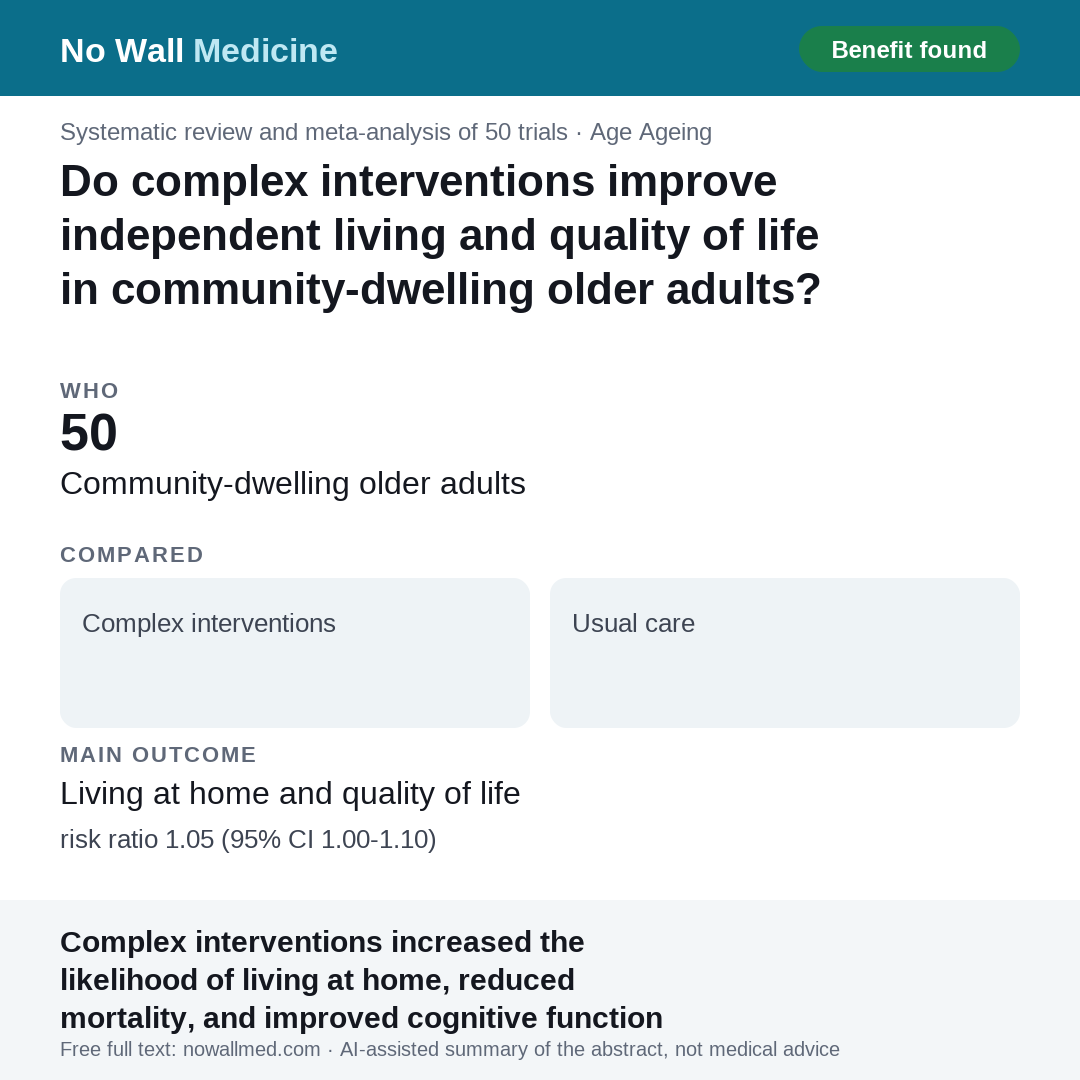
Clinical question: Do complex interventions improve independent living and quality of life in community-dwelling older adults?
Why it matters: It was unknown which specific components of community-based complex interventions are most effective for improving independent living and quality of life in older adults.
Key points
- Researchers analyzed 50 randomized controlled trials comparing complex interventions, which often include holistic needs assessment and care planning, to usual care for community-dwelling older adults.
- Complex interventions were associated with an increased likelihood of living at home (RR 1.05; 95% CI 1.00-1.10) but did not affect quality of life.
- These interventions were associated with reduced mortality (RR 0.86; 95% CI 0.77-0.96), enhanced cognitive function (SMD 0.12; 95% CI 0.02-0.22), and improved activities of daily living.
Headline and key points written with AI from the paper’s abstract, with every number checked against it. Read the paper before relying on them.
Was this summary helpful?
Subject terms
Cite this article
Ho L, Malden S, McGill K, Shimonovich M, Frost H, Aujla N. Complex interventions for improving independent living and quality of life amongst community-dwelling older adults: a systematic review and meta-analysis. Age Ageing. 2023. doi:10.1093/ageing/afad132
Spotted a mistake? Suggest a correction
Top studies every Monday
The week’s key trials and guidelines in your specialties, plus any topics you follow. By email, free.
Get the weekly digest