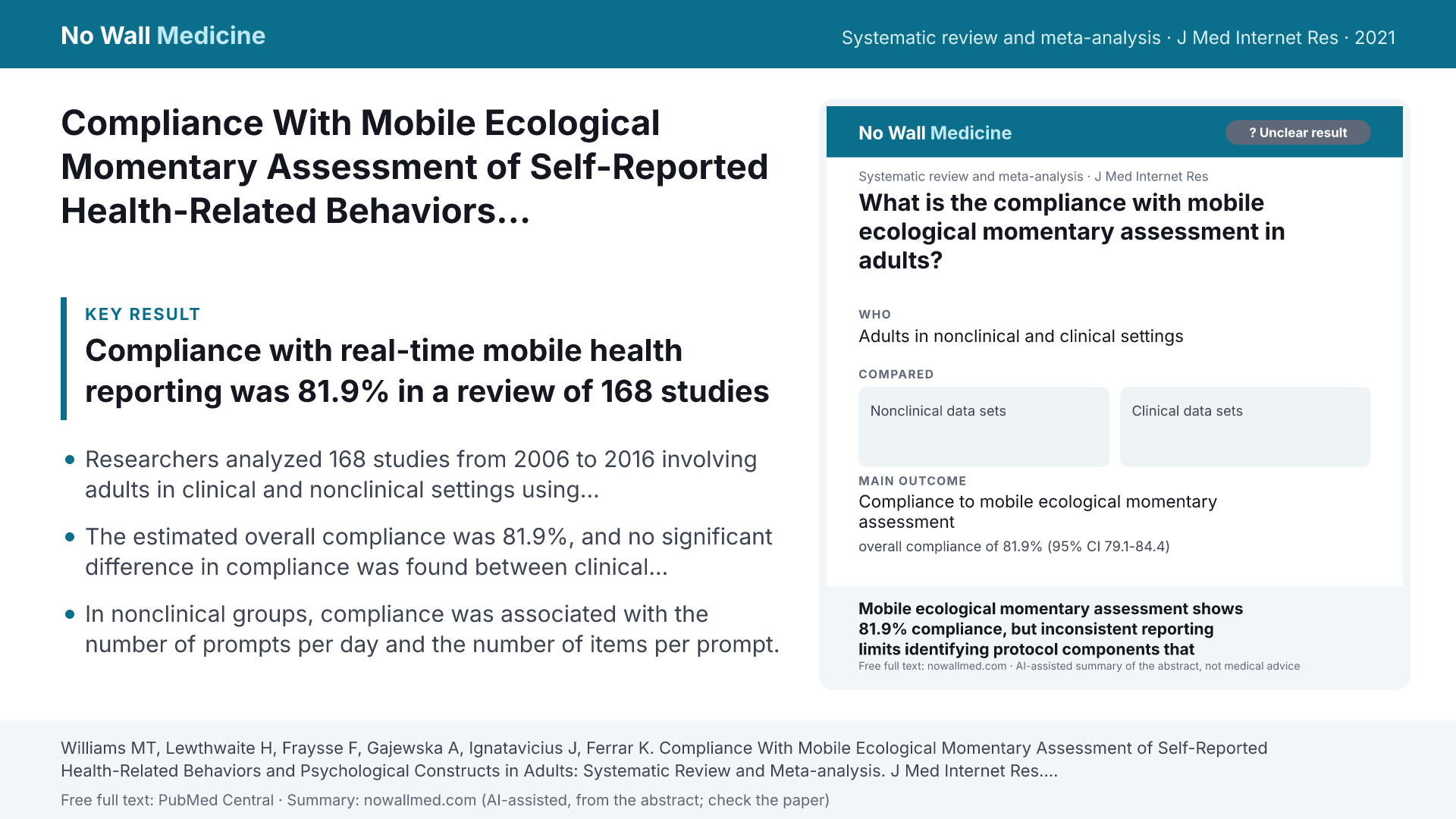
Compliance With Mobile Ecological Momentary Assessment of Self-Reported Health-Related Behaviors and Psychological Constructs in Adults: Systematic Review and Meta-analysis
Key result: Compliance with real-time mobile health reporting was 81.9% in a review of 168 studies
Key points
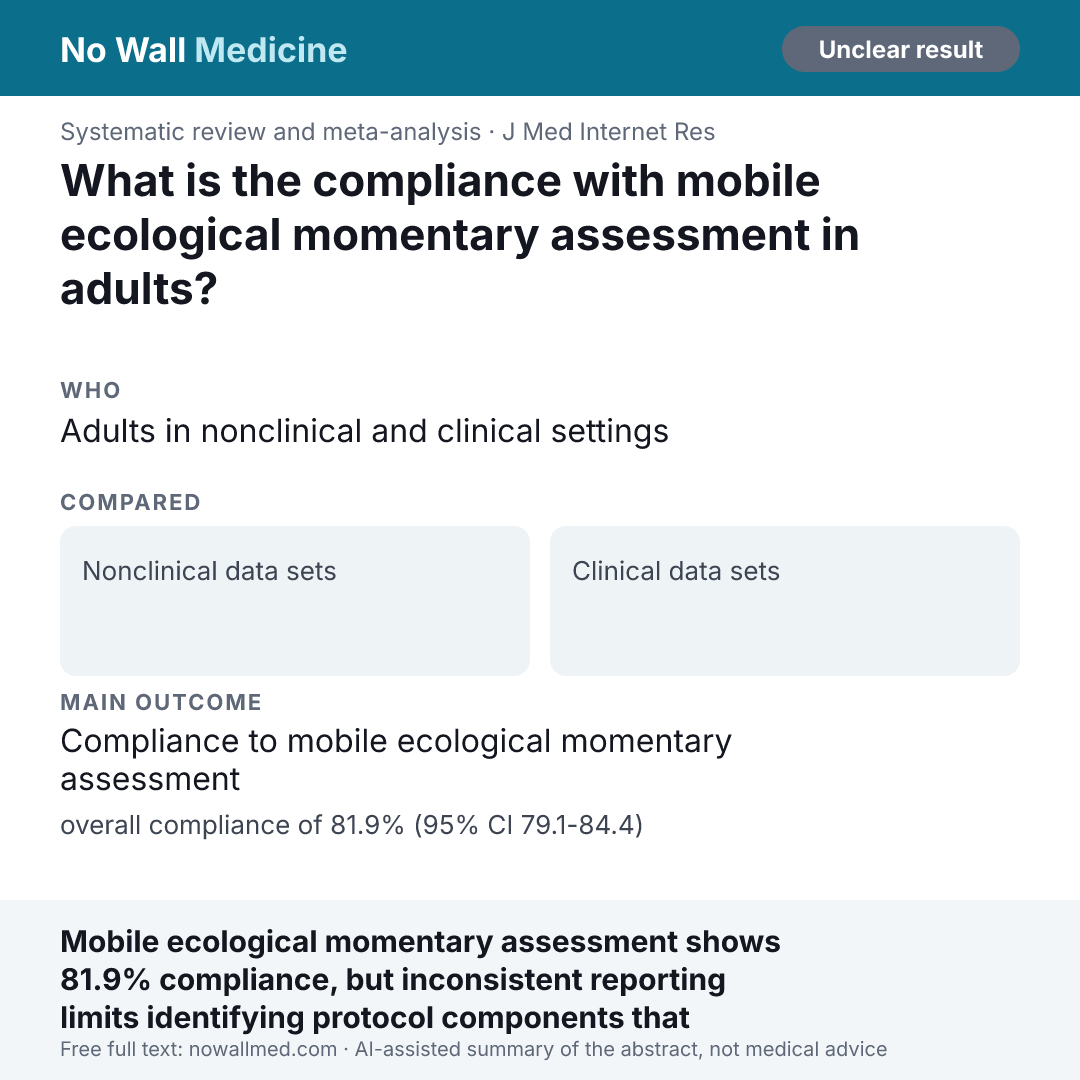
- Researchers analyzed 168 studies from 2006 to 2016 involving adults in clinical and nonclinical settings using mobile ecological momentary assessment, which is real-time digital reporting of behaviors.
- The estimated overall compliance was 81.9%, and no significant difference in compliance was found between clinical and nonclinical adult groups.
- In nonclinical groups, compliance was associated with the number of prompts per day and the number of items per prompt.
Why it matters: Reporting of protocols and compliance rates for real-time mobile health assessments has been identified as problematic in systematic reviews of specific populations.
Limitation the authors note: Widespread heterogeneity existed across the analysis.
Discussion prompts
- Would these patients look like yours? Who was left out?
- Is the main outcome one that matters to patients?
- Is the difference large enough to change what you do?
Cite: Williams MT, Lewthwaite H, Fraysse F, Gajewska A, Ignatavicius J, Ferrar K. Compliance With Mobile Ecological Momentary Assessment of Self-Reported Health-Related Behaviors and Psychological Constructs in Adults: Systematic Review and Meta-analysis. J Med Internet Res. 2021;23(3):e17023. doi:10.2196/17023
Free full text: PubMed Central · Summary and visual abstract: nowallmed.com/a/compliance-with-mobile-ecological-momentary-assessment-of-self-ozy1ys/ (AI-assisted from the abstract; check the paper before relying on it).