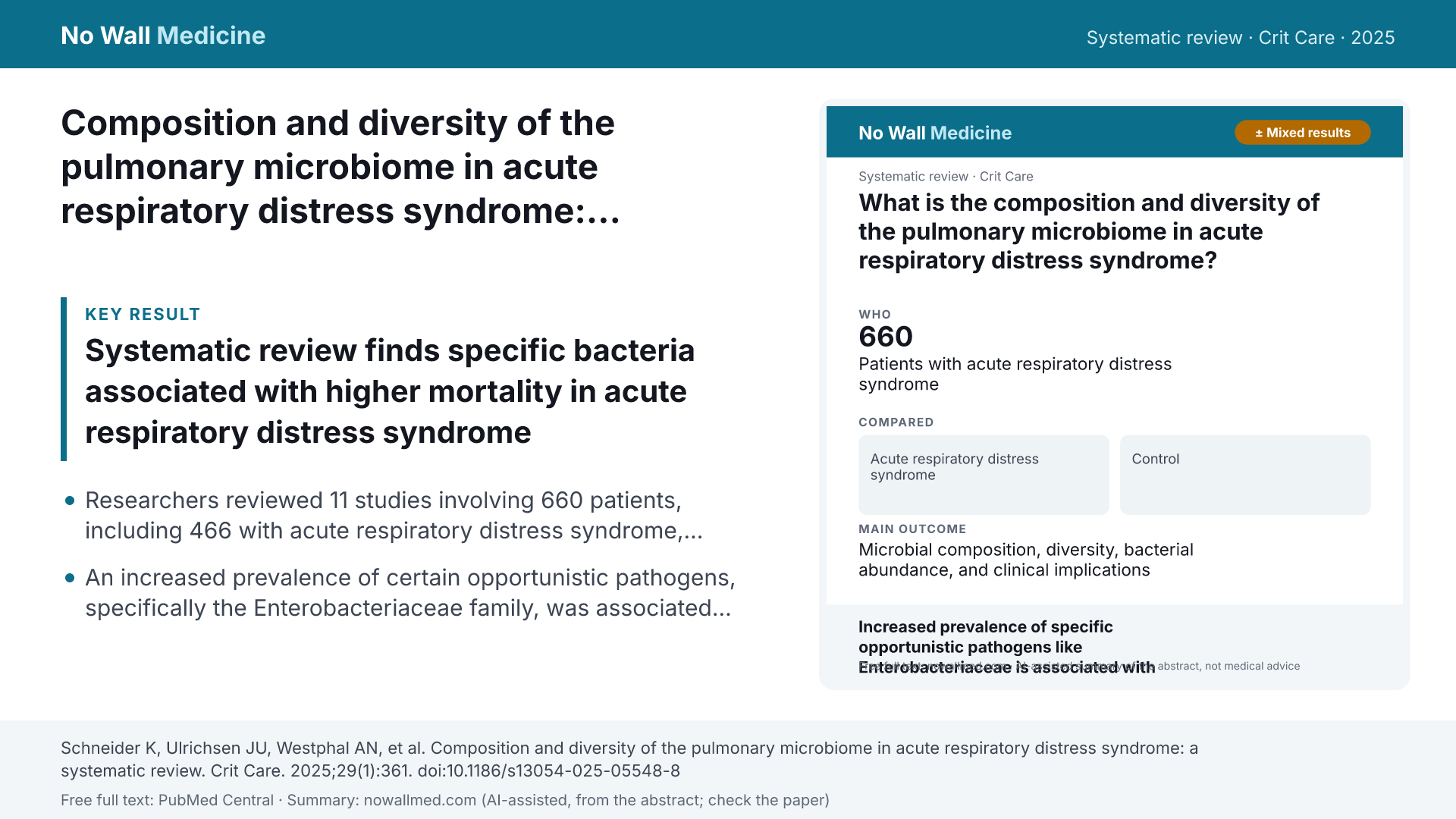
Systematic review finds specific bacteria associated with higher mortality in acute respiratory distress syndrome
Composition and diversity of the pulmonary microbiome in acute respiratory distress syndrome: a systematic review
Systematic reviewMixed results
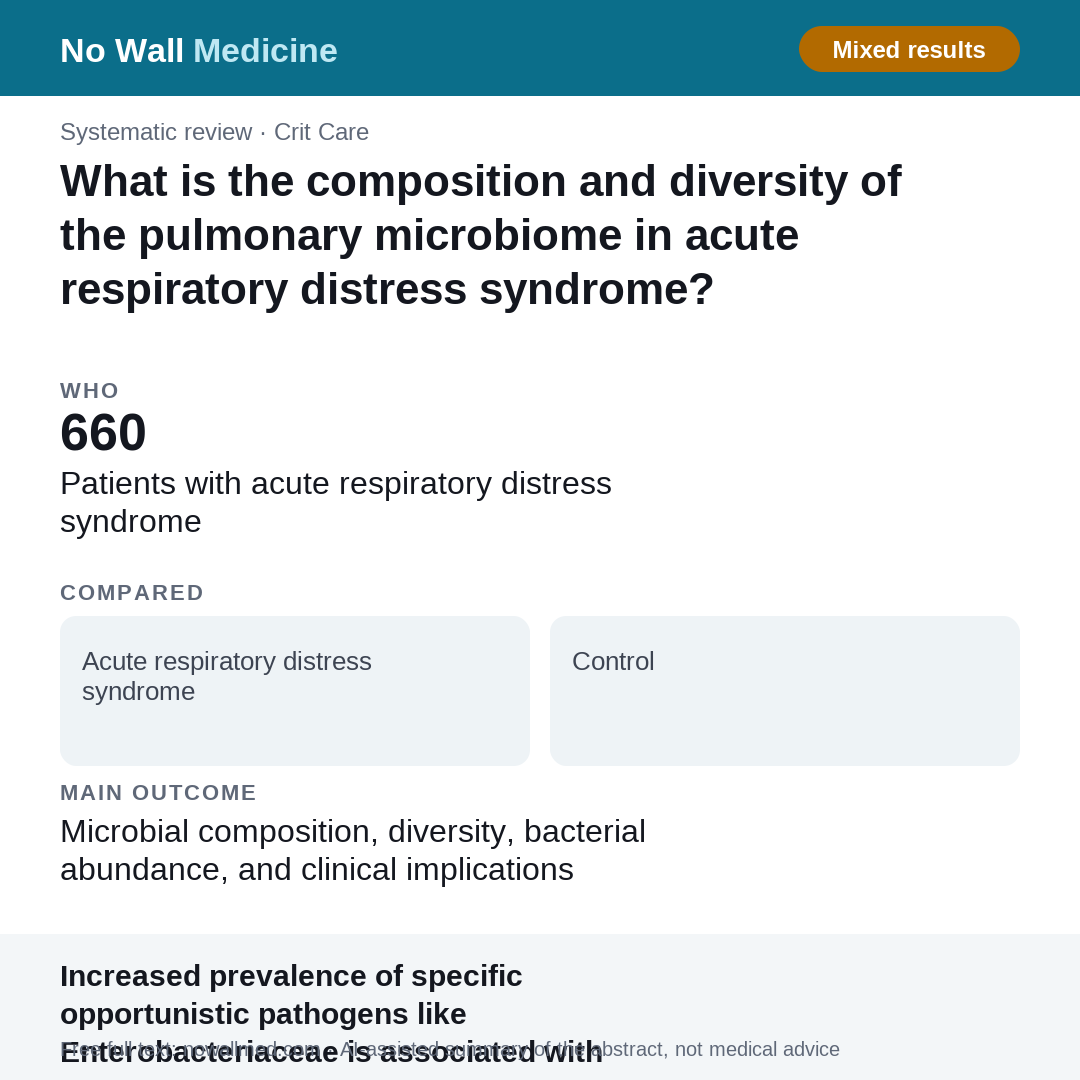
What is the composition and diversity of the pulmonary microbiome in acute respiratory distress syndrome?
Who
660
Patients with acute respiratory distress syndrome
Compared
Acute respiratory distress syndrome
Control
Main outcome
Microbial composition, diversity, bacterial abundance, and clinical implications
Bottom line: Increased prevalence of specific opportunistic pathogens like Enterobacteriaceae is associated with mortality and fewer ventilator-free days.
Crit Care · 2025-08-18Download image
Clinical question: What is the composition and diversity of the pulmonary microbiome in acute respiratory distress syndrome?
Key points
- Researchers reviewed 11 studies involving 660 patients, including 466 with acute respiratory distress syndrome, to examine lung microbial changes.
- An increased prevalence of certain opportunistic pathogens, specifically the Enterobacteriaceae family, was associated with mortality and fewer ventilator-free days.
- While microbial compositions showed consistent changes, findings regarding microbial diversity varied across the included studies.
Headline and key points written with AI from the paper’s abstract, with every number checked against it. Read the paper before relying on them.
Was this summary helpful?
Subject terms
Headline, design, result, key points, caveat and citation as plain text.
Cite this article
Schneider K, Ulrichsen JU, Westphal AN, et al. Composition and diversity of the pulmonary microbiome in acute respiratory distress syndrome: a systematic review. Crit Care. 2025. doi:10.1186/s13054-025-05548-8
Spotted a mistake? Suggest a correction