Comprehensive Evaluation of Targeted and Perilesional Biopsy in Biopsy-Naïve Patients With Prostate Positive Magnetic Resonance Imaging: PERI-PRO Noninferiority Randomized Controlled Trial
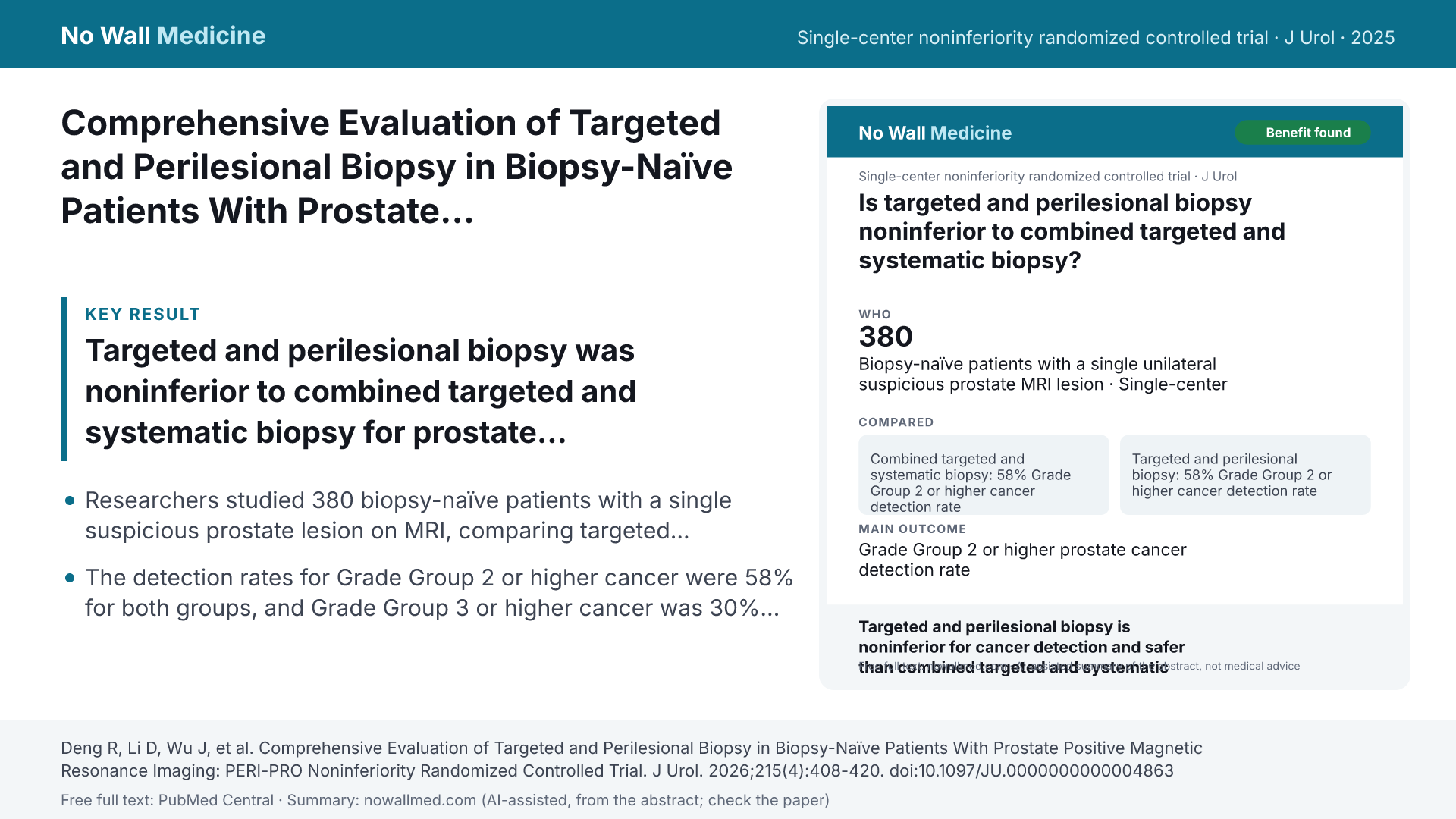
Key result: Targeted and perilesional biopsy was noninferior to combined targeted and systematic biopsy for prostate cancer detection
Key points
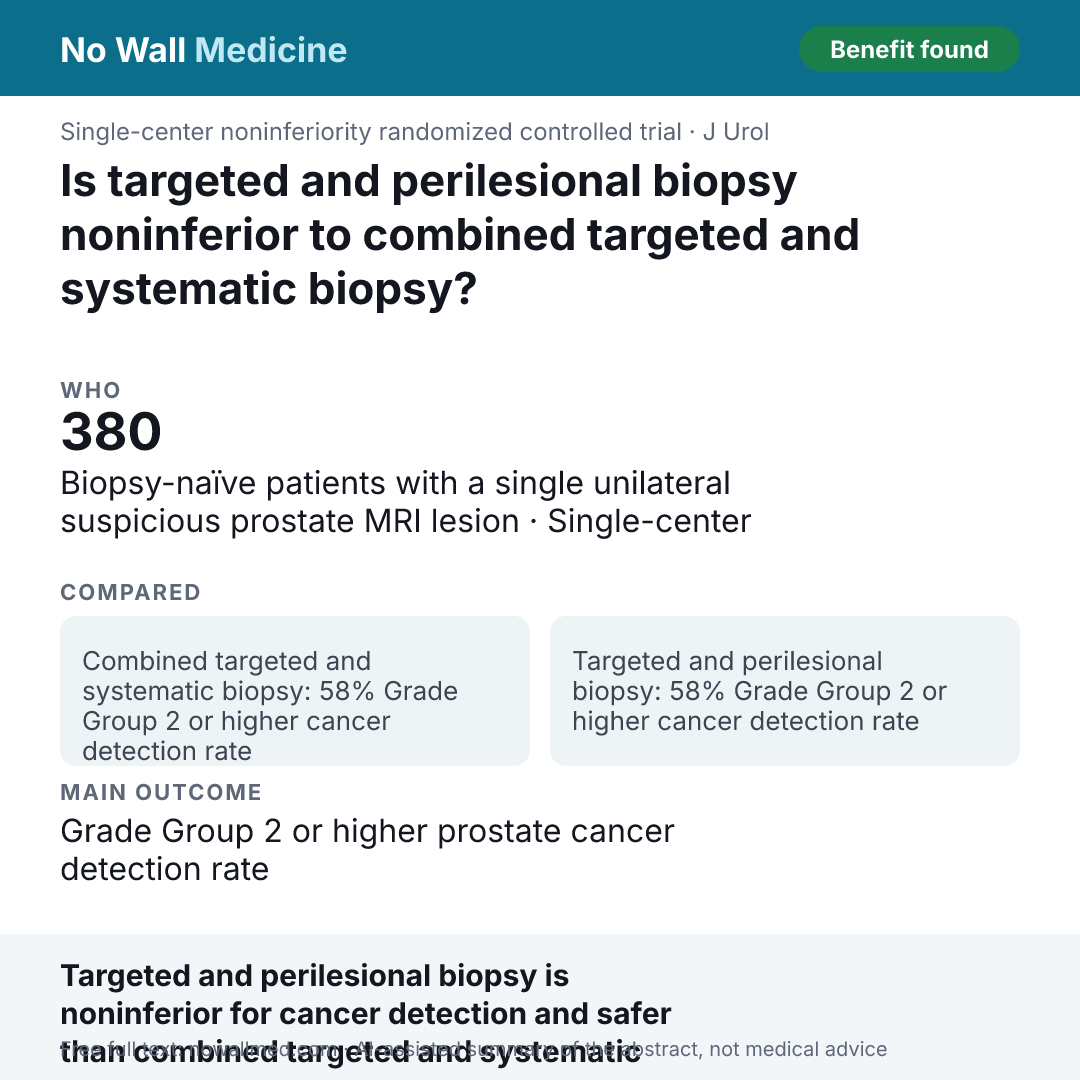
- Researchers studied 380 biopsy-naïve patients with a single suspicious prostate lesion on MRI, comparing targeted and perilesional biopsy to combined targeted and systematic biopsy.
- The detection rates for Grade Group 2 or higher cancer were 58% for both groups, and Grade Group 3 or higher cancer was 30% for both groups.
- Targeted and perilesional biopsy was associated with lower complication rates, including rectal bleeding at 34% versus 48% and blood in the urine at 39% versus 56%.
Why it matters: Current guidelines recommend targeted and perilesional biopsy, but its efficacy and safety compared to the standard combined targeted and systematic biopsy needed evaluation.
Limitation the authors note: This was a single-center study.
Discussion prompts
- Would these patients look like yours? Who was left out?
- Is the main outcome one that matters to patients?
- Is the difference large enough to change what you do?
Cite: Deng R, Li D, Wu J, et al. Comprehensive Evaluation of Targeted and Perilesional Biopsy in Biopsy-Naïve Patients With Prostate Positive Magnetic Resonance Imaging: PERI-PRO Noninferiority Randomized Controlled Trial. J Urol. 2026;215(4):408-420. doi:10.1097/JU.0000000000004863
Free full text: PubMed Central · Summary and visual abstract: nowallmed.com/a/comprehensive-evaluation-of-targeted-and-perilesional-biopsy-in-1dodlxu/ (AI-assisted from the abstract; check the paper before relying on it).