Review of computational models for mechanical ventilation shows poor reporting and quality standards
Computational physiological models for individualised mechanical ventilation: a systematic literature review focussing on quality, availability, and clinical readiness
Systematic literature reviewMixed results
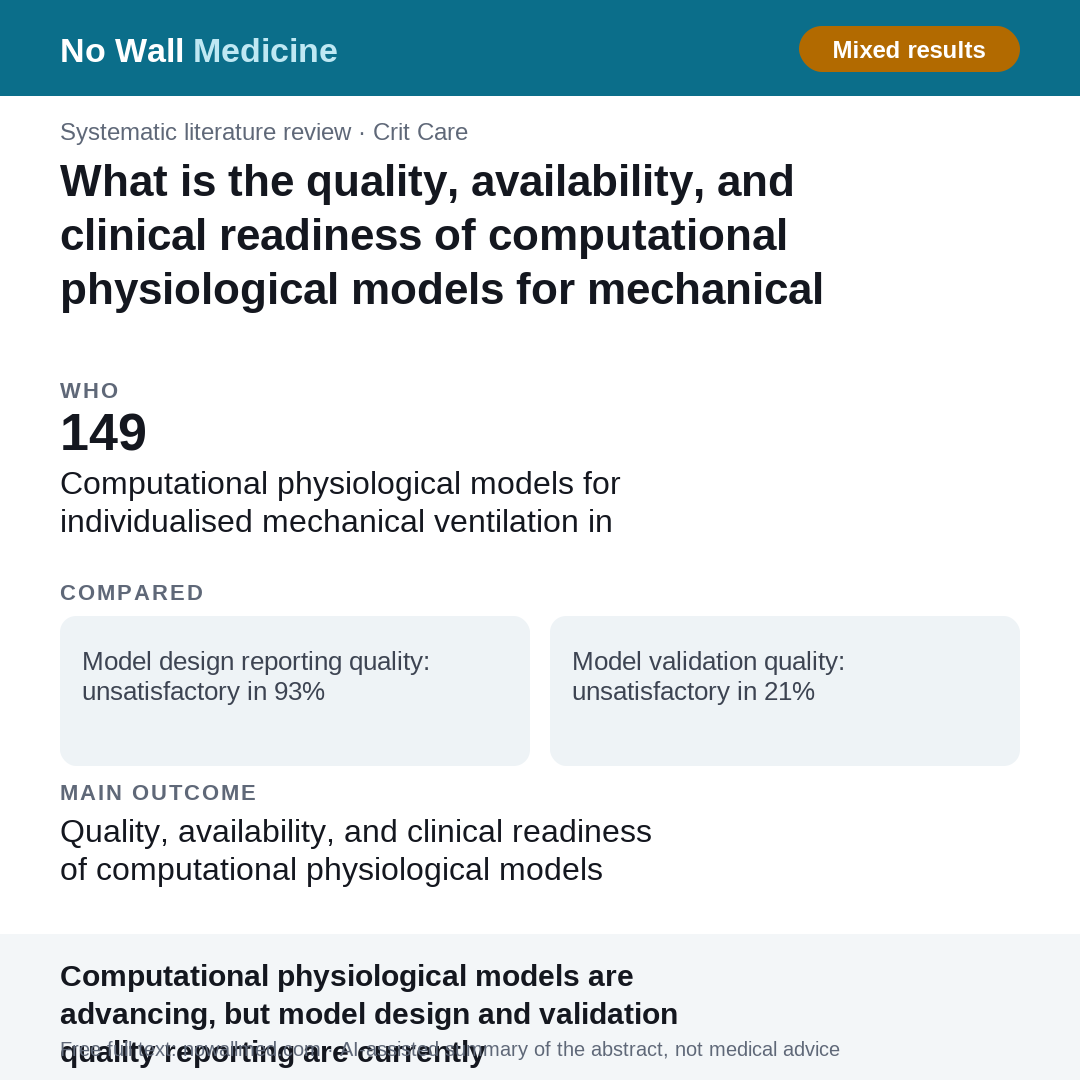
What is the quality, availability, and clinical readiness of computational physiological models for mechanical ventilation?
Who
149
Computational physiological models for individualised mechanical ventilation in intensive care
Compared
Model design reporting quality: unsatisfactory in 93%
Model validation quality: unsatisfactory in 21%
Main outcome
Quality, availability, and clinical readiness of computational physiological models
Bottom line: Computational physiological models are advancing, but model design and validation quality reporting are currently unsatisfactory.
Crit Care · 2023-07-06Download image
Clinical question: What is the quality, availability, and clinical readiness of computational physiological models for mechanical ventilation?
Why it matters: It is unknown if current computational physiological models for tailoring mechanical ventilation are high quality, widely available, or ready for clinical use.
Key points
- Researchers reviewed 149 publications from 6,333 unique articles regarding computational physiological models for tailoring mechanical ventilation in intensive care units.
- While 88% of the 149 articles modelled lung mechanics, model design and quality were reported as unsatisfactory in 93% and 21% of the articles.
- Three randomised controlled trials were initiated using specific models for gas exchange and positive end-expiratory pressure (PEEP) optimisation.
Headline and key points written with AI from the paper’s abstract, with every number checked against it. Read the paper before relying on them.
Was this summary helpful?
Subject terms
Cite this article
Warnaar RSP, Mulder MP, Fresiello L, Cornet AD, Heunks LMA, Donker DW. Computational physiological models for individualised mechanical ventilation: a systematic literature review focussing on quality, availability, and clinical readiness. Crit Care. 2023. doi:10.1186/s13054-023-04549-9
Spotted a mistake? Suggest a correction
Top studies every Monday
The week’s key trials and guidelines in your specialties, plus any topics you follow. By email, free.
Get the weekly digest