Consensus guidelines for the perioperative management of patients undergoing endoscopic retrograde cholangiopancreatography
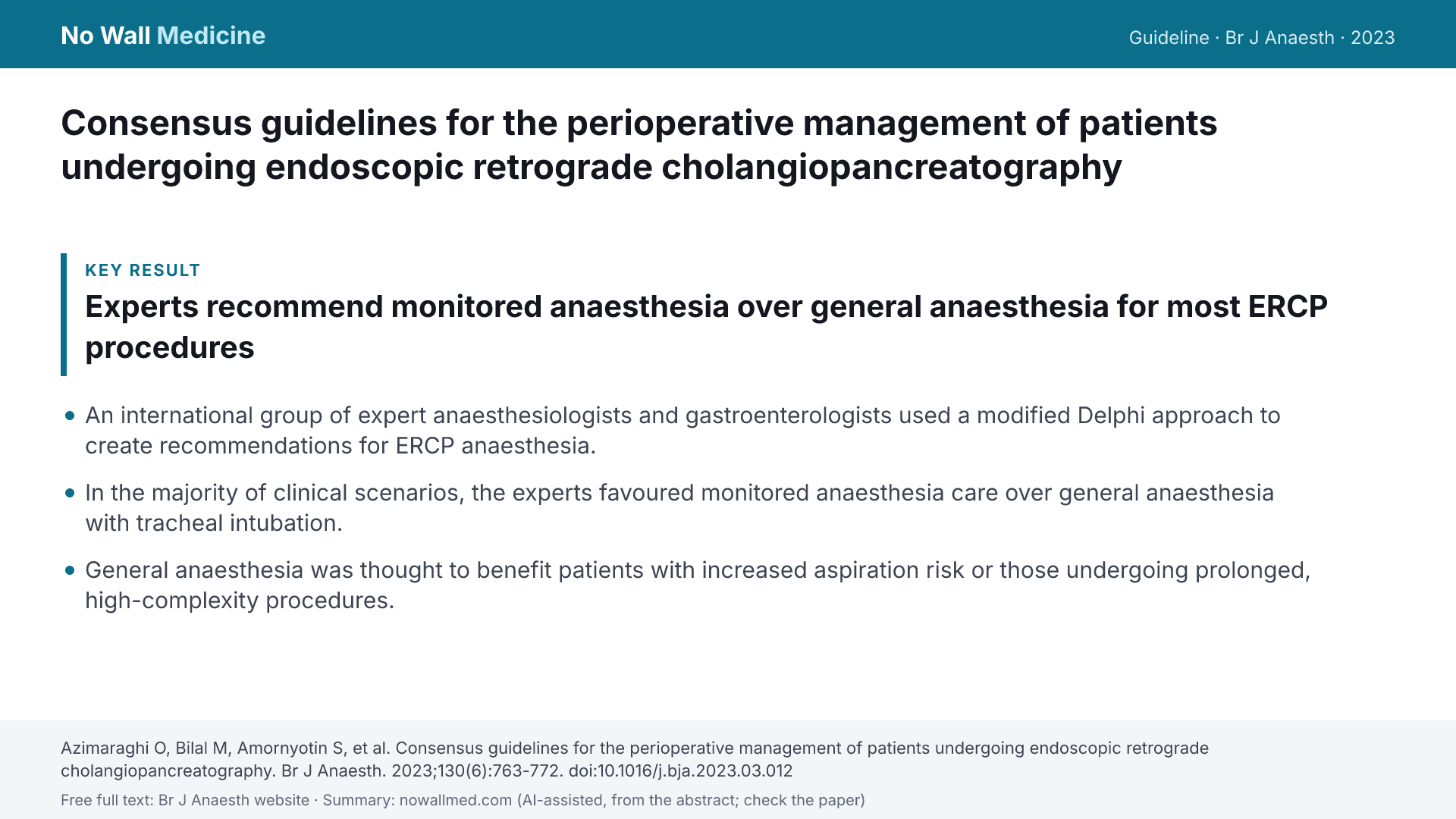
Key result: Experts recommend monitored anaesthesia over general anaesthesia for most ERCP procedures
Key points
- An international group of expert anaesthesiologists and gastroenterologists used a modified Delphi approach to create recommendations for ERCP anaesthesia.
- In the majority of clinical scenarios, the experts favoured monitored anaesthesia care over general anaesthesia with tracheal intubation.
- General anaesthesia was thought to benefit patients with increased aspiration risk or those undergoing prolonged, high-complexity procedures.
Why it matters: There are distinct pathophysiological differences between anaesthesia techniques that need consideration based on patient disease, comorbidities, and procedural risks.
Discussion prompts
- Would these patients look like yours? Who was left out?
- Is the main outcome one that matters to patients?
- Is the difference large enough to change what you do?
Cite: Azimaraghi O, Bilal M, Amornyotin S, et al. Consensus guidelines for the perioperative management of patients undergoing endoscopic retrograde cholangiopancreatography. Br J Anaesth. 2023. doi:10.1016/j.bja.2023.03.012
Free full text: Br J Anaesth website · Summary and visual abstract: nowallmed.com/a/consensus-guidelines-for-the-perioperative-management-of-patients-1j2m23b/ (AI-assisted from the abstract; check the paper before relying on it).