Conservative versus Liberal Oxygenation Targets in Intensive Care Unit Patients (ICONIC): A Randomized Clinical Trial
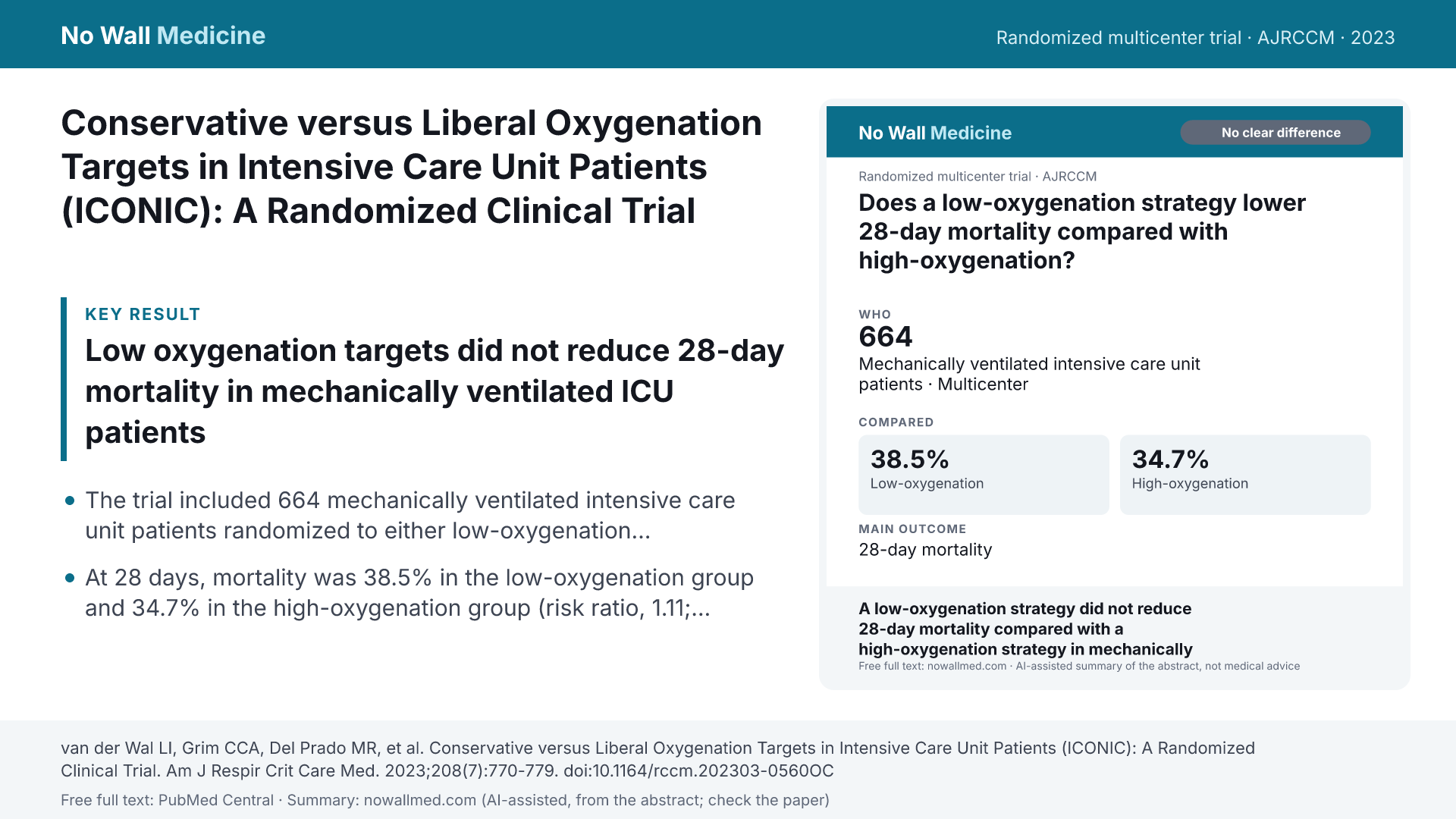
Key result: Low oxygenation targets did not reduce 28-day mortality in mechanically ventilated ICU patients
Randomized multicenter trialNo clear difference
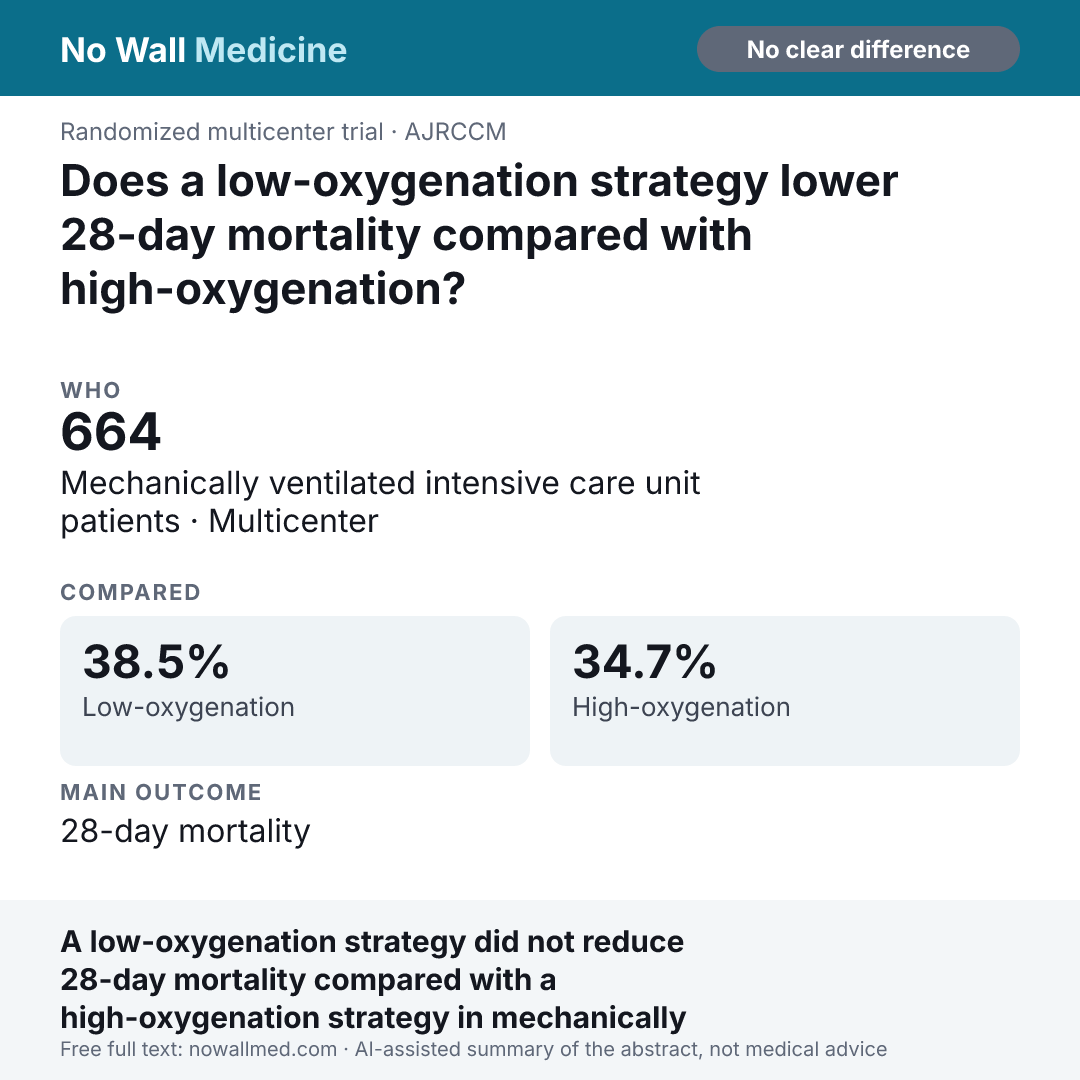
Does a low-oxygenation strategy lower 28-day mortality compared with high-oxygenation?
Who
664
Mechanically ventilated intensive care unit patients · Multicenter
Compared
38.5%Low-oxygenation
34.7%High-oxygenation
Main outcome
28-day mortality
Result: risk ratio 1.11 (95% confidence interval, 0.9-1.4)
Bottom line: A low-oxygenation strategy did not reduce 28-day mortality compared with a high-oxygenation strategy in mechanically ventilated patients.
AJRCCM · 2023-08-08 · Save PNG
Key points
- The trial included 664 mechanically ventilated intensive care unit patients randomized to either low-oxygenation or high-oxygenation targets.
- At 28 days, mortality was 38.5% in the low-oxygenation group and 34.7% in the high-oxygenation group (risk ratio, 1.11; 95% confidence interval, 0.9-1.4; P = 0.30).
- Serious adverse events occurred in 3.6% of patients in the low-oxygenation group and 5.2% in the high-oxygenation group.
Discussion prompts
- Would these patients look like yours? Who was left out?
- Is the main outcome one that matters to patients?
- Is the difference large enough to change what you do?
Cite: van der Wal LI, Grim CCA, Del Prado MR, et al. Conservative versus Liberal Oxygenation Targets in Intensive Care Unit Patients (ICONIC): A Randomized Clinical Trial. Am J Respir Crit Care Med. 2023;208(7):770-779. doi:10.1164/rccm.202303-0560OC
Free full text: PubMed Central · Summary and visual abstract: nowallmed.com/a/conservative-versus-liberal-oxygenation-targets-in-intensive-care-l2ztxy/ (AI-assisted from the abstract; check the paper before relying on it).