Constipation is associated with an increased risk of depression in a large meta-analysis
Constipation is associated with an increased risk of depression: A systematic review and meta-analysis of observational studies
Systematic review and meta-analysis of observational studiesBenefit found
Is constipation associated with an increased risk of depression?
Who
730,263
General population
Compared
Constipation
No constipation
Main outcome
Risk of depression
Result: odds ratio 2.08 (95% CI 1.84-2.34)
Bottom line: Constipation is significantly associated with an increased risk of depression in the general population.
Limitation: substantial heterogeneity (I² = 92.6%)
Transl Psychiatry · 2026-06-02Download image
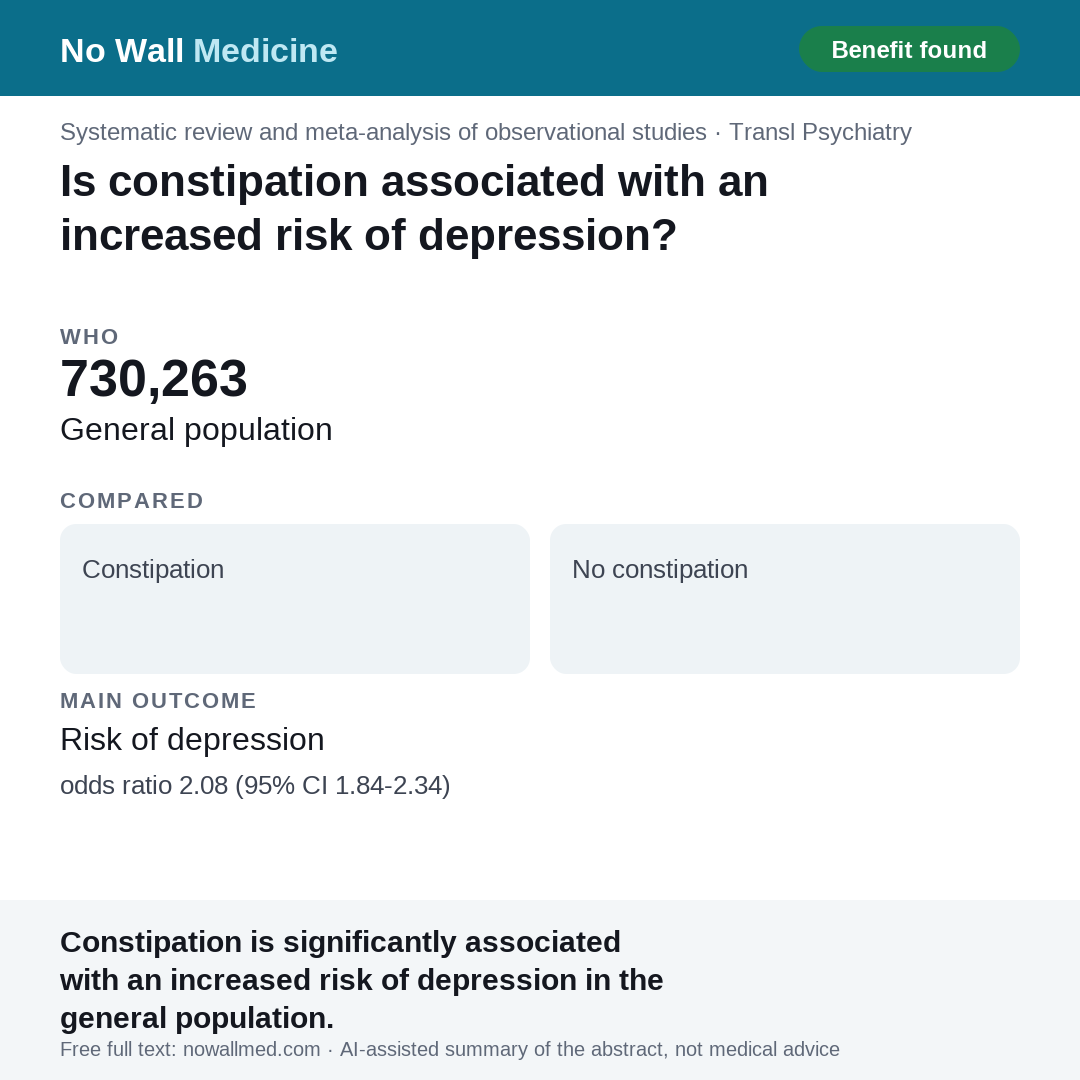
Clinical question: Is constipation associated with an increased risk of depression?
Why it matters: Epidemiological findings regarding the potential association between constipation and depression have remained inconsistent.
Key points
- Researchers analyzed eighteen observational studies involving 730,263 participants to examine the link between constipation and depression.
- Constipation was significantly associated with an increased risk of depression with an odds ratio of 2.08 (95% CI: 1.84-2.34).
- Stronger associations were observed in adolescents, in studies from Asia and North America, and in studies using self-reported depression measures.
Headline and key points written with AI from the paper’s abstract, with every number checked against it. Read the paper before relying on them.
Topics
Spotted a mistake? Suggest a correction
More in Psychiatry & Mental Health
Depressive symptoms linked to stronger defensive response in panic disorder patients
Defensive reactivity to interoceptive perturbation in panic disorder: Depressive symptom burden and panic severity dimensions
Genes linked to mitochondria implicated in psychiatric disorders
Brain-derived multi-omics prioritization of mitochondria-related genes in schizophrenia, bipolar disorder, and major depressive disorder
Brain structure variations linked to alcohol use severity in large studies
A reproducible structural brain axis of alcohol use severity
Most animal psychedelic studies use stress-inducing methods and brief testing
Animal models in psychedelic research - Tripping over translation