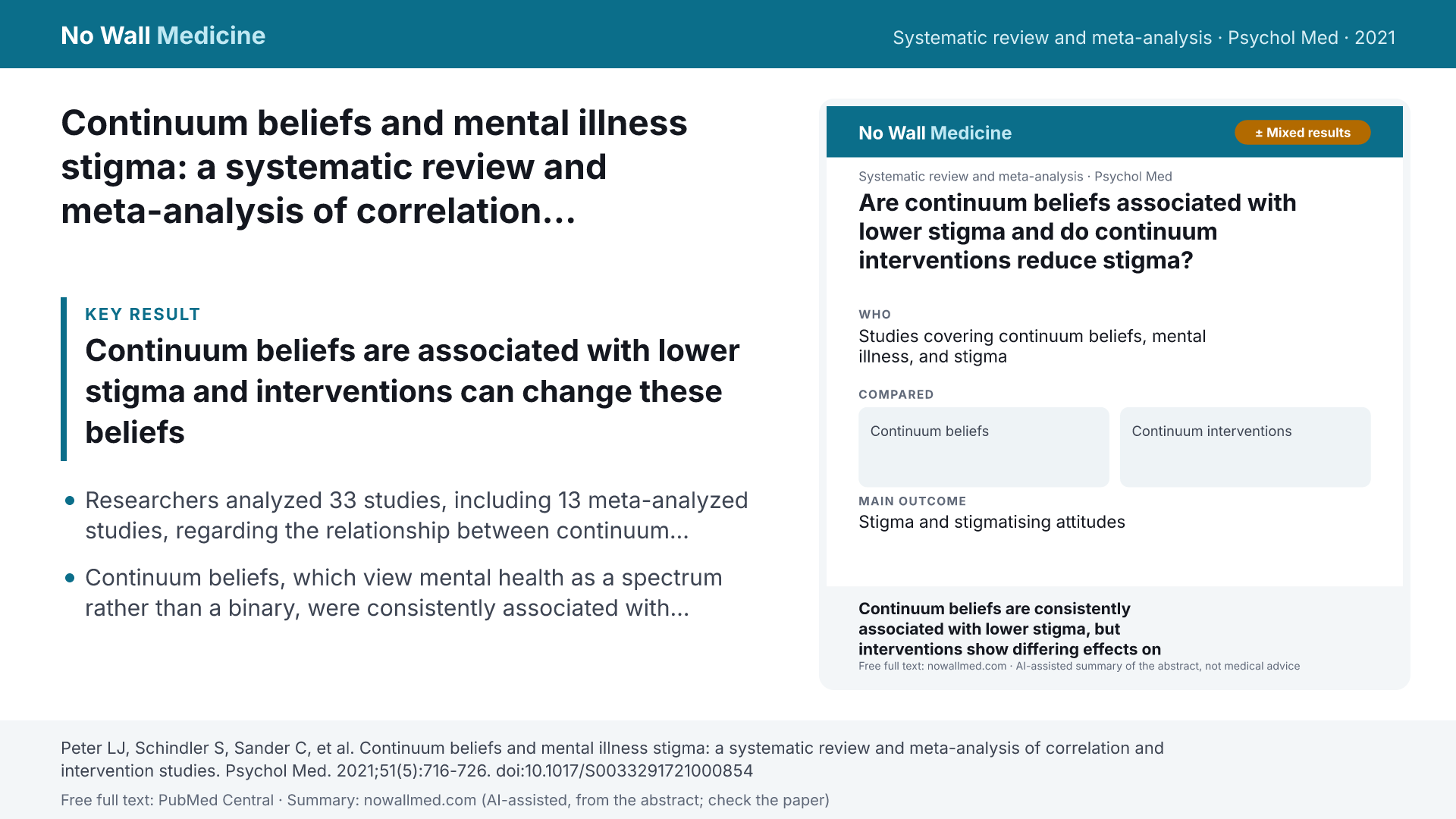
Continuum beliefs are associated with lower stigma and interventions can change these beliefs
Continuum beliefs and mental illness stigma: a systematic review and meta-analysis of correlation and intervention studies
Systematic review and meta-analysisMixed results
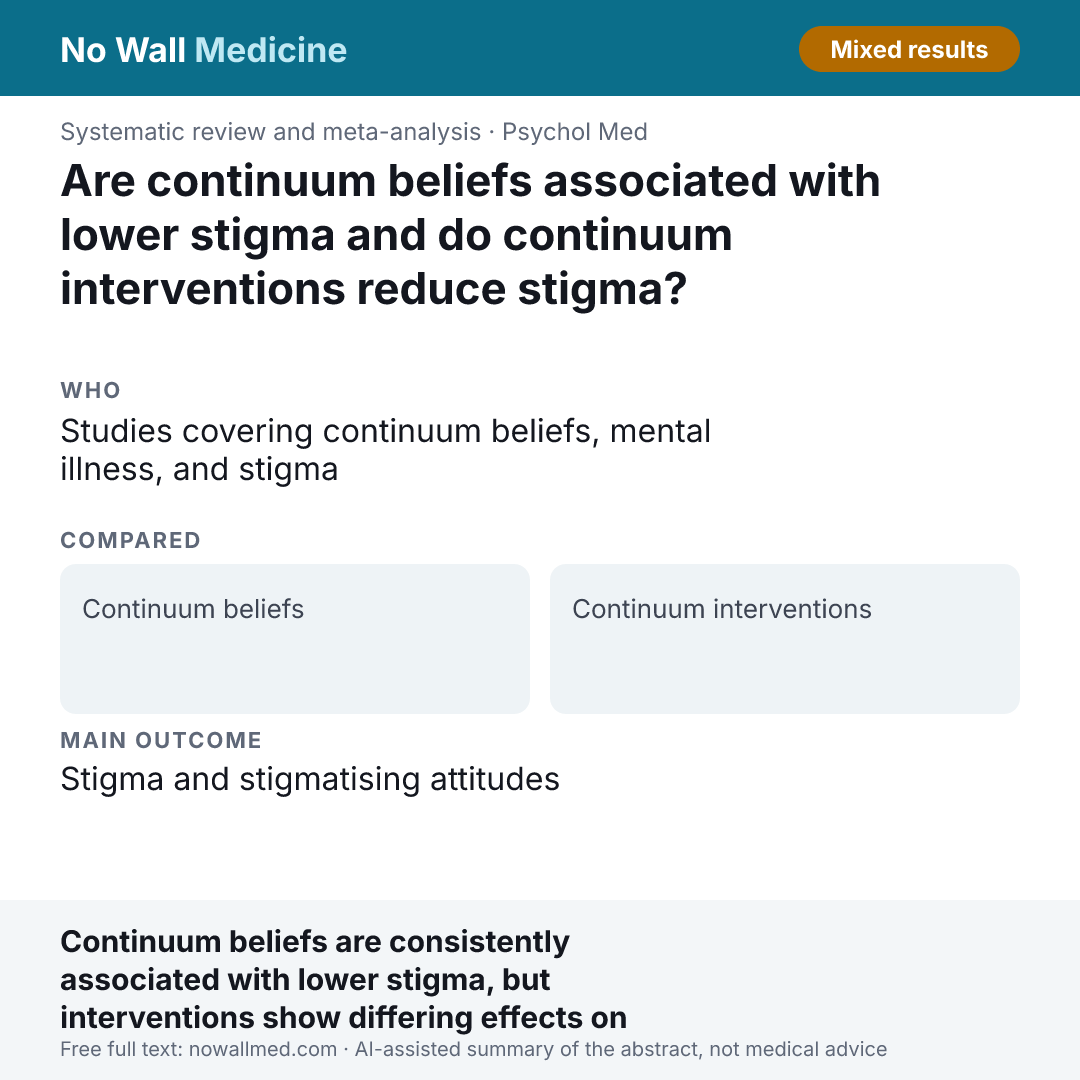
Are continuum beliefs associated with lower stigma and do continuum interventions reduce stigma?
Who
Studies covering continuum beliefs, mental illness, and stigma
Compared
Continuum beliefs
Continuum interventions
Main outcome
Stigma and stigmatising attitudes
Bottom line: Continuum beliefs are consistently associated with lower stigma, but interventions show differing effects on stigmatising attitudes.
Psychol Med · 2021-04-08 · Save PNG
Clinical question: Are continuum beliefs associated with lower stigma and do continuum interventions reduce stigma?
Key points
- Researchers analyzed 33 studies, including 13 meta-analyzed studies, regarding the relationship between continuum beliefs and mental illness stigma.
- Continuum beliefs, which view mental health as a spectrum rather than a binary, were consistently associated with lower stigma.
- Interventions were effective at changing continuum beliefs, but their effects on stigmatizing attitudes varied.
Headline and key points written with AI from the paper’s abstract, with every number checked against it. Read the paper before relying on them.
Was this summary helpful?
Subject terms
Headline, design, result, key points, caveat and citation as plain text.
Cite this article
Peter LJ, Schindler S, Sander C, et al. Continuum beliefs and mental illness stigma: a systematic review and meta-analysis of correlation and intervention studies. Psychol Med. 2021. doi:10.1017/S0033291721000854
Spotted a mistake? Suggest a correction