Increased blood flow and lower pressure contribute to reduced resistance in pulmonary arterial hypertension
Contribution of pressure and flow changes to resistance reduction after pulmonary arterial hypertension treatment: a meta-analysis of 3898 patients
Random-effects meta-analysisBenefit found
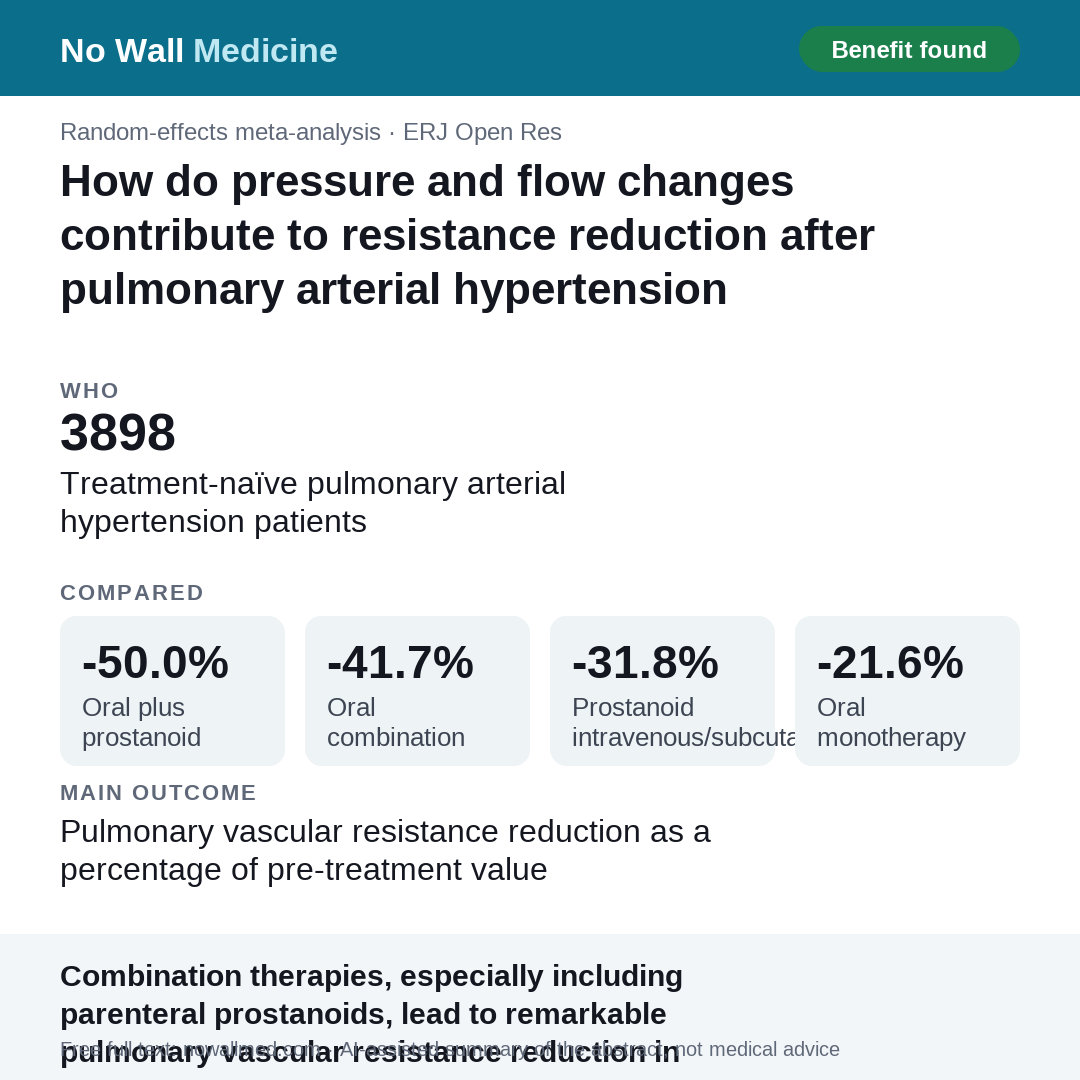
How do pressure and flow changes contribute to resistance reduction after pulmonary arterial hypertension treatment?
Who
3898
Treatment-naïve pulmonary arterial hypertension patients
Compared
-50.0%Oral plus prostanoid intravenous/subcutaneous combination
-41.7%Oral combination therapy
-31.8%Prostanoid intravenous/subcutaneous monotherapy
-21.6%Oral monotherapy
Main outcome
Pulmonary vascular resistance reduction as a percentage of pre-treatment value
Result: mean difference -50.0% (95% CI -60.8 to -39.2%)
Bottom line: Combination therapies, especially including parenteral prostanoids, lead to remarkable pulmonary vascular resistance reduction in treatment-naïve patients.
ERJ Open Res · 2024-01-22Download image
Clinical question: How do pressure and flow changes contribute to resistance reduction after pulmonary arterial hypertension treatment?
Why it matters: It was unknown how much changes in blood pressure versus blood flow contribute to the reduction of pulmonary vascular resistance during treatment.
Key points
- Researchers analyzed 68 studies involving 3898 patients with pulmonary arterial hypertension to measure changes in blood pressure and flow after treatment.
- In cases with large pulmonary vascular resistance reduction, both increased cardiac output and decreased mean pulmonary artery pressure contributed to the result.
- Combination therapy using oral drugs and intravenous or subcutaneous prostanoids showed a -50.0% mean difference in resistance reduction compared to other treatment types.
Headline and key points written with AI from the paper’s abstract, with every number checked against it. Read the paper before relying on them.
Cite this article
Farmakis IT, Baroutidou A, Patsiou V, Arvanitaki A, Doundoulakis I, Hobohm L. Contribution of pressure and flow changes to resistance reduction after pulmonary arterial hypertension treatment: a meta-analysis of 3898 patients. ERJ Open Res. 2024. doi:10.1183/23120541.00706-2023
Spotted a mistake? Suggest a correction
Top studies every Monday
The week’s key trials and guidelines in your specialties, plus any topics you follow. By email, free.
Get the weekly digest