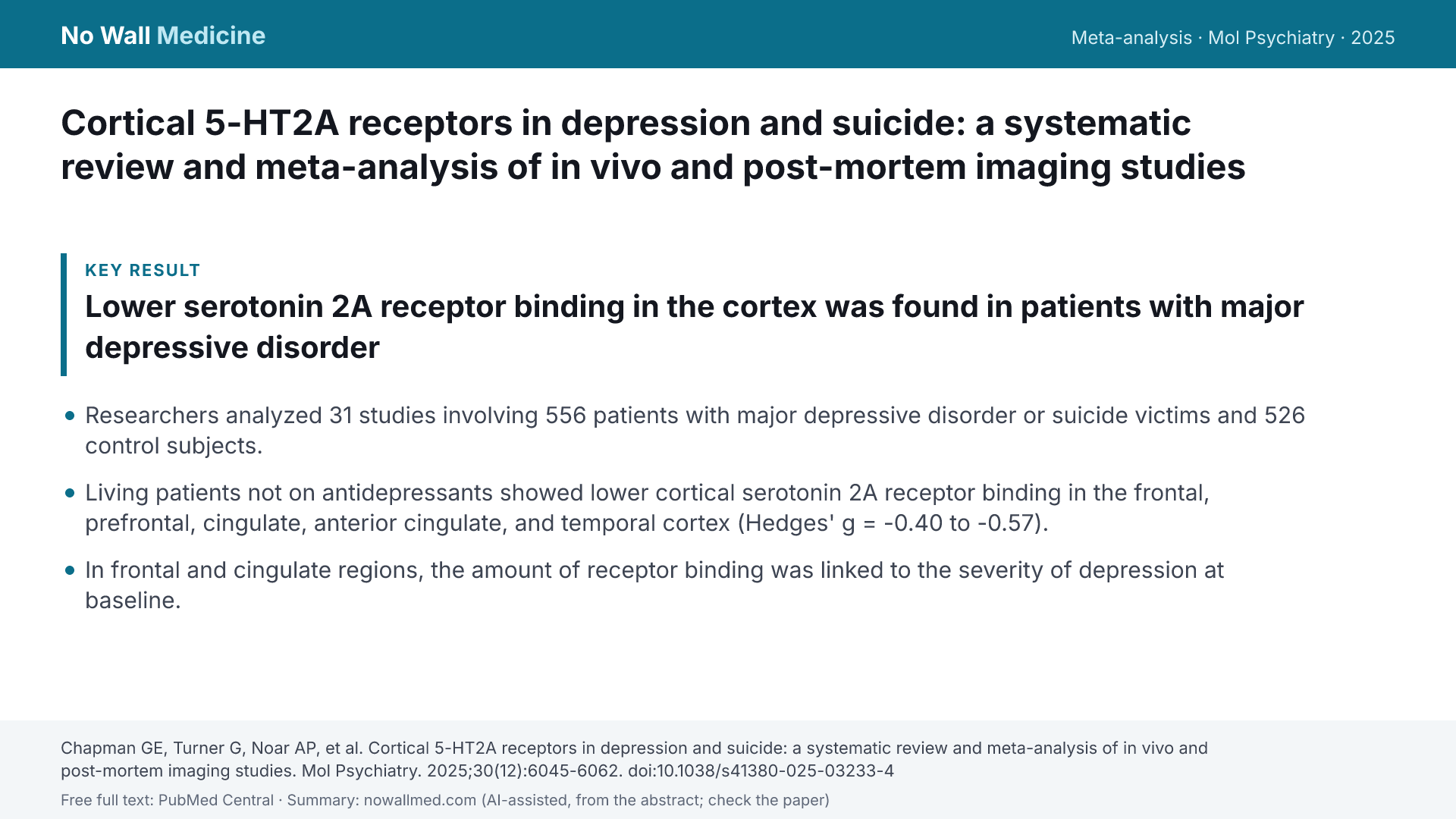
Cortical 5-HT2A receptors in depression and suicide: a systematic review and meta-analysis of in vivo and post-mortem imaging studies
Key result: Lower serotonin 2A receptor binding in the cortex was found in patients with major depressive disorder
Key points
- Researchers analyzed 31 studies involving 556 patients with major depressive disorder or suicide victims and 526 control subjects.
- Living patients not on antidepressants showed lower cortical serotonin 2A receptor binding in the frontal, prefrontal, cingulate, anterior cingulate, and temporal cortex (Hedges' g = -0.40 to -0.57).
- In frontal and cingulate regions, the amount of receptor binding was linked to the severity of depression at baseline.
Why it matters: Understanding changes to serotonin 2A receptors in major depressive disorder and suicide may help to improve treatments.
Limitation the authors note: The results of most post-mortem analyses were negative and the included studies were of variable quality.
Discussion prompts
- Would these patients look like yours? Who was left out?
- Is the main outcome one that matters to patients?
- Is the difference large enough to change what you do?
Cite: Chapman GE, Turner G, Noar AP, et al. Cortical 5-HT2A receptors in depression and suicide: a systematic review and meta-analysis of in vivo and post-mortem imaging studies. Mol Psychiatry. 2025;30(12):6045-6062. doi:10.1038/s41380-025-03233-4
Free full text: PubMed Central · Summary and visual abstract: nowallmed.com/a/cortical-5-ht2a-receptors-in-depression-and-suicide-a-systematic-16nps3p/ (AI-assisted from the abstract; check the paper before relying on it).