Prednisolone did not improve asthma symptoms or quality of life in patients receiving mepolizumab
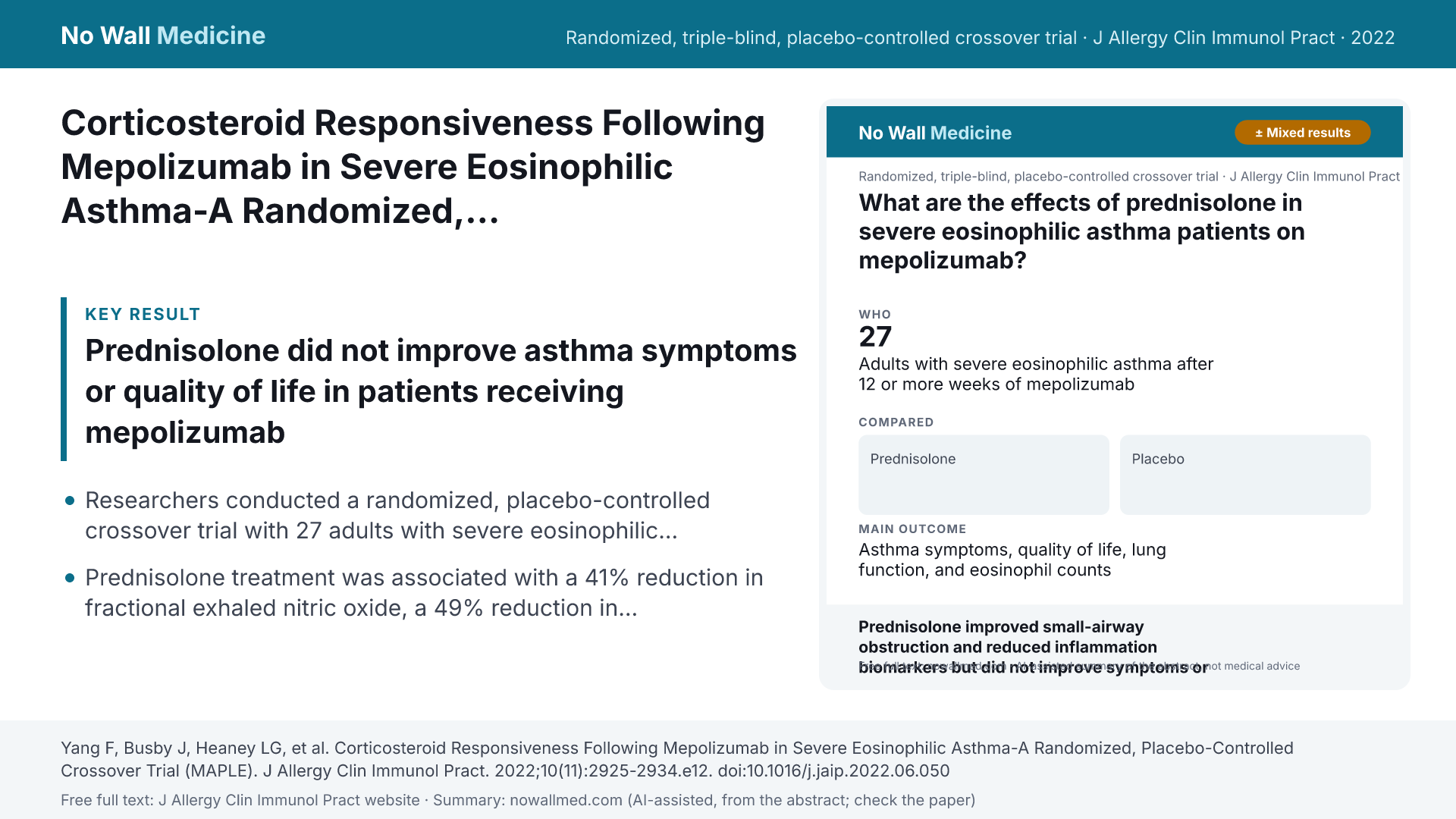
Corticosteroid Responsiveness Following Mepolizumab in Severe Eosinophilic Asthma-A Randomized, Placebo-Controlled Crossover Trial (MAPLE)
Randomized, triple-blind, placebo-controlled crossover trialMixed results
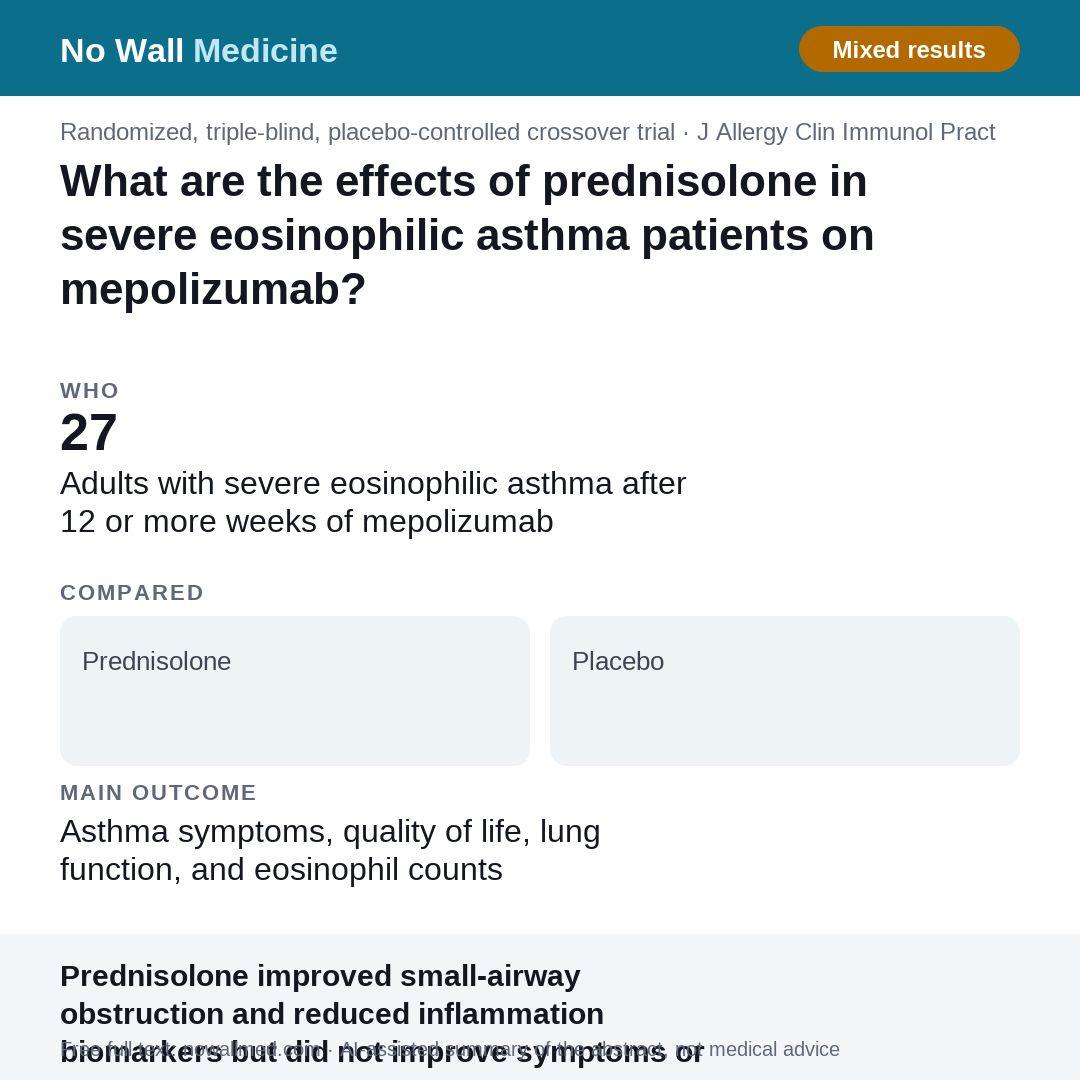
What are the effects of prednisolone in severe eosinophilic asthma patients on mepolizumab?
Who
27
Adults with severe eosinophilic asthma after 12 or more weeks of mepolizumab
Compared
Prednisolone
Placebo
Main outcome
Asthma symptoms, quality of life, lung function, and eosinophil counts
Bottom line: Prednisolone improved small-airway obstruction and reduced inflammation biomarkers but did not improve symptoms or quality of life.
J Allergy Clin Immunol Pract · 2022-07-19Download image
Clinical question: What are the effects of prednisolone in severe eosinophilic asthma patients on mepolizumab?
Why it matters: It is unknown whether oral corticosteroids provide additional clinical benefits for patients with severe eosinophilic asthma who are already receiving mepolizumab to inhibit interleukin-5 activity.
Key points
- Researchers conducted a randomized, placebo-controlled crossover trial with 27 adults with severe eosinophilic asthma who had received mepolizumab for at least 12 weeks.
- Prednisolone treatment was associated with a 41% reduction in fractional exhaled nitric oxide, a 49% reduction in blood eosinophil counts, and a 71% reduction in sputum eosinophil counts.
- Prednisolone did not significantly change asthma symptom scores, quality of life scores, or the forced expiratory volume in 1 second, which measures lung function.
Headline and key points written with AI from the paper’s abstract, with every number checked against it. Read the paper before relying on them.
Was this summary helpful?
Subject terms
Cite this article
Yang F, Busby J, Heaney LG, Pavord ID, Brightling CE, Borg K. Corticosteroid Responsiveness Following Mepolizumab in Severe Eosinophilic Asthma-A Randomized, Placebo-Controlled Crossover Trial (MAPLE). J Allergy Clin Immunol Pract. 2022. doi:10.1016/j.jaip.2022.06.050
Spotted a mistake? Suggest a correction