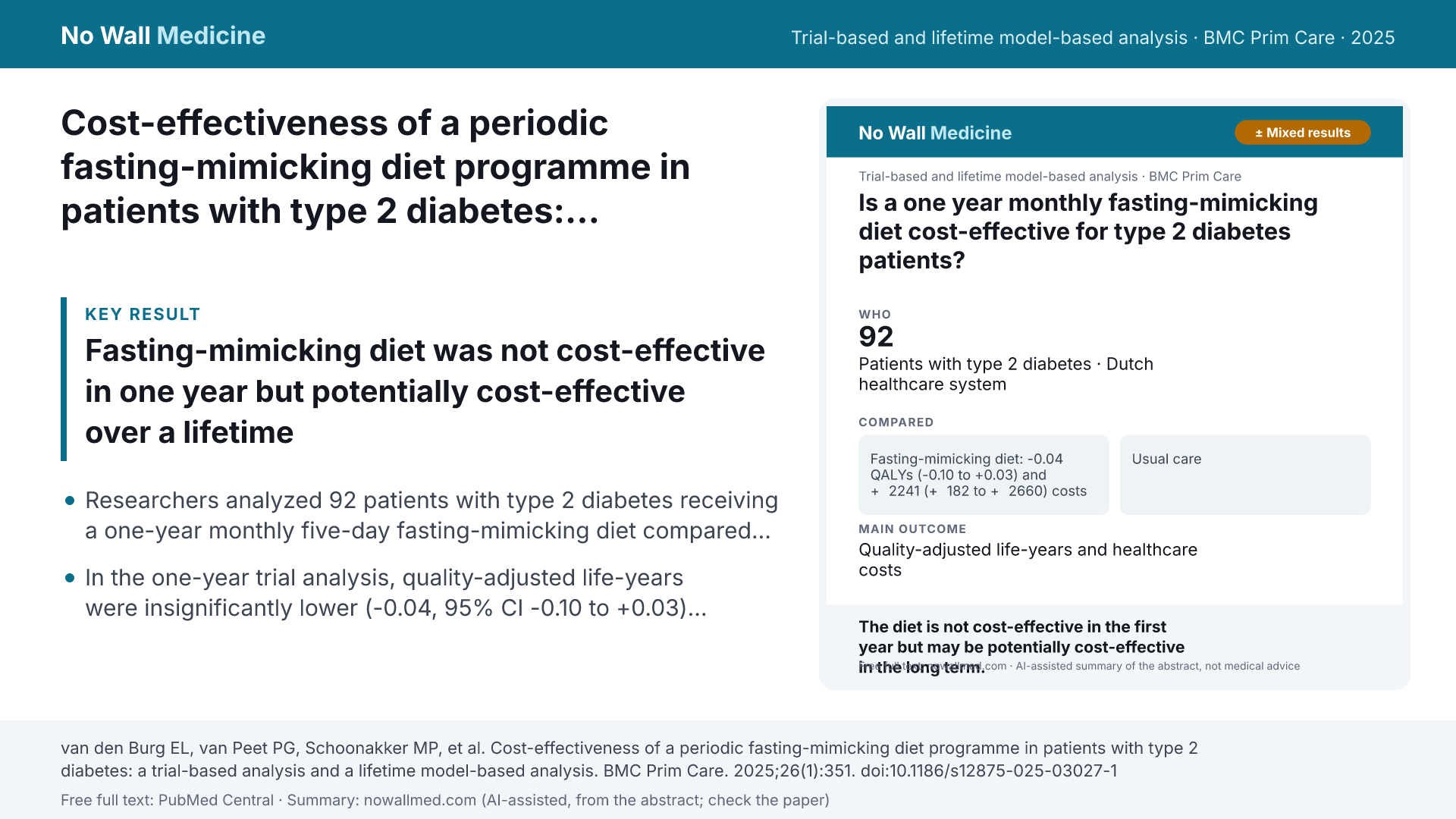
Cost-effectiveness of a periodic fasting-mimicking diet programme in patients with type 2 diabetes: a trial-based analysis and a lifetime model-based analysis
Key result: Fasting-mimicking diet was not cost-effective in one year but potentially cost-effective over a lifetime
Key points
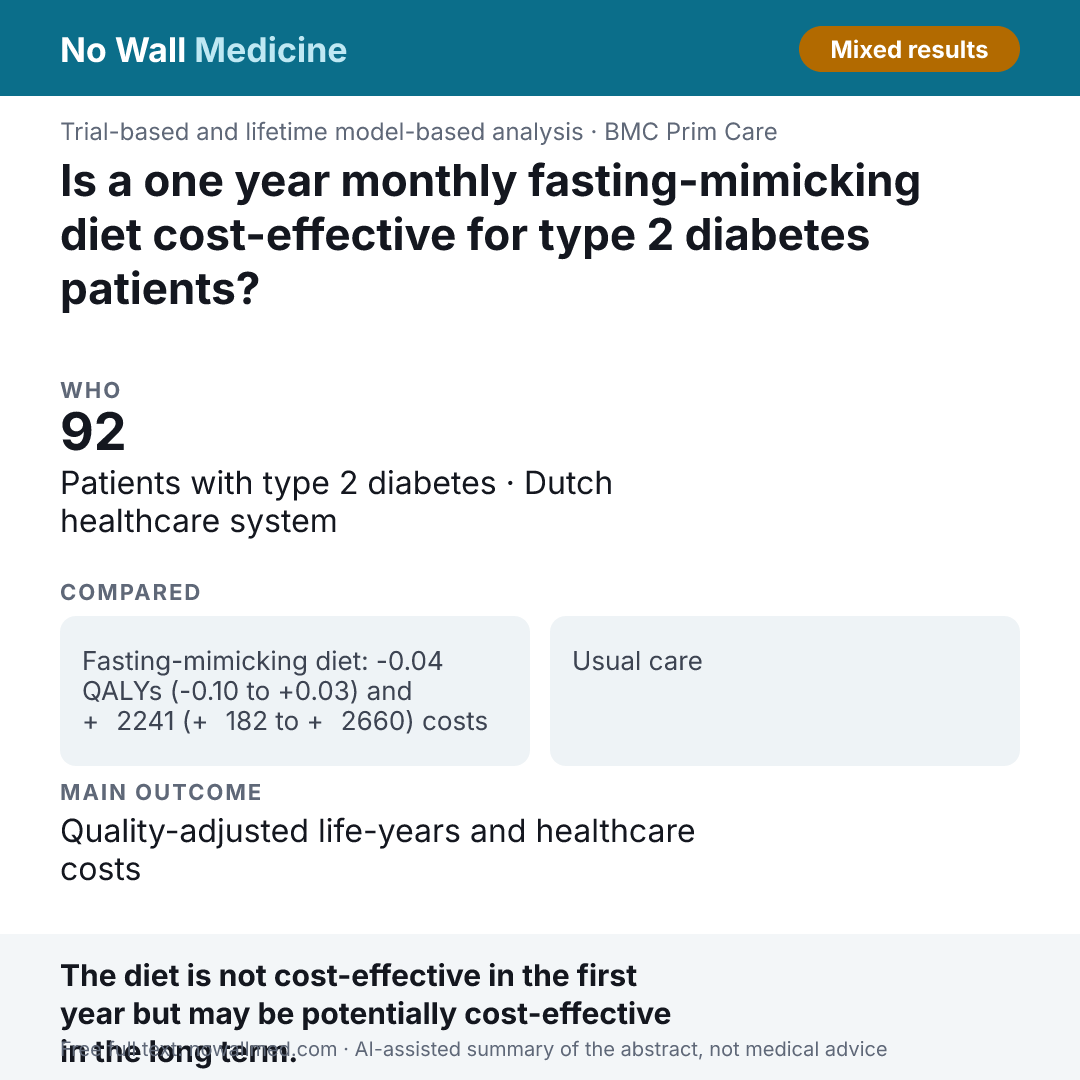
- Researchers analyzed 92 patients with type 2 diabetes receiving a one-year monthly five-day fasting-mimicking diet compared to usual care.
- In the one-year trial analysis, quality-adjusted life-years were insignificantly lower (-0.04, 95% CI -0.10 to +0.03) and healthcare costs were significantly higher (+€2241, 95% CI +182 to +2660).
- Lifetime modeling predicted insignificantly higher quality-adjusted life-years (+0.16, 95% CI -1.16 to +1.48) and insignificantly higher costs (+€1336, 95% CI -753 to +3425).
Limitation the authors note: The authors state that the conclusion should be interpreted with caution due to the small sample size.
Discussion prompts
- Would these patients look like yours? Who was left out?
- Is the main outcome one that matters to patients?
- Is the difference large enough to change what you do?
Cite: van den Burg EL, van Peet PG, Schoonakker MP, et al. Cost-effectiveness of a periodic fasting-mimicking diet programme in patients with type 2 diabetes: a trial-based analysis and a lifetime model-based analysis. BMC Prim Care. 2025;26(1):351. doi:10.1186/s12875-025-03027-1
Free full text: PubMed Central · Summary and visual abstract: nowallmed.com/a/cost-effectiveness-of-a-periodic-fasting-mimicking-diet-programme-in-21noy/ (AI-assisted from the abstract; check the paper before relying on it).