Evidence for cost-effectiveness of electronic patient-reported outcome measures in cancer care remains limited
Cost-Effectiveness of Electronic Patient-Reported Outcome Measure Interventions in Cancer: Systematic Review and Parameter Extraction for Economic Modeling
Systematic review and parameter extractionMixed results
Are electronic patient-reported outcome measure interventions cost-effective in cancer care?
Who
Adult cancer populations
Compared
electronic patient-reported outcome measures
standard care
Main outcome
cost-effectiveness
Bottom line: Evidence is limited, but some interventions show cost-effectiveness through reduced hospitalizations and improved quality of life.
Limitation: The evidence base remains limited and qualitative research rarely addressed economic questions.
J Med Internet Res · 2026-09-11Download image
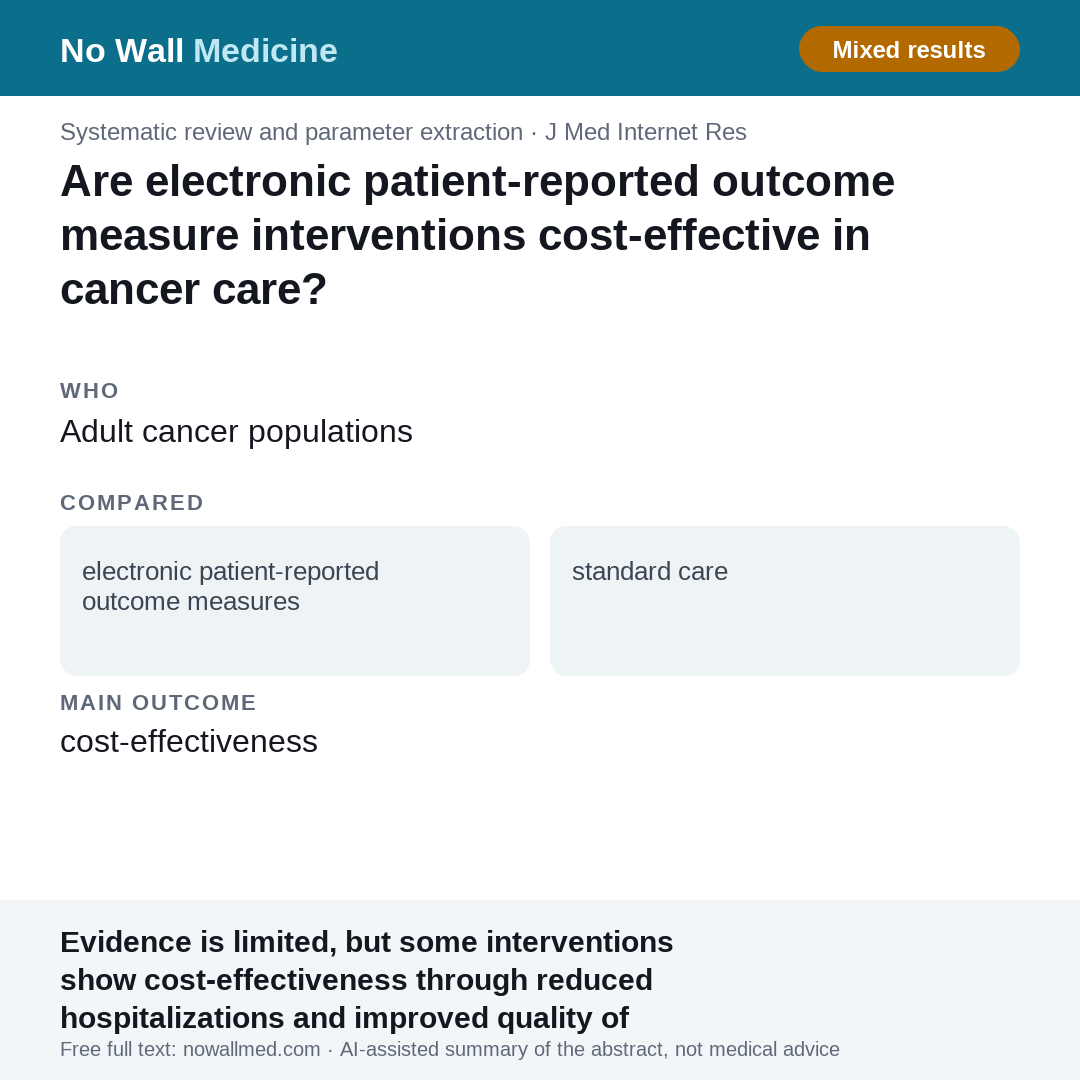
Clinical question: Are electronic patient-reported outcome measure interventions cost-effective in cancer care?
Why it matters: More research is needed on the cost-effectiveness of using digital symptom monitoring systems in cancer care.
Key points
- Researchers reviewed 27 unique studies and 34 publications to evaluate the economic impact of electronic patient-reported outcome measures, which are digital tools for patients to report their symptoms.
- Of five full cost-effectiveness analyses, three showed highly uncertain results with no clear differences, while two showed cost-effectiveness through improved quality of life and fewer hospitalizations.
- Four of five publications reporting partial economic results found that these digital tools led to lower costs and health resource use, primarily by reducing hospital stays.
Limitation the authors note: The evidence base for the cost-effectiveness of these digital interventions remains limited.
Headline and key points written with AI from the paper’s abstract, with every number checked against it. Read the paper before relying on them.
Topics
Cite this article
Atter M, Bullen A, Cresswell K, Hall PS. Cost-Effectiveness of Electronic Patient-Reported Outcome Measure Interventions in Cancer: Systematic Review and Parameter Extraction for Economic Modeling. J Med Internet Res. 2026. doi:10.2196/100505
Spotted a mistake? Suggest a correction