Genetic analysis of 456,000 people identifies thousands of signals linked to liver function biomarkers
Cross-ancestry genome-wide association studies of liver function biomarkers uncover pleiotropic variants, systemic disease links and therapeutic targets
Cross-ancestry genome-wide association studies meta-analysesBenefit found
What is the genetic architecture of seven liver function-related quantitative biomarkers?
Who
456,000
Individuals of East Asian, European, South Asian, and African ancestries
Compared
5,507Lead signals (P < 5 × 10⁻⁹)
210Novel lead signals
Main outcome
Genetic architecture of seven liver function-related quantitative biomarkers
Bottom line: Cross-ancestry meta-analyses identified 5,507 lead signals and prioritized genes for potential liver disease therapies.
Genome Med · 2026-02-13Download image
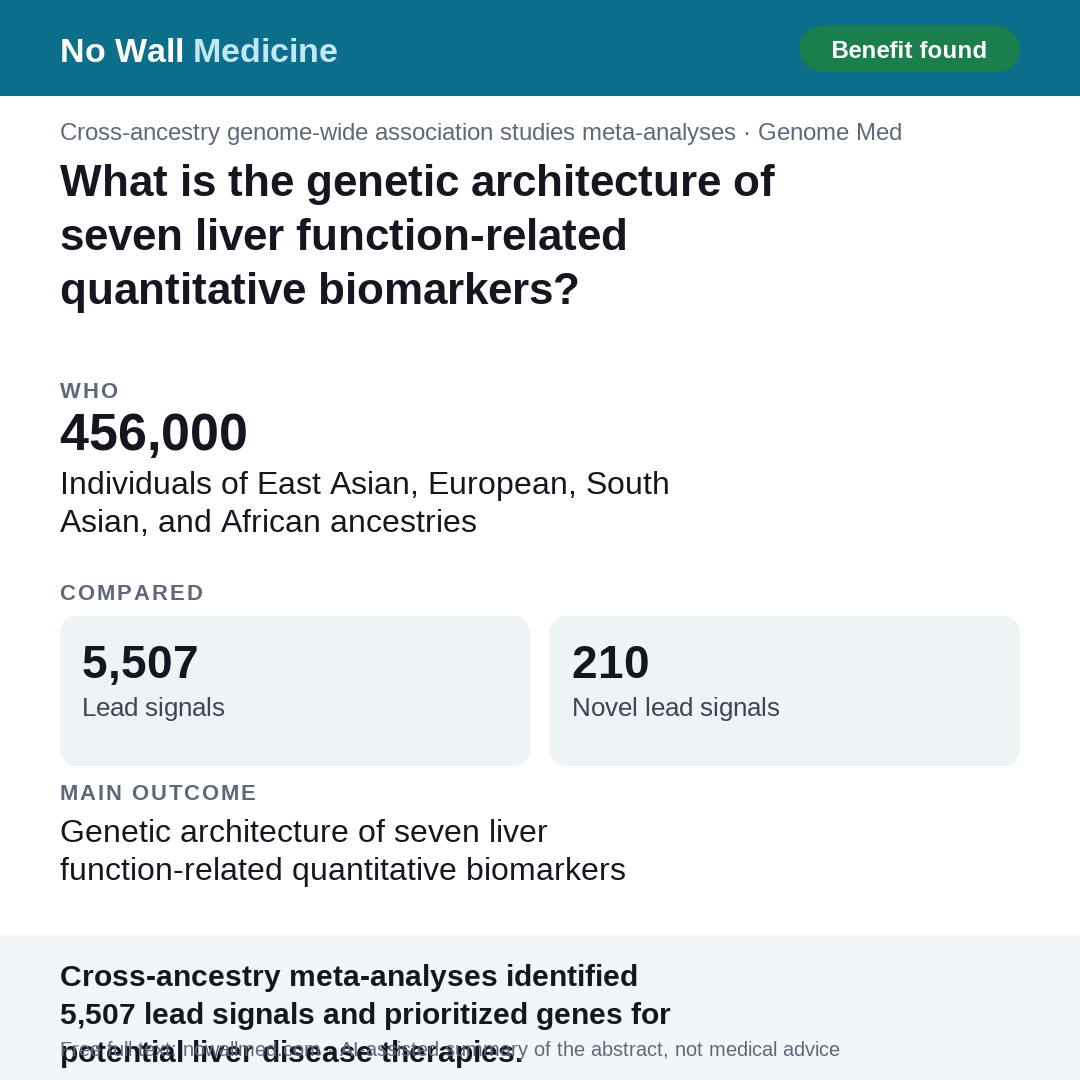
Clinical question: What is the genetic architecture of seven liver function-related quantitative biomarkers?
Why it matters: Prior genome-wide association studies have largely studied liver function-related quantitative biomarkers in isolation rather than looking at their shared genetic architecture.
Key points
- Researchers performed meta-analyses on seven liver function-related quantitative biomarkers in approximately 456,000 individuals from East Asian, European, South Asian, and African ancestries.
- The study identified 5,507 lead signals, including 210 novel ones, and 2,012 putative causal variants through fine-mapping.
- Mendelian randomization analysis suggested the PEPD protein has therapeutic potential for metabolic dysfunction-associated steatotic liver disease (P = 2.24 × 10⁻⁵) and cirrhosis (P = 4.36 × 10⁻³).
Headline and key points written with AI from the paper’s abstract, with every number checked against it. Read the paper before relying on them.
Topics
Cite this article
Yao W, Fan J, Lu J, Guo H, Yu C, Wang X. Cross-ancestry genome-wide association studies of liver function biomarkers uncover pleiotropic variants, systemic disease links and therapeutic targets. Genome Med. 2026. doi:10.1186/s13073-026-01606-0
Spotted a mistake? Suggest a correction