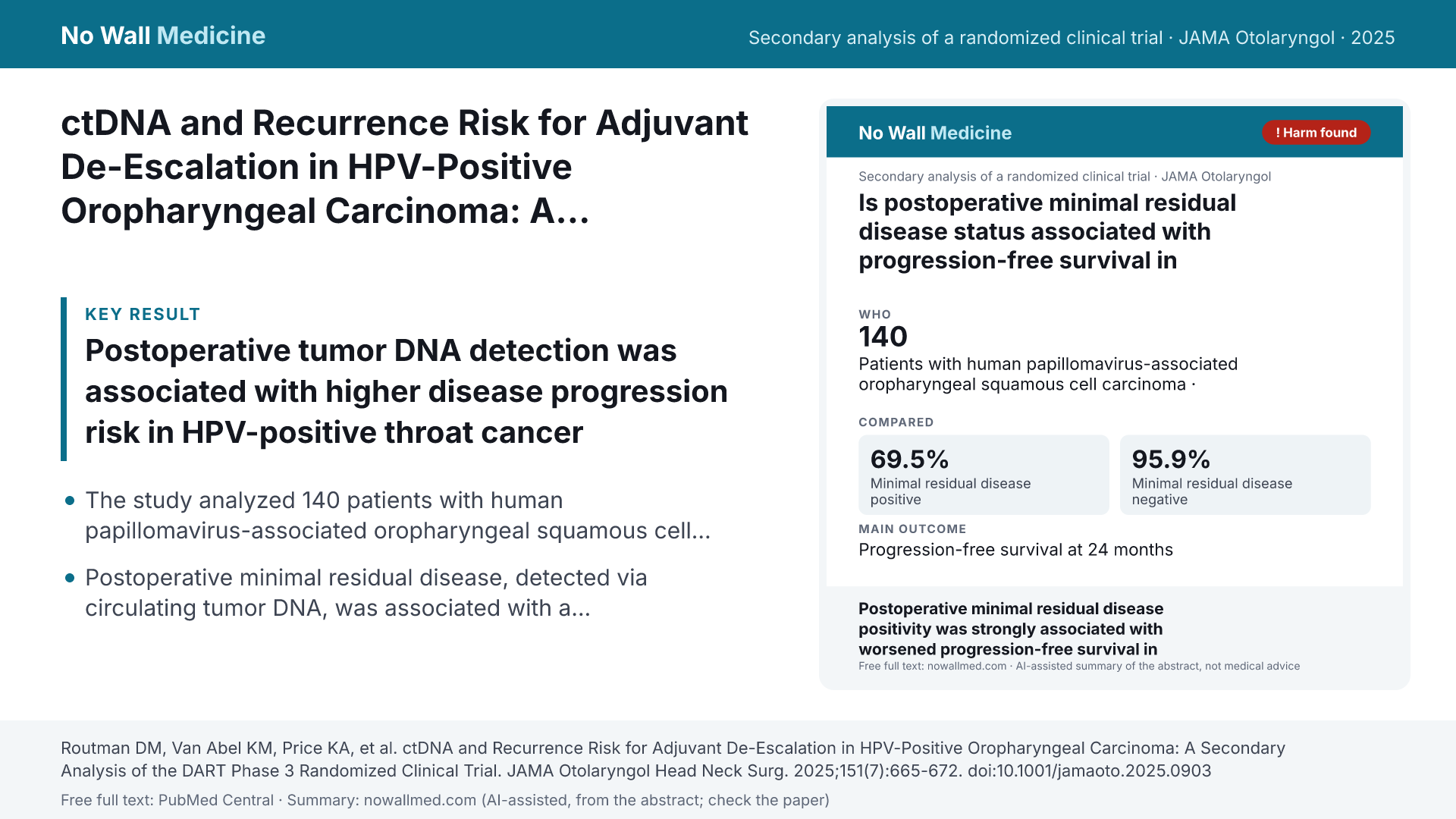
Postoperative tumor DNA detection was associated with higher disease progression risk in HPV-positive throat cancer
ctDNA and Recurrence Risk for Adjuvant De-Escalation in HPV-Positive Oropharyngeal Carcinoma: A Secondary Analysis of the DART Phase 3 Randomized Clinical Trial
Secondary analysis of a randomized clinical trialHarm found
Is postoperative minimal residual disease status associated with progression-free survival in HPV-positive oropharyngeal squamous cell carcinoma?
Who
140
Patients with human papillomavirus-associated oropharyngeal squamous cell carcinoma · Multiple sites in the United States
Compared
69.5%Minimal residual disease positive
95.9%Minimal residual disease negative
Main outcome
Progression-free survival at 24 months
Result: hazard ratio 0.19 (95% CI, 0.06-0.59)
Bottom line: Postoperative minimal residual disease positivity was strongly associated with worsened progression-free survival in patients with human papillomavirus-associated oropharyngeal squamous cell carcinoma.
JAMA Otolaryngol · 2025-05-22Download image
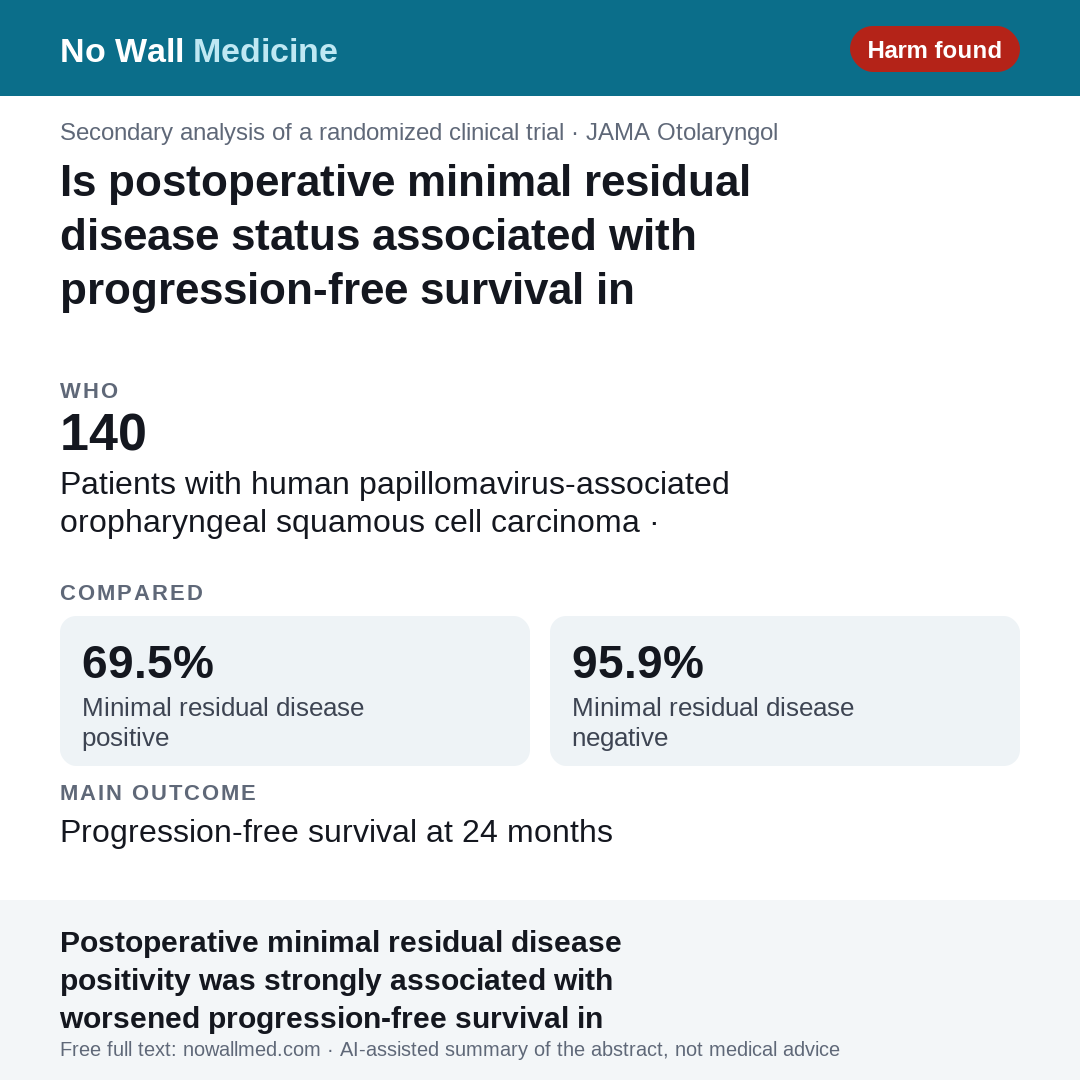
Clinical question: Is postoperative minimal residual disease status associated with progression-free survival in HPV-positive oropharyngeal squamous cell carcinoma?
Why it matters: It is unclear how postoperative circulating tumor DNA assessment can be used to personalize treatment intensity or improve patient selection for de-escalating radiation therapy.
Key points
- The study analyzed 140 patients with human papillomavirus-associated oropharyngeal squamous cell carcinoma who received either de-escalated radiation or standard of care.
- Postoperative minimal residual disease, detected via circulating tumor DNA, was associated with a 24-month progression-free survival rate of 69.5% compared to 95.9% for those without detectable disease.
- In the de-escalated radiation group, 24-month progression-free survival was 68.4% for patients with detectable tumor DNA versus 92.6% for those without.
Headline and key points written with AI from the paper’s abstract, with every number checked against it. Read the paper before relying on them.
Was this summary helpful?
Subject terms
Cite this article
Routman DM, Van Abel KM, Price KA, Moore EJ, Patel SH, Hinni ML. ctDNA and Recurrence Risk for Adjuvant De-Escalation in HPV-Positive Oropharyngeal Carcinoma: A Secondary Analysis of the DART Phase 3 Randomized Clinical Trial. JAMA Otolaryngol. 2025. doi:10.1001/jamaoto.2025.0903
Spotted a mistake? Suggest a correction
Top studies every Monday
The week’s key trials and guidelines in your specialties, plus any topics you follow. By email, free.
Get the weekly digest