Cure and Hormonal Control After Prolactinoma Resection: Case Series and Systematic Review
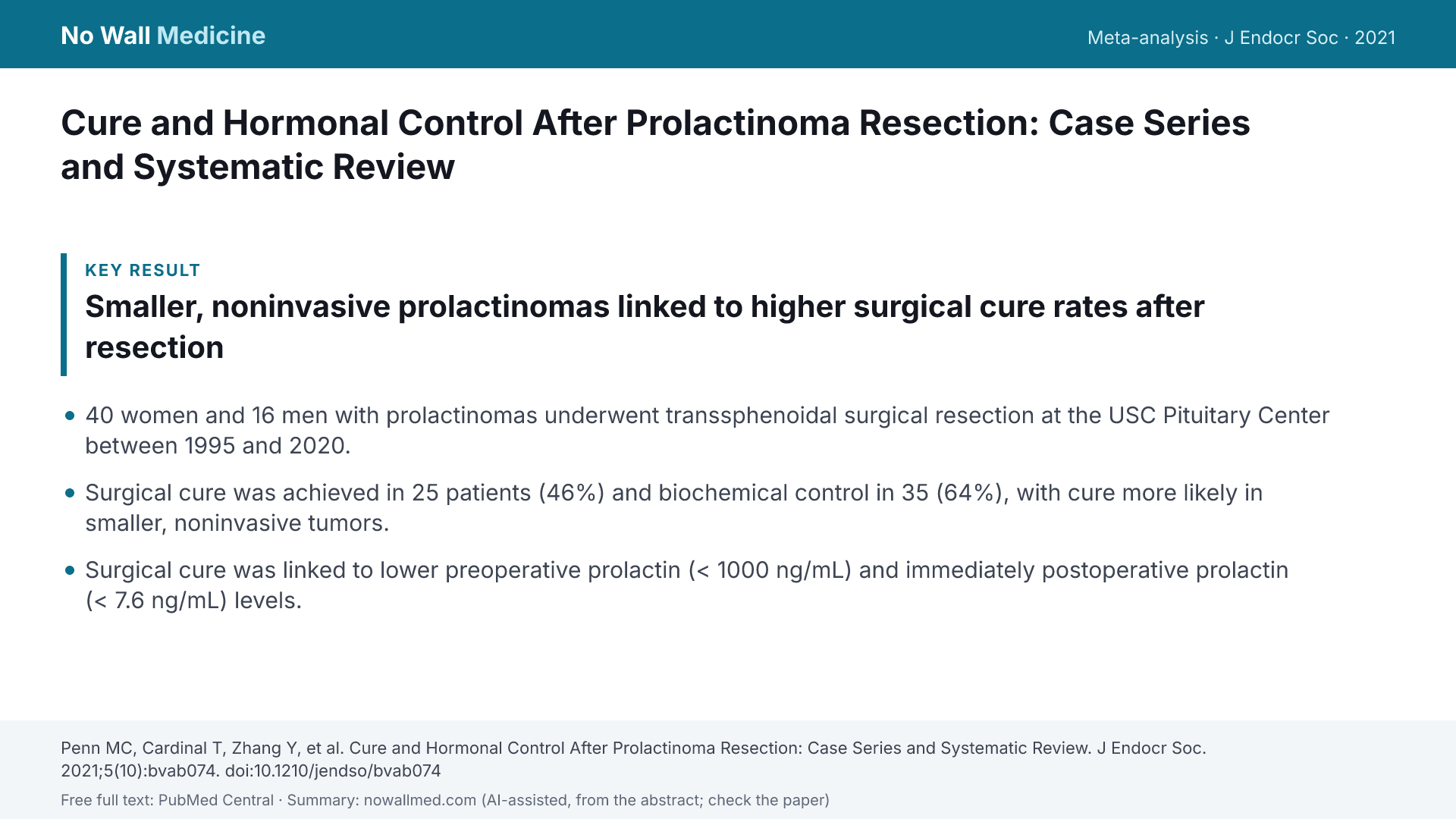
Key result: Smaller, noninvasive prolactinomas linked to higher surgical cure rates after resection
Key points
- 40 women and 16 men with prolactinomas underwent transsphenoidal surgical resection at the USC Pituitary Center between 1995 and 2020.
- Surgical cure was achieved in 25 patients (46%) and biochemical control in 35 (64%), with cure more likely in smaller, noninvasive tumors.
- Surgical cure was linked to lower preoperative prolactin (< 1000 ng/mL) and immediately postoperative prolactin (< 7.6 ng/mL) levels.
Why it matters: Predictors of surgical cure and biochemical remission following transsphenoidal surgical resection for prolactinomas remain sparse in the literature.
Limitation the authors note: The study was a retrospective review of patients at a single center.
Discussion prompts
- Would these patients look like yours? Who was left out?
- Is the main outcome one that matters to patients?
- Is the difference large enough to change what you do?
Cite: Penn MC, Cardinal T, Zhang Y, et al. Cure and Hormonal Control After Prolactinoma Resection: Case Series and Systematic Review. J Endocr Soc. 2021. doi:10.1210/jendso/bvab074
Free full text: PubMed Central · Summary and visual abstract: nowallmed.com/a/cure-and-hormonal-control-after-prolactinoma-resection-case-series-1au7we1/ (AI-assisted from the abstract; check the paper before relying on it).