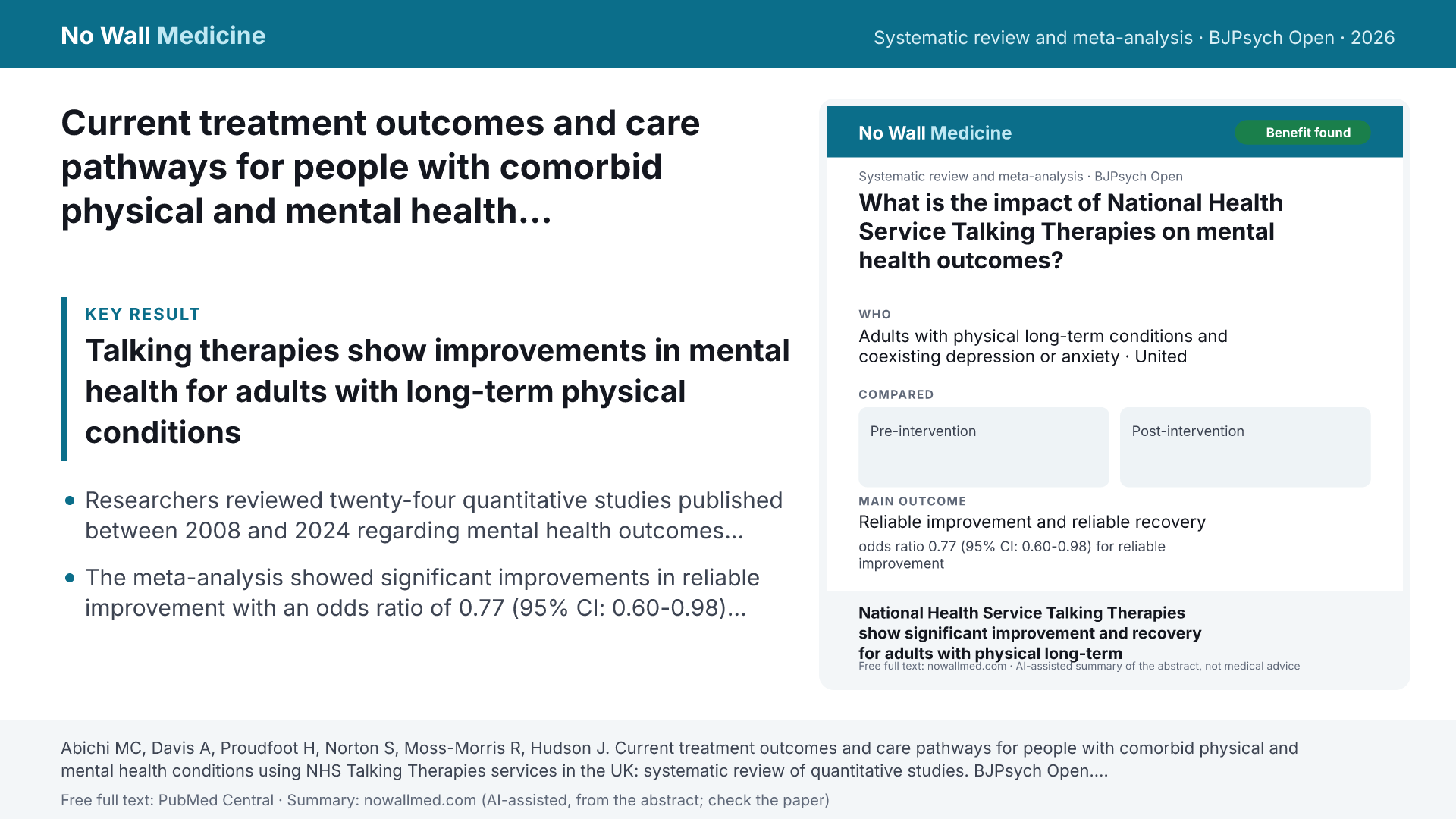
Talking therapies show improvements in mental health for adults with long-term physical conditions
Current treatment outcomes and care pathways for people with comorbid physical and mental health conditions using NHS Talking Therapies services in the UK: systematic review of quantitative studies
Systematic review and meta-analysisBenefit found
What is the impact of National Health Service Talking Therapies on mental health outcomes?
Who
Adults with physical long-term conditions and coexisting depression or anxiety · United Kingdom
Compared
Pre-intervention
Post-intervention
Main outcome
Reliable improvement and reliable recovery
Result: odds ratio 0.77 (95% CI: 0.60-0.98) for reliable improvement
Bottom line: National Health Service Talking Therapies show significant improvement and recovery for adults with physical long-term conditions.
Limitation: Heterogeneity between the studies was high (>90%).
BJPsych Open · 2026-02-05Download image
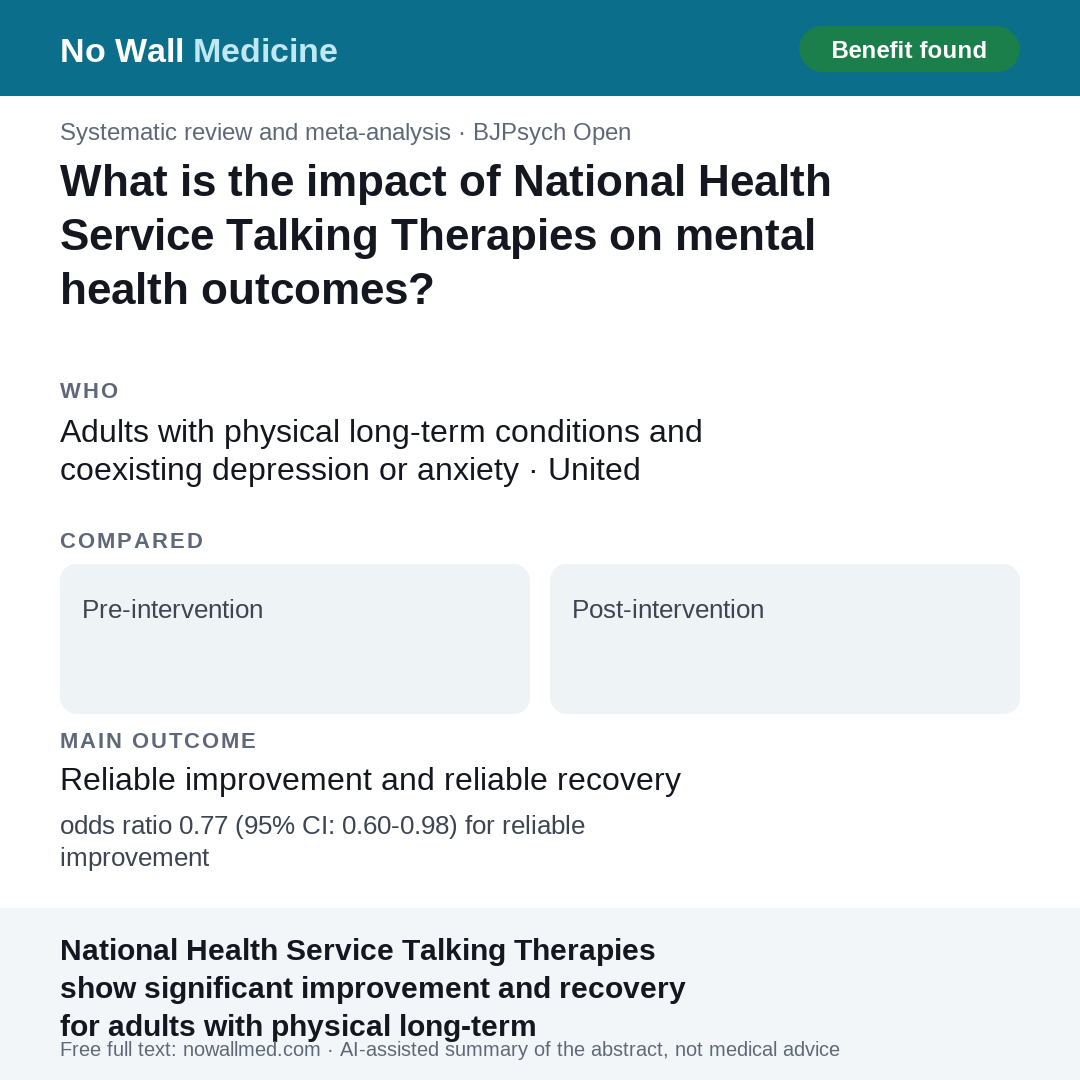
Clinical question: What is the impact of National Health Service Talking Therapies on mental health outcomes?
Why it matters: Evidence regarding the effectiveness of National Health Service Talking Therapies for people with long-term physical conditions has remained inconsistent.
Key points
- Researchers reviewed twenty-four quantitative studies published between 2008 and 2024 regarding mental health outcomes for adults with long-term physical conditions.
- The meta-analysis showed significant improvements in reliable improvement with an odds ratio of 0.77 (95% CI: 0.60-0.98) and reliable recovery with an odds ratio of 0.80 (CI: 0.68-0.95).
- There were no significant differences in treatment engagement or accessibility between participants with and without long-term physical conditions (odds ratio 0.97, 95% CI: 0.82-1.14).
Limitation the authors note: The researchers noted that heterogeneity, or the variation between the different studies, was high at more than 90%.
Headline and key points written with AI from the paper’s abstract, with every number checked against it. Read the paper before relying on them.
Was this summary helpful?
Cite this article
Abichi MC, Davis A, Proudfoot H, Norton S, Moss-Morris R, Hudson J. Current treatment outcomes and care pathways for people with comorbid physical and mental health conditions using NHS Talking Therapies services in the UK: systematic review of quantitative studies. BJPsych Open. 2026. doi:10.1192/bjo.2025.10957
Spotted a mistake? Suggest a correction