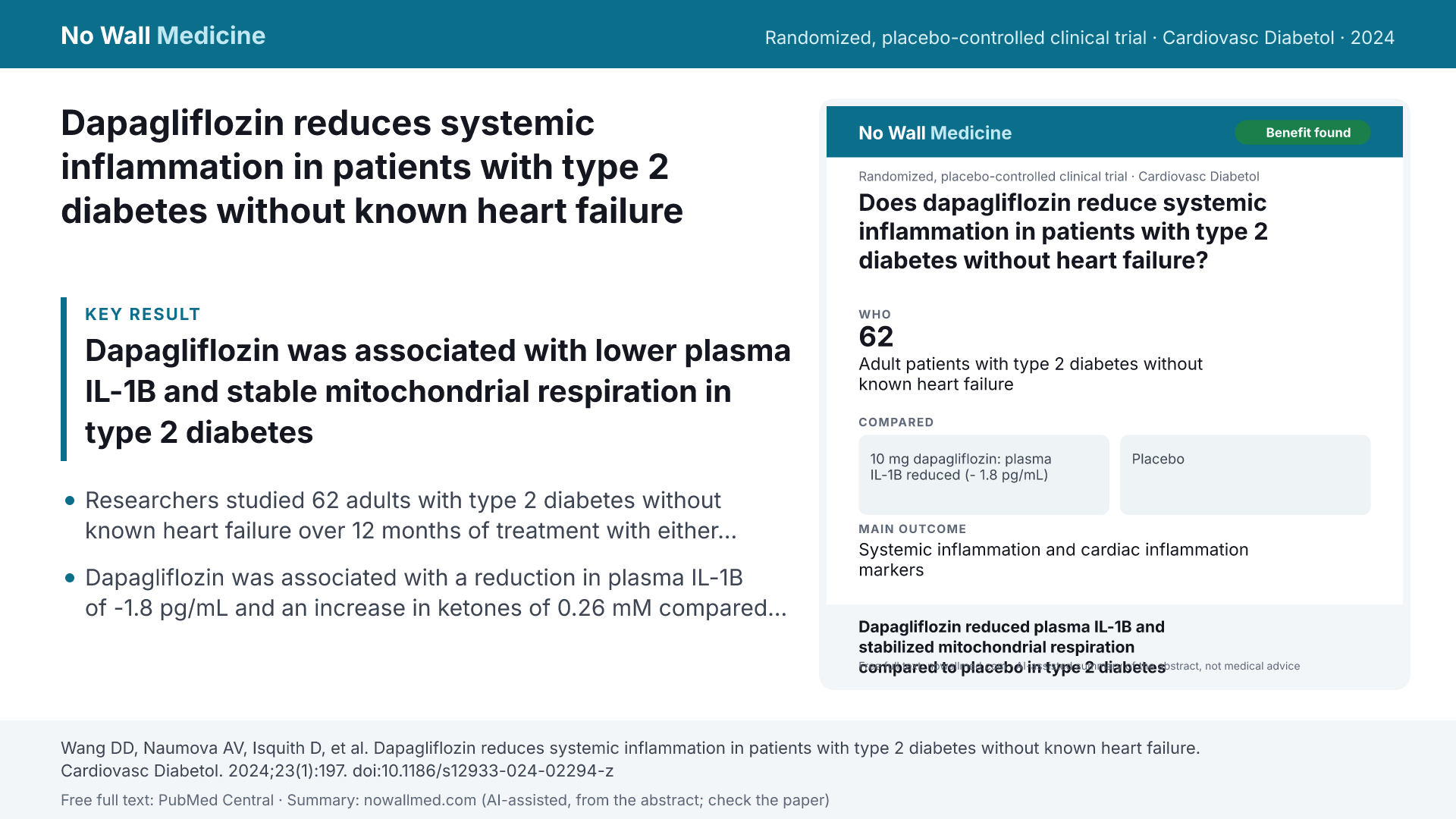
Dapagliflozin was associated with lower plasma IL-1B and stable mitochondrial respiration in type 2 diabetes
Dapagliflozin reduces systemic inflammation in patients with type 2 diabetes without known heart failure
Randomized, placebo-controlled clinical trialBenefit found
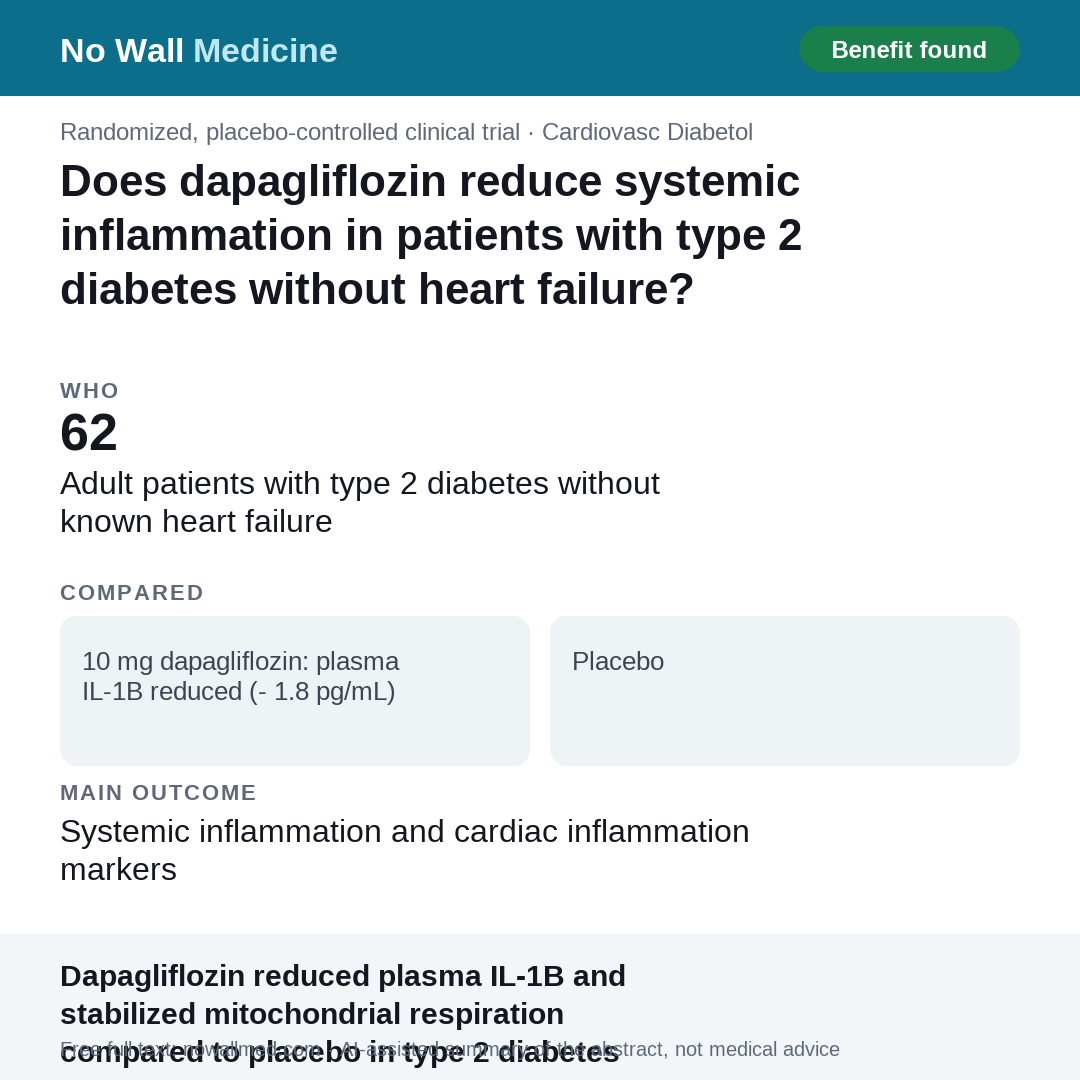
Does dapagliflozin reduce systemic inflammation in patients with type 2 diabetes without heart failure?
Who
62
Adult patients with type 2 diabetes without known heart failure
Compared
10 mg dapagliflozin: plasma IL-1B reduced (- 1.8 pg/mL)
Placebo
Main outcome
Systemic inflammation and cardiac inflammation markers
Bottom line: Dapagliflozin reduced plasma IL-1B and stabilized mitochondrial respiration compared to placebo in type 2 diabetes patients.
Cardiovasc Diabetol · 2024-06-07Download image
Clinical question: Does dapagliflozin reduce systemic inflammation in patients with type 2 diabetes without heart failure?
Key points
- Researchers studied 62 adults with type 2 diabetes without known heart failure over 12 months of treatment with either 10 mg dapagliflozin or a placebo.
- Dapagliflozin was associated with a reduction in plasma IL-1B of -1.8 pg/mL and an increase in ketones of 0.26 mM compared to baseline.
- In the dapagliflozin group, peripheral blood mononuclear cell maximal oxygen consumption rate did not change, whereas it decreased by -158.9 pmole/min/106 cells in the placebo group.
Headline and key points written with AI from the paper’s abstract, with every number checked against it. Read the paper before relying on them.
Was this summary helpful?
Subject terms
Cite this article
Wang DD, Naumova AV, Isquith D, et al. Dapagliflozin reduces systemic inflammation in patients with type 2 diabetes without known heart failure. Cardiovasc Diabetol. 2024. doi:10.1186/s12933-024-02294-z
Spotted a mistake? Suggest a correction