Randomized trial to compare diagnostic CT scans with standard CT simulation for palliative radiation planning
DART: diagnostic-CT-enabled planning: a randomized trial in palliative radiation therapy (study protocol)
Randomized, phase II studyUnclear result
Is diagnostic-CT-enabled planning effective and acceptable compared to conventional CT simulation planning?
Who
33
Patients receiving palliative radiation therapy to bone, soft tissue and lung disease
Compared
conventional CT simulation
diagnostic CT enabled planning workflow
Main outcome
amount of time the patient spends at the cancer centre
Bottom line: This study protocol aims to assess the efficacy and acceptability of using diagnostic CT for palliative radiation planning.
BMC Palliat Care · 2022-12-09Download image
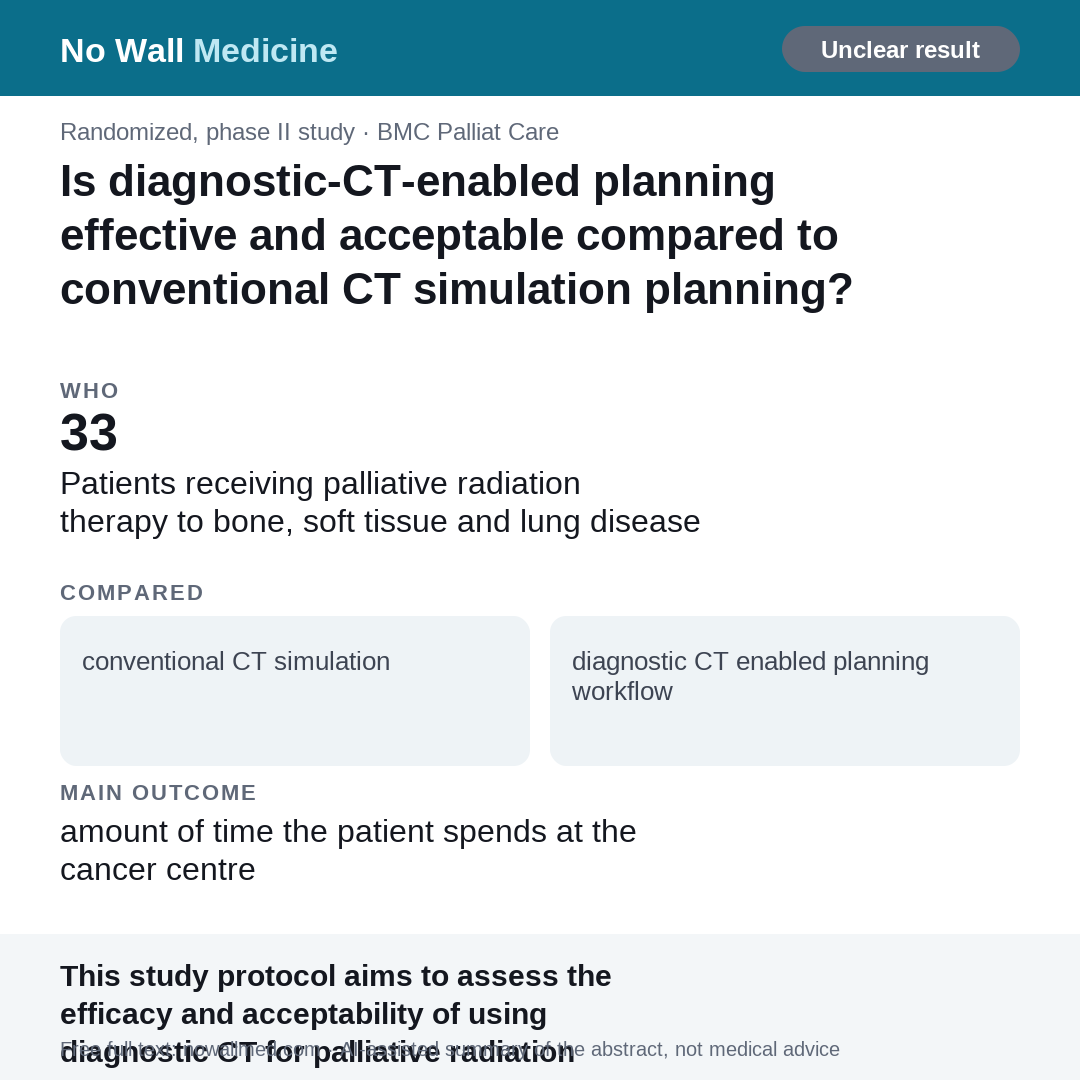
Clinical question: Is diagnostic-CT-enabled planning effective and acceptable compared to conventional CT simulation planning?
Why it matters: Standard radiation planning requires a dedicated CT simulation scan that can create bottlenecks and delay the start of palliative radiation therapy.
Key points
- The study will randomize 33 patients receiving palliative radiation therapy for bone, soft tissue, or lung disease into two different planning workflows.
- Researchers will compare the time patients spend at the cancer centre between conventional CT simulation and planning using existing diagnostic CT scans.
- Secondary measures include the rate of plan deliverability, plan acceptability through blinded dose review, and stakeholder perceptions from patients and clinicians.
Headline and key points written with AI from the paper’s abstract, with every number checked against it. Read the paper before relying on them.
Was this summary helpful?
Subject terms
Cite this article
O'Neil M, Nguyen TK, Laba J, Dinniwell R, Warner A, Palma DA. DART: diagnostic-CT-enabled planning: a randomized trial in palliative radiation therapy (study protocol). BMC Palliat Care. 2022. doi:10.1186/s12904-022-01115-y
Spotted a mistake? Suggest a correction
Top studies every Monday
The week’s key trials and guidelines in your specialties, plus any topics you follow. By email, free.
Get the weekly digest