Data-informed debriefing improved CPR quality during simulated pediatric cardiac arrest compared to traditional debriefing
Data-informed debriefing for cardiopulmonary arrest: A randomized controlled trial
Prospective, randomized trialBenefit found
Does data-informed debriefing improve care during simulated pediatric cardiac arrest?
Who
80
Healthcare teams managing simulated pediatric cardiac arrest
Compared
53.8%Traditional debriefing
78.7%Data-informed debriefing
Main outcome
Percentage of overall excellent cardiopulmonary resuscitation
Result: MD 24.9%, 95%CI: 5.4 to 44.4%
Bottom line: Data-informed debriefing improves cardiopulmonary resuscitation quality and reduces pauses during simulated pediatric cardiac arrest.
Resusc Plus · 2023-05-25Download image
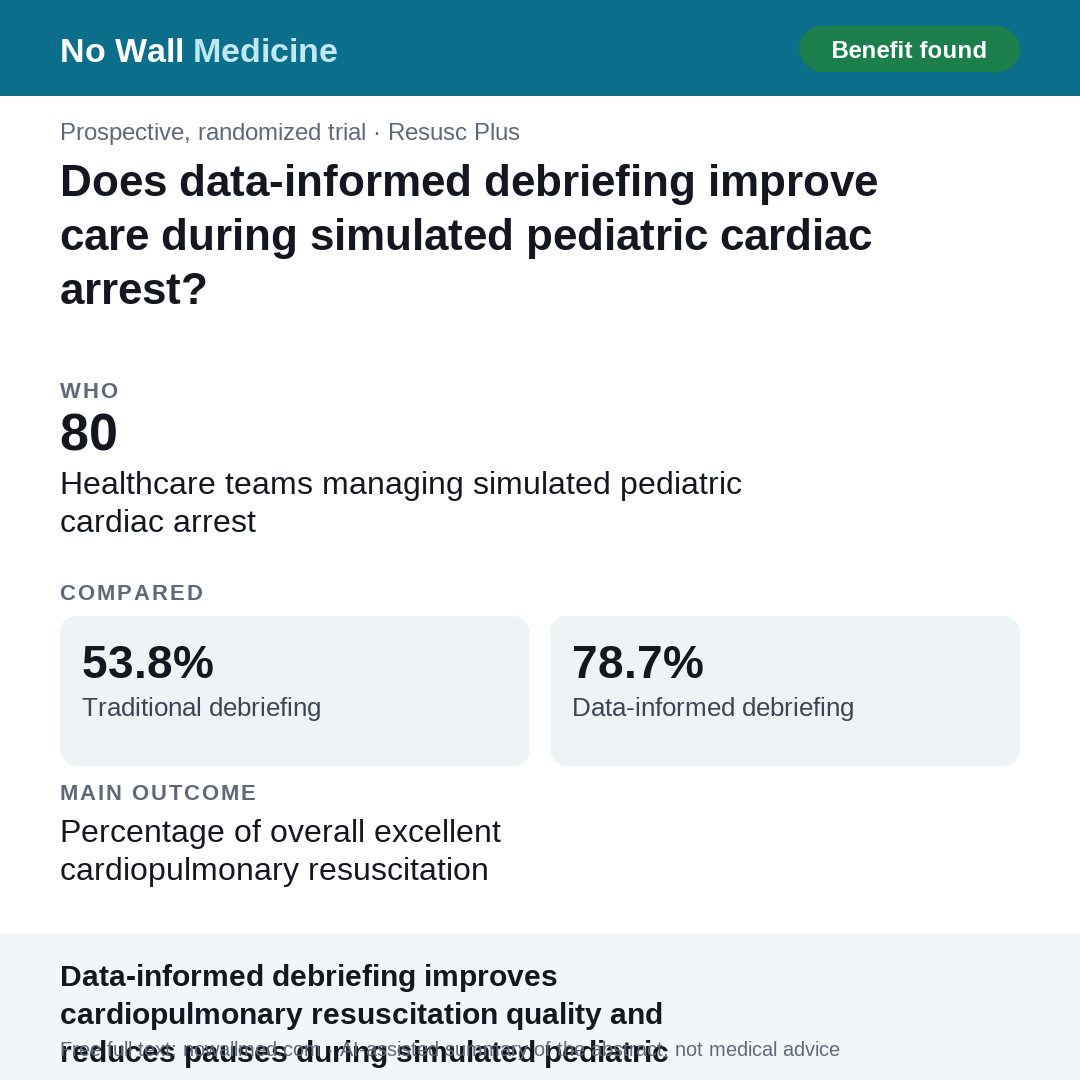
Clinical question: Does data-informed debriefing improve care during simulated pediatric cardiac arrest?
Why it matters: It was unknown if using a debriefing tool supported by data improves the quality of care provided during pediatric cardiac arrest simulations.
Key points
- Researchers studied 20 teams of 80 participants who performed simulated pediatric cardiac arrests and received either traditional or data-informed debriefing.
- The data-informed group had 78.7% overall excellent CPR compared to 53.8% in the traditional group and showed better guideline-compliant compression depth.
- Data-informed debriefing was associated with a 3.7 s peri-shock pause duration compared to 5.8 s in the control group, but time to critical interventions showed no significant difference.
Headline and key points written with AI from the paper’s abstract, with every number checked against it. Read the paper before relying on them.
Was this summary helpful?
Cite this article
Cheng A, Davidson J, Wan B, St-Onge-St-Hilaire A, Lin Y. Data-informed debriefing for cardiopulmonary arrest: A randomized controlled trial. Resusc Plus. 2023. doi:10.1016/j.resplu.2023.100401
Spotted a mistake? Suggest a correction
Top studies every Monday
The week’s key trials and guidelines in your specialties, plus any topics you follow. By email, free.
Get the weekly digest