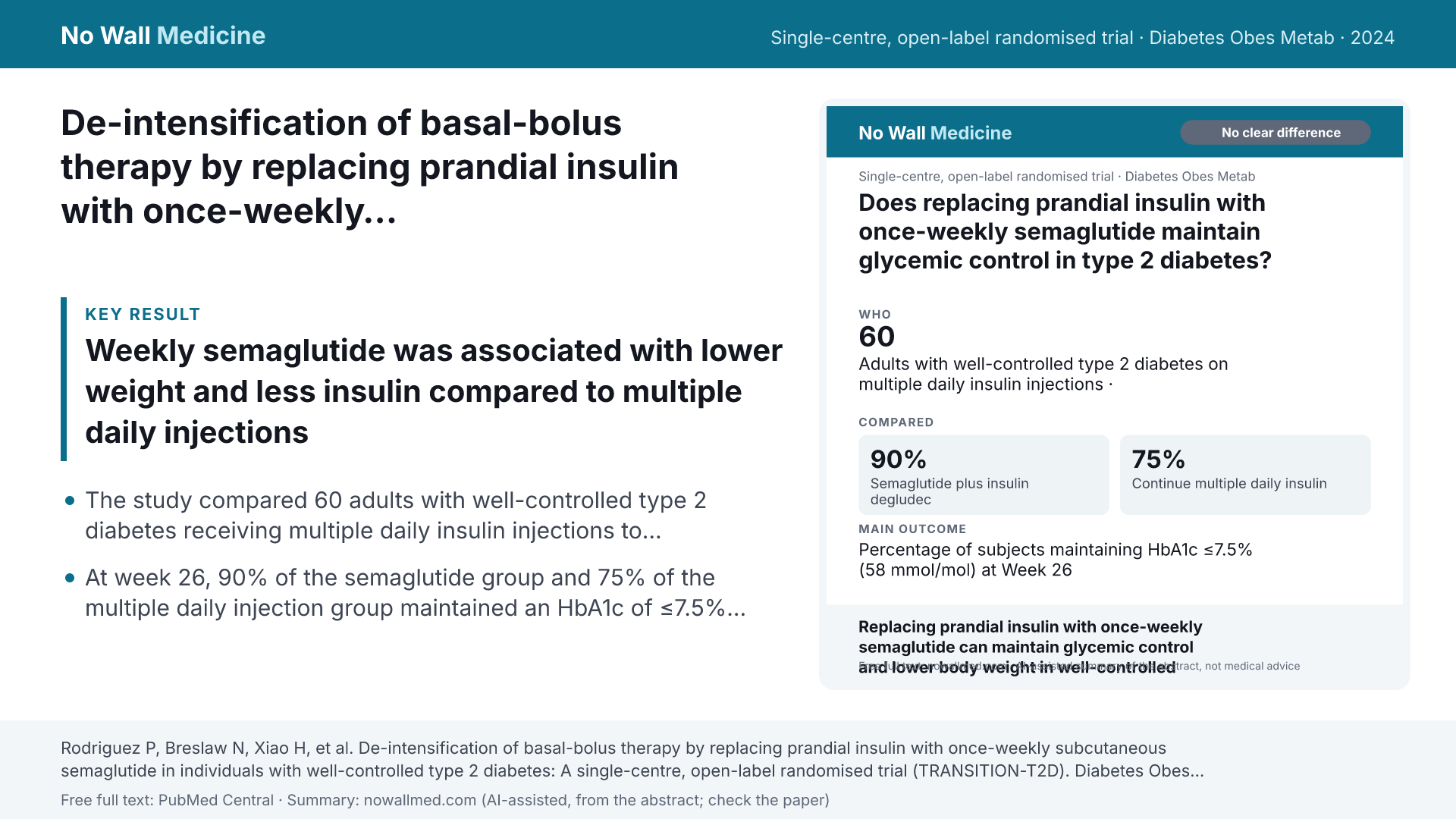
Weekly semaglutide was associated with lower weight and less insulin compared to multiple daily injections
De-intensification of basal-bolus therapy by replacing prandial insulin with once-weekly subcutaneous semaglutide in individuals with well-controlled type 2 diabetes: A single-centre, open-label randomised trial (TRANSITION-T2D)
Single-centre, open-label randomised trialNo clear difference
Does replacing prandial insulin with once-weekly semaglutide maintain glycemic control in type 2 diabetes?
Who
60
Adults with well-controlled type 2 diabetes on multiple daily insulin injections · Single-centre
Compared
90%Semaglutide plus insulin degludec
75%Continue multiple daily insulin
Main outcome
Percentage of subjects maintaining HbA1c ≤7.5% (58 mmol/mol) at Week 26
Bottom line: Replacing prandial insulin with once-weekly semaglutide can maintain glycemic control and lower body weight in well-controlled type 2 diabetes.
Diabetes Obes Metab · 2024-11-12 · Save PNG
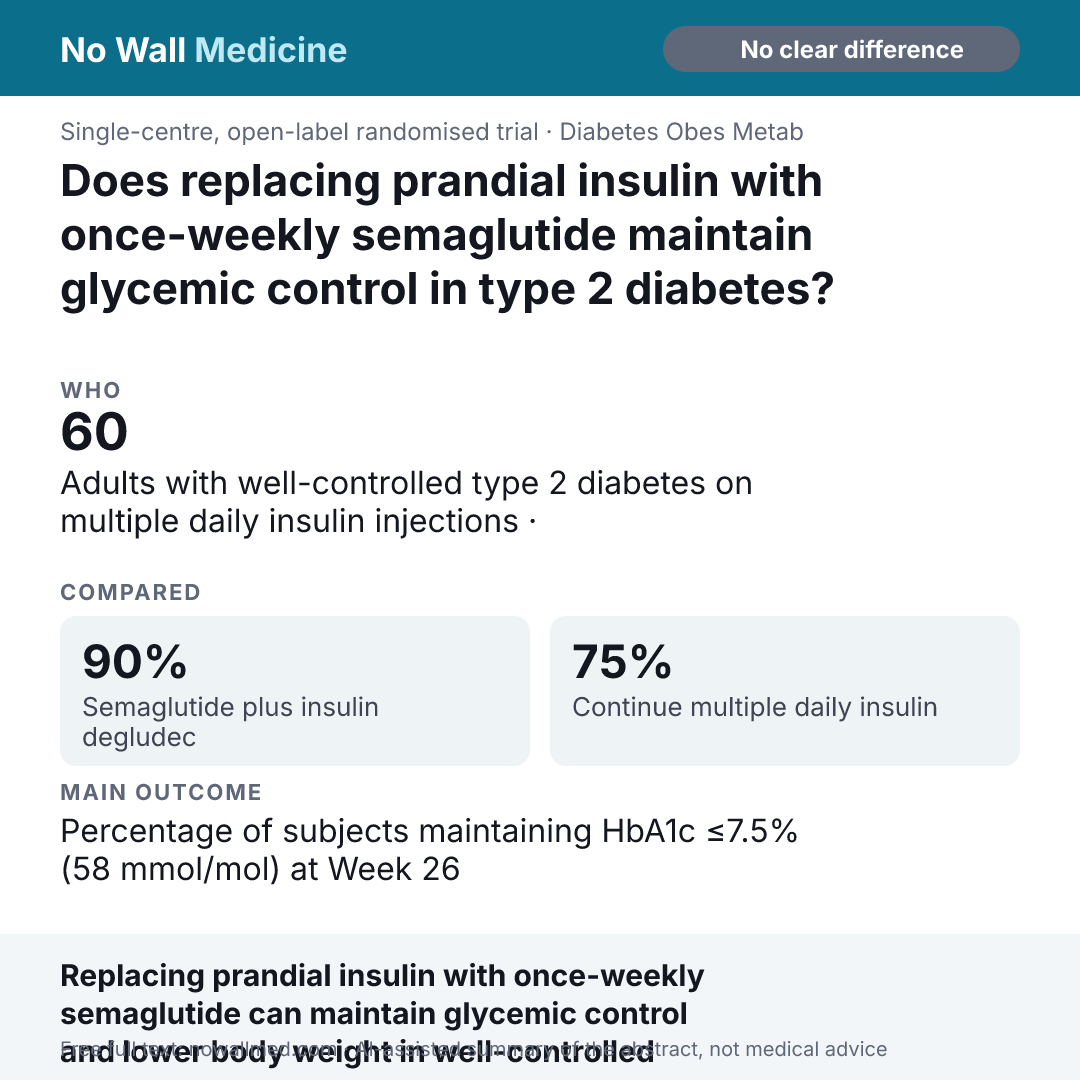
Clinical question: Does replacing prandial insulin with once-weekly semaglutide maintain glycemic control in type 2 diabetes?
Key points
- The study compared 60 adults with well-controlled type 2 diabetes receiving multiple daily insulin injections to those receiving once-weekly semaglutide plus basal insulin.
- At week 26, 90% of the semaglutide group and 75% of the multiple daily injection group maintained an HbA1c of ≤7.5% (58 mmol/mol), which was not a statistically significant difference.
- Semaglutide was associated with a mean weight change of -8.9 kg compared to a 1.5 kg increase in the multiple daily injection group.
Limitation the authors note: The study was a single-centre, open-label randomised trial.
Headline and key points written with AI from the paper’s abstract, with every number checked against it. Read the paper before relying on them.
Was this summary helpful?
Subject terms
Headline, design, result, key points, caveat and citation as plain text.
Cite this article
Rodriguez P, Breslaw N, Xiao H, et al. De-intensification of basal-bolus therapy by replacing prandial insulin with once-weekly subcutaneous semaglutide in individuals with well-controlled type 2 diabetes: A single-centre, open-label randomised trial (TRANSITION-T2D). Diabetes Obes Metab. 2025;27(2):642-651. doi:10.1111/dom.16057
Spotted a mistake? Suggest a correction