Deep learning algorithms show similar diagnostic performance to clinicians for breast and cervical cancer detection
Deep learning in image-based breast and cervical cancer detection: a systematic review and meta-analysis
Systematic review and meta-analysisKey finding
What is the diagnostic performance of deep learning for breast and cervical cancer detection?
Who
Patients undergoing breast and cervical cancer imaging
Compared
Deep learning algorithms: sensitivity 88% (95% CI 85-90%)
Deep learning algorithms: specificity 84% (79-87%)
Main outcome
Diagnostic performance of deep learning algorithms
Result: AUC 0.92 (95% CI 0.90-0.94)
Bottom line: Deep learning algorithms show acceptable diagnostic performance for detecting breast and cervical cancer using medical imaging.
Limitation: Studies had relatively poor designs and reporting, likely causing bias and overestimated performance.
NPJ Digit Med · 2022-02-15 · Save PNG
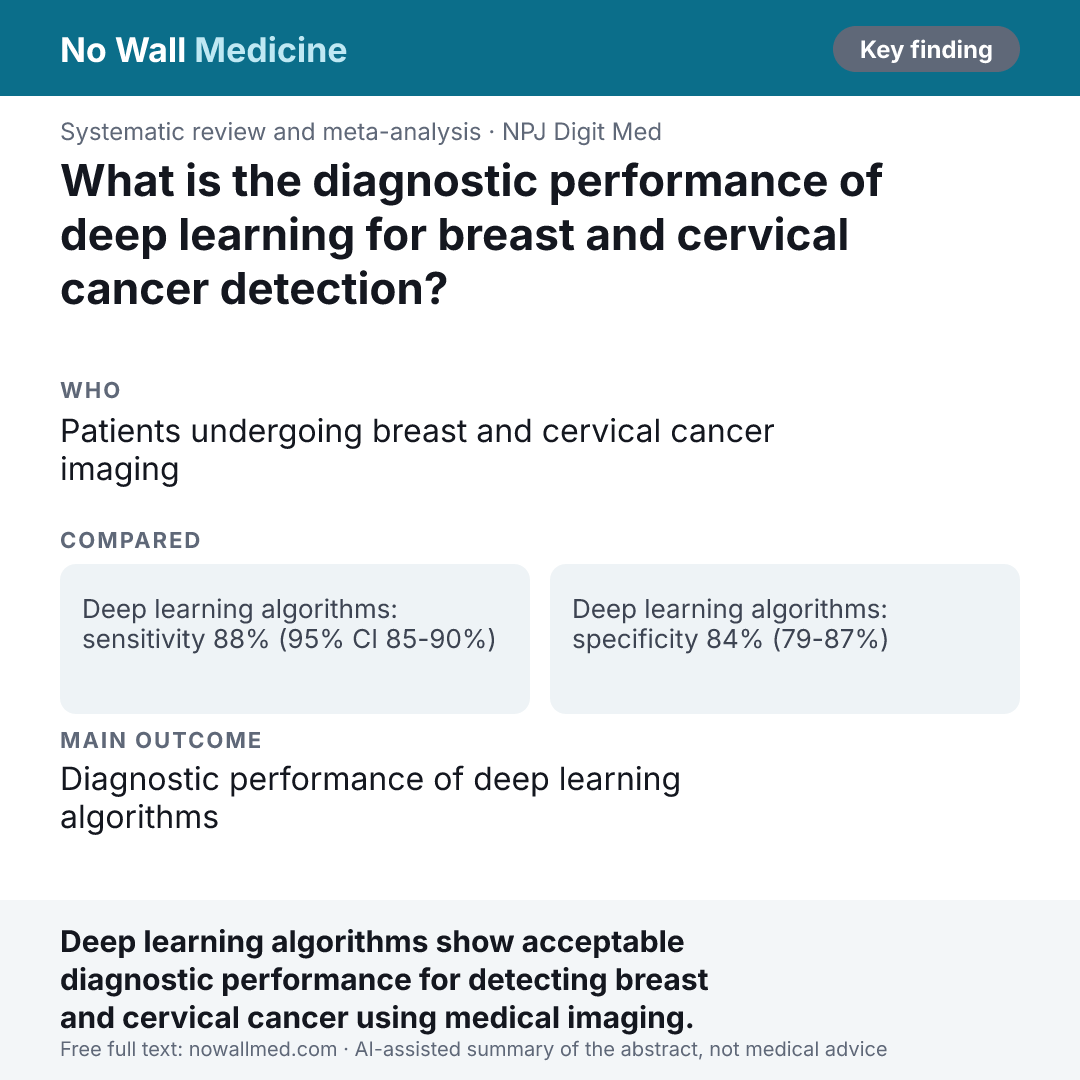
Clinical question: What is the diagnostic performance of deep learning for breast and cervical cancer detection?
Key points
- Researchers analyzed 35 studies, including 20 meta-analyzed studies, to assess how deep learning algorithms perform in identifying breast and cervical cancer through medical imaging.
- The pooled results showed a sensitivity of 88% (95% CI 85-90%), a specificity of 84% (79-87%), and an area under the curve of 0.92 (0.90-0.94).
- The performance of deep learning algorithms was found to be analogous across different cancer types, validation methods, and imaging modalities like mammography and ultrasound.
Limitation the authors note: The authors state that the studies had relatively poor designs and reporting, which likely caused bias and overestimated algorithm performance.
Headline and key points written with AI from the paper’s abstract, with every number checked against it. Read the paper before relying on them.
Was this summary helpful?
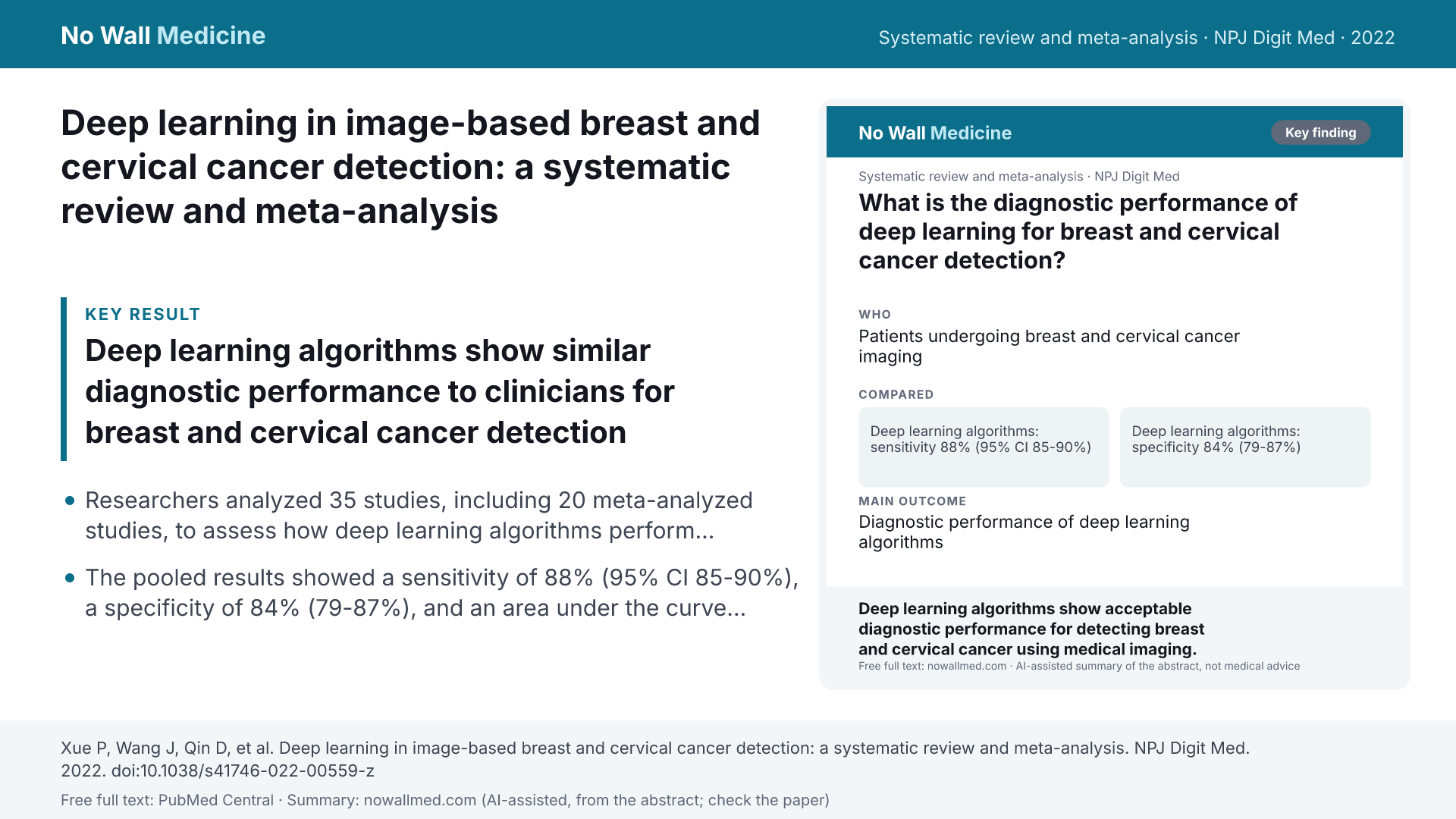
Headline, design, result, key points, caveat and citation as plain text.
Cite this article
Xue P, Wang J, Qin D, et al. Deep learning in image-based breast and cervical cancer detection: a systematic review and meta-analysis. NPJ Digit Med. 2022. doi:10.1038/s41746-022-00559-z
Spotted a mistake? Suggest a correction