Deep muscle relaxation improves surgical conditions and reduces pain during single-site hysterectomy surgery
Deep neuromuscular blockade improves surgical conditions during laparoendoscopic single-site (LESS) surgery for total hysterectomy and reduces postoperative pain: a randomized controlled trial
Randomized controlled trialBenefit found
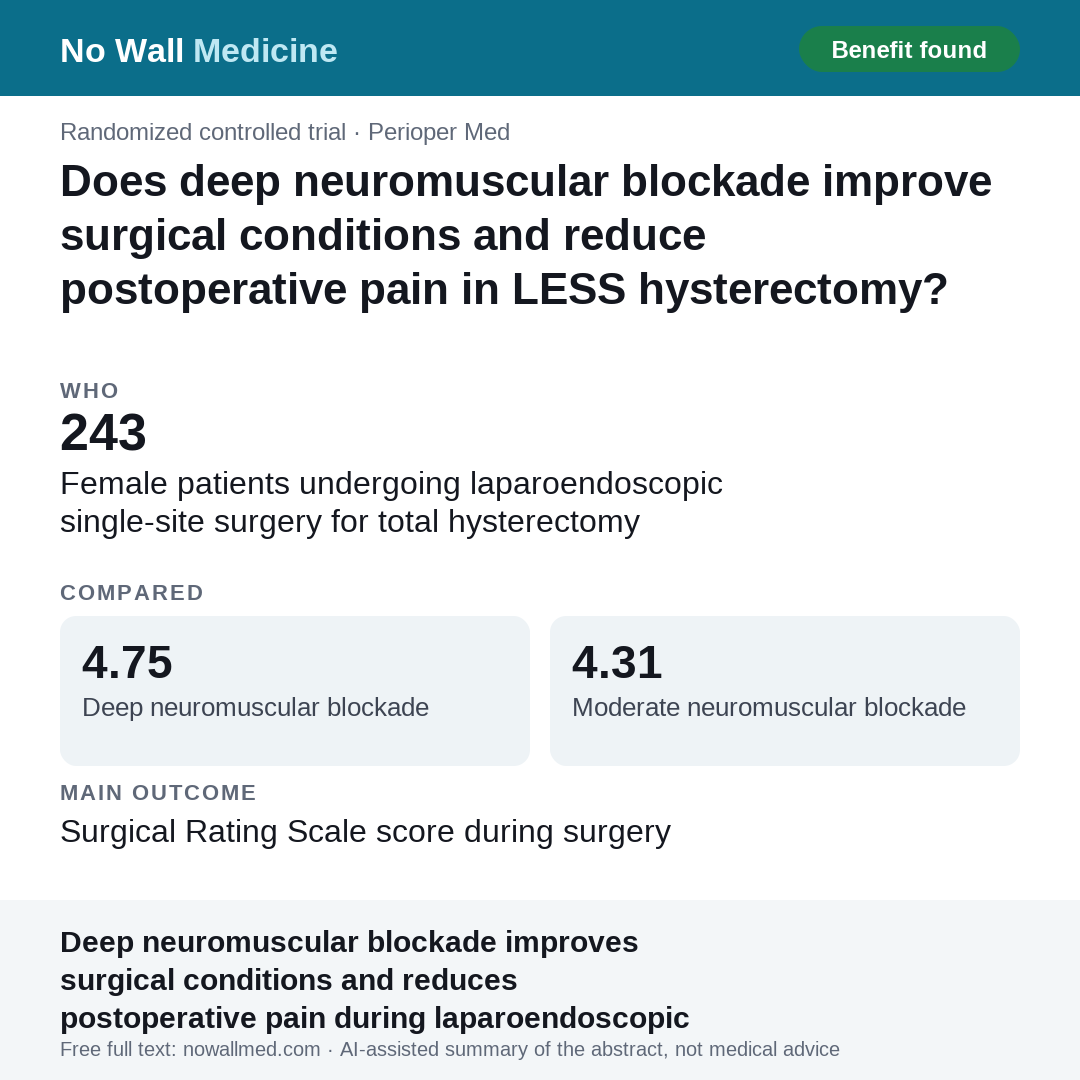
Does deep neuromuscular blockade improve surgical conditions and reduce postoperative pain in LESS hysterectomy?
Who
243
Female patients undergoing laparoendoscopic single-site surgery for total hysterectomy
Compared
4.75Deep neuromuscular blockade (0.54)
4.31Moderate neuromuscular blockade (0.86)
Main outcome
Surgical Rating Scale score during surgery
Bottom line: Deep neuromuscular blockade improves surgical conditions and reduces postoperative pain during laparoendoscopic single-site hysterectomy.
Limitation: Recovery time to extubation was significantly prolonged in the deep neuromuscular blockade group.
Perioper Med · 2026-02-28Download image
Clinical question: Does deep neuromuscular blockade improve surgical conditions and reduce postoperative pain in LESS hysterectomy?
Why it matters: It is unclear how the depth of muscle relaxation affects surgical conditions and pain levels during laparoendoscopic single-site hysterectomy.
Key points
- Researchers studied 243 female patients undergoing single-site hysterectomy, comparing deep neuromuscular blockade to moderate neuromuscular blockade using cisatracurium.
- Deep neuromuscular blockade resulted in higher surgical rating scale scores and lower postoperative pain scores at 6, 24, and 48 hours compared to moderate blockade.
- The deep neuromuscular blockade group had longer times for recovery of muscle function and extubation, but no significant differences were found in nausea, vomiting, or length of stay.
Headline and key points written with AI from the paper’s abstract, with every number checked against it. Read the paper before relying on them.
Cite this article
Shen Y, Hu J, Lv F, Yu C, Gong Y, Wang D. Deep neuromuscular blockade improves surgical conditions during laparoendoscopic single-site (LESS) surgery for total hysterectomy and reduces postoperative pain: a randomized controlled trial. Perioper Med. 2026. doi:10.1186/s13741-026-00664-7
Spotted a mistake? Suggest a correction
Top studies every Monday
The week’s key trials and guidelines in your specialties, plus any topics you follow. By email, free.
Get the weekly digest