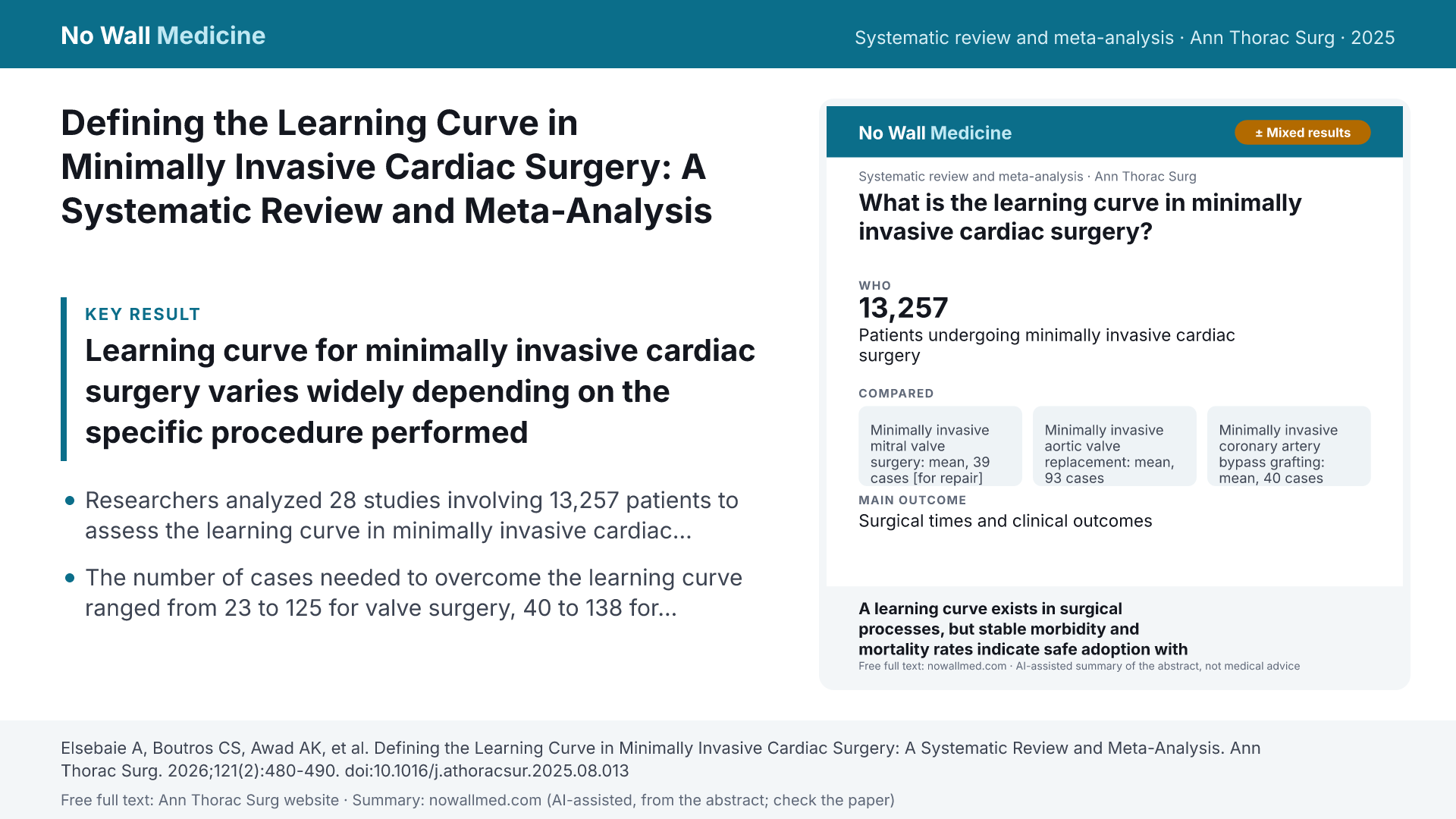
Learning curve for minimally invasive cardiac surgery varies widely depending on the specific procedure performed
Defining the Learning Curve in Minimally Invasive Cardiac Surgery: A Systematic Review and Meta-Analysis
Systematic review and meta-analysisMixed results
What is the learning curve in minimally invasive cardiac surgery?
Who
13,257
Patients undergoing minimally invasive cardiac surgery
Compared
Minimally invasive mitral valve surgery: mean, 39 cases [for repair] and 78 [for replacement]
Minimally invasive aortic valve replacement: mean, 93 cases
Minimally invasive coronary artery bypass grafting: mean, 40 cases
Main outcome
Surgical times and clinical outcomes
Bottom line: A learning curve exists in surgical processes, but stable morbidity and mortality rates indicate safe adoption with training.
Limitation: Significant heterogeneity across studies prevents precise learning curve characterization.
Ann Thorac Surg · 2025-08-29Download image
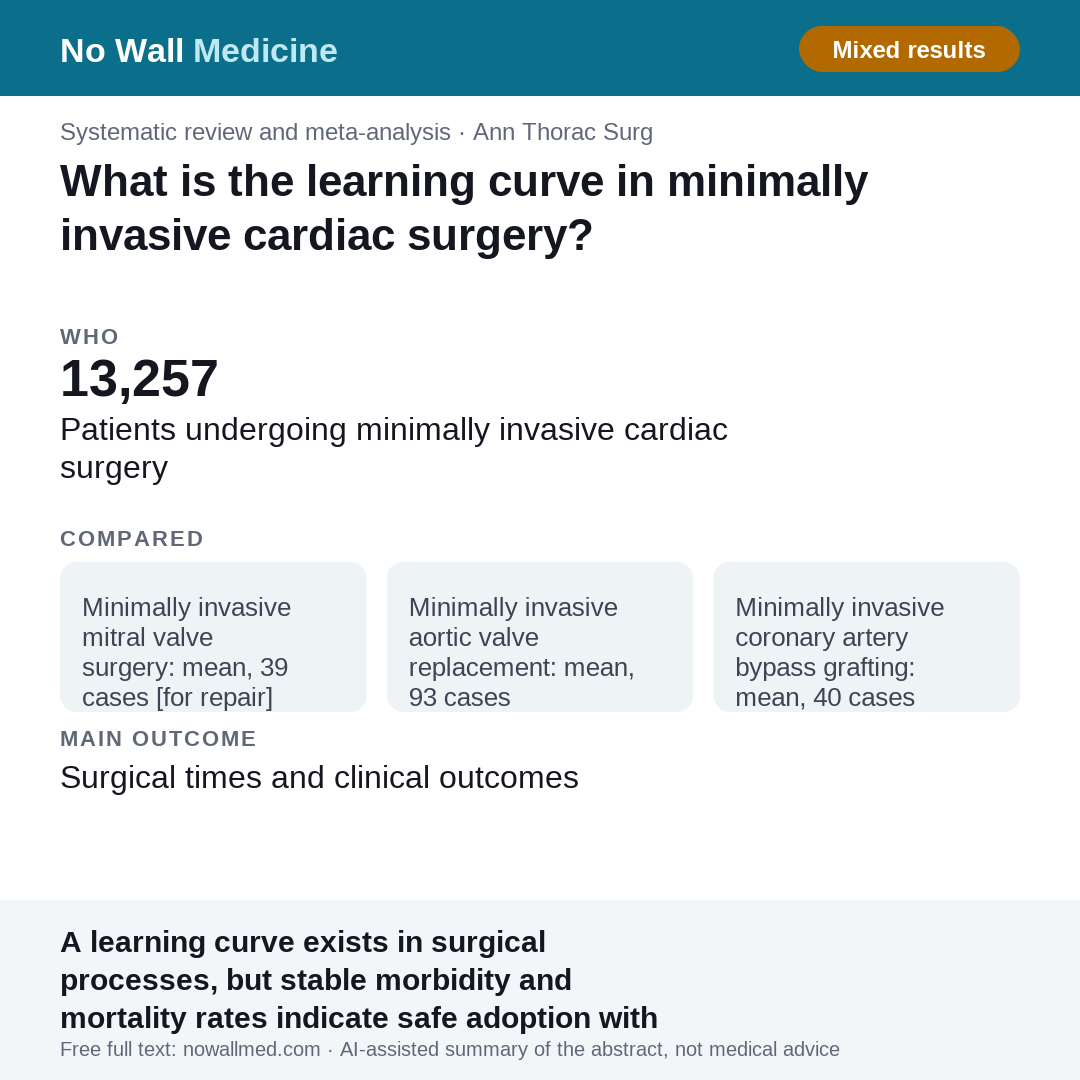
Clinical question: What is the learning curve in minimally invasive cardiac surgery?
Why it matters: Concerns exist regarding procedural efficiency and surgical outcomes during the early stages of the learning curve for minimally invasive cardiac surgery.
Key points
- Researchers analyzed 28 studies involving 13,257 patients to assess the learning curve in minimally invasive cardiac surgery using surgical times and clinical outcomes.
- The number of cases needed to overcome the learning curve ranged from 23 to 125 for valve surgery, 40 to 138 for aortic valve replacement, and 16 to 100 for coronary artery bypass grafting.
- While surgical processes and outcomes changed during the learning phase, mortality and complication rates remained stable, suggesting safe adoption with training.
Limitation the authors note: Significant heterogeneity across studies prevents precise characterization of the learning curve.
Headline and key points written with AI from the paper’s abstract, with every number checked against it. Read the paper before relying on them.
Was this summary helpful?
Subject terms
Cite this article
Elsebaie A, Boutros CS, Awad AK, Sanad M, Pelletier M, Abu-Omar Y. Defining the Learning Curve in Minimally Invasive Cardiac Surgery: A Systematic Review and Meta-Analysis. Ann Thorac Surg. 2025. doi:10.1016/j.athoracsur.2025.08.013
Spotted a mistake? Suggest a correction
Top studies every Monday
The week’s key trials and guidelines in your specialties, plus any topics you follow. By email, free.
Get the weekly digest