High inconsistency found in how surgical trials define and analyze perioperative bleeding outcomes
Definition, analysis, reporting, and interpretation of perioperative bleeding in randomized controlled trials: a methodological systematic review
Systematic reviewUnclear result
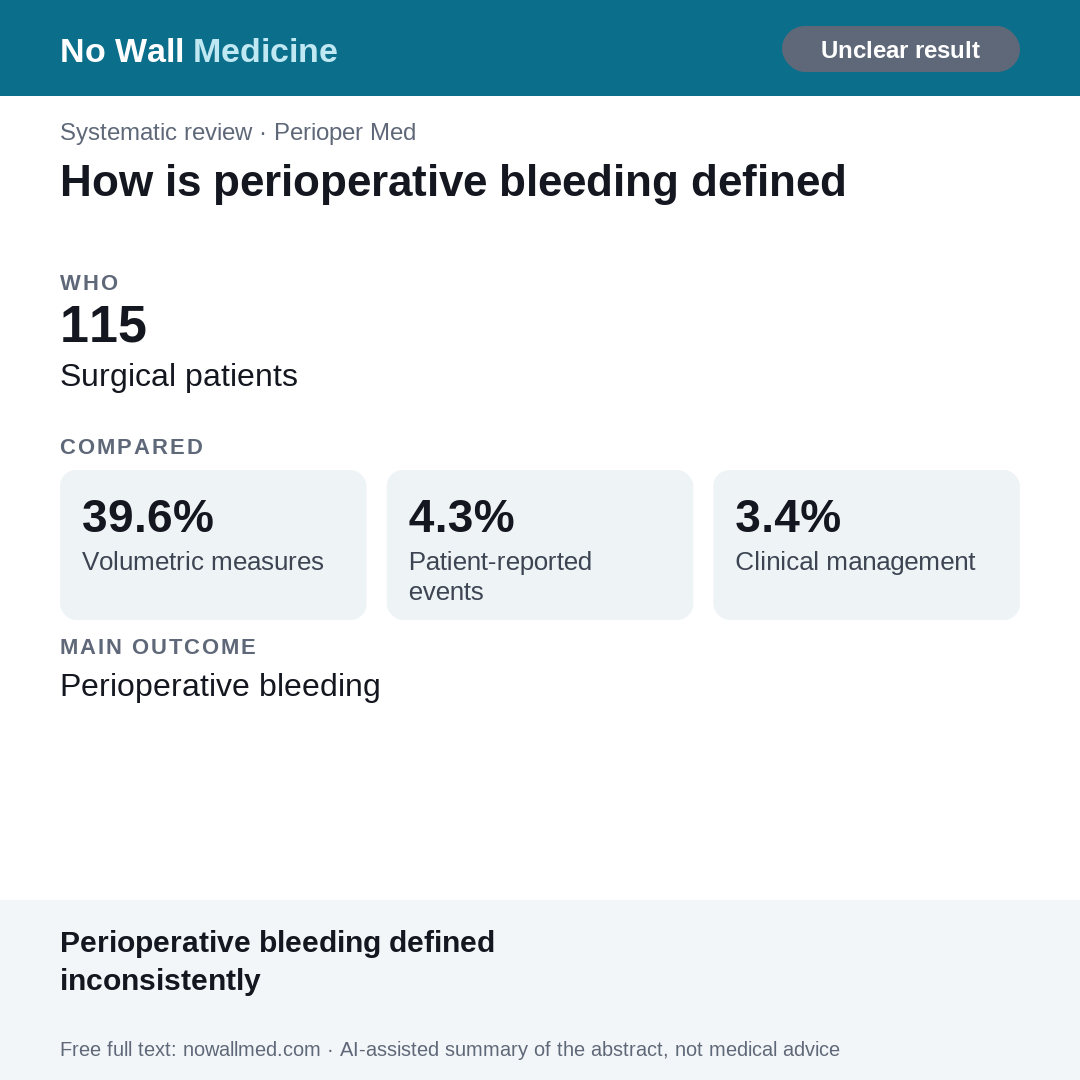
How is perioperative bleeding defined
Who
115
Surgical patients
Compared
39.6%Volumetric measures
4.3%Patient-reported events
3.4%Clinical management
Main outcome
Perioperative bleeding
Bottom line: Perioperative bleeding defined inconsistently
Limitation: High inconsistency in definitions
Perioper Med · 2026-07-02Download image
Why it matters: The lack of standardized definitions and reporting practices for perioperative bleeding affects trial design, statistical power, and the interpretation of treatment effects.
Key points
- Researchers reviewed 115 randomized trials reporting 116 primary bleeding outcomes to evaluate how surgical bleeding is defined and analyzed.
- While 39.6% of trials used volume or weight measurements, 37.8% of trials lacked justification for the effect-size used in sample size calculations.
- In noninferiority trials, which test if a new treatment is not worse than an old one, 33.3% claimed noninferiority without using prespecified margins.
Headline and key points written with AI from the paper’s abstract, with every number checked against it. Read the paper before relying on them.
Was this summary helpful?
Cite this article
Mohammadi Kamalabadi Y, Zou G, El-Shimy M, Zitoun NM, Bartoszko J, Roshanov PS. Definition, analysis, reporting, and interpretation of perioperative bleeding in randomized controlled trials: a methodological systematic review. Perioper Med. 2026. doi:10.1186/s13741-026-00715-z
Spotted a mistake? Suggest a correction
Top studies every Monday
The week’s key trials and guidelines in your specialties, plus any topics you follow. By email, free.
Get the weekly digest