Degree of Behavioral Health Integration and Patient Outcomes
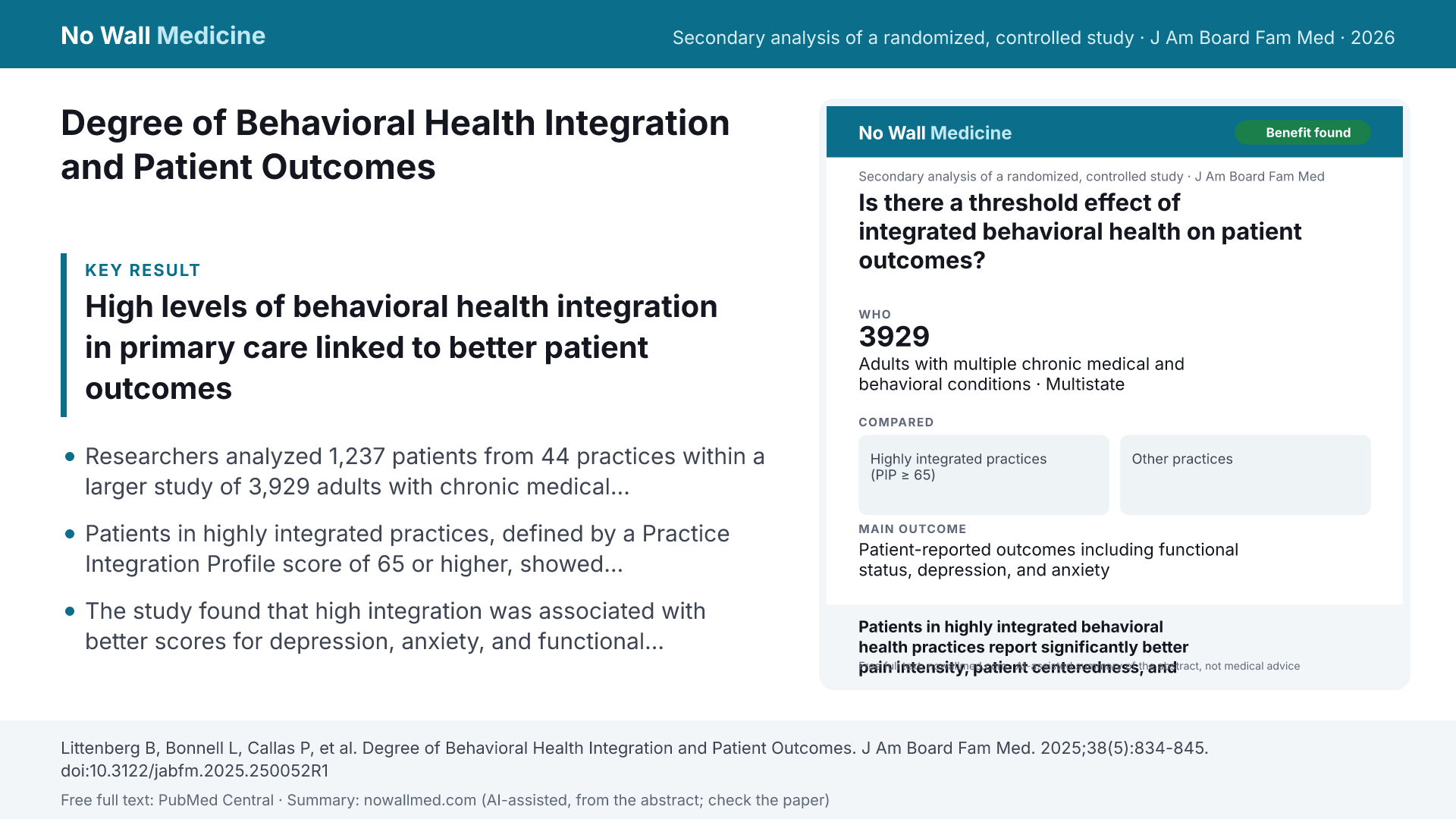
Key result: High levels of behavioral health integration in primary care linked to better patient outcomes
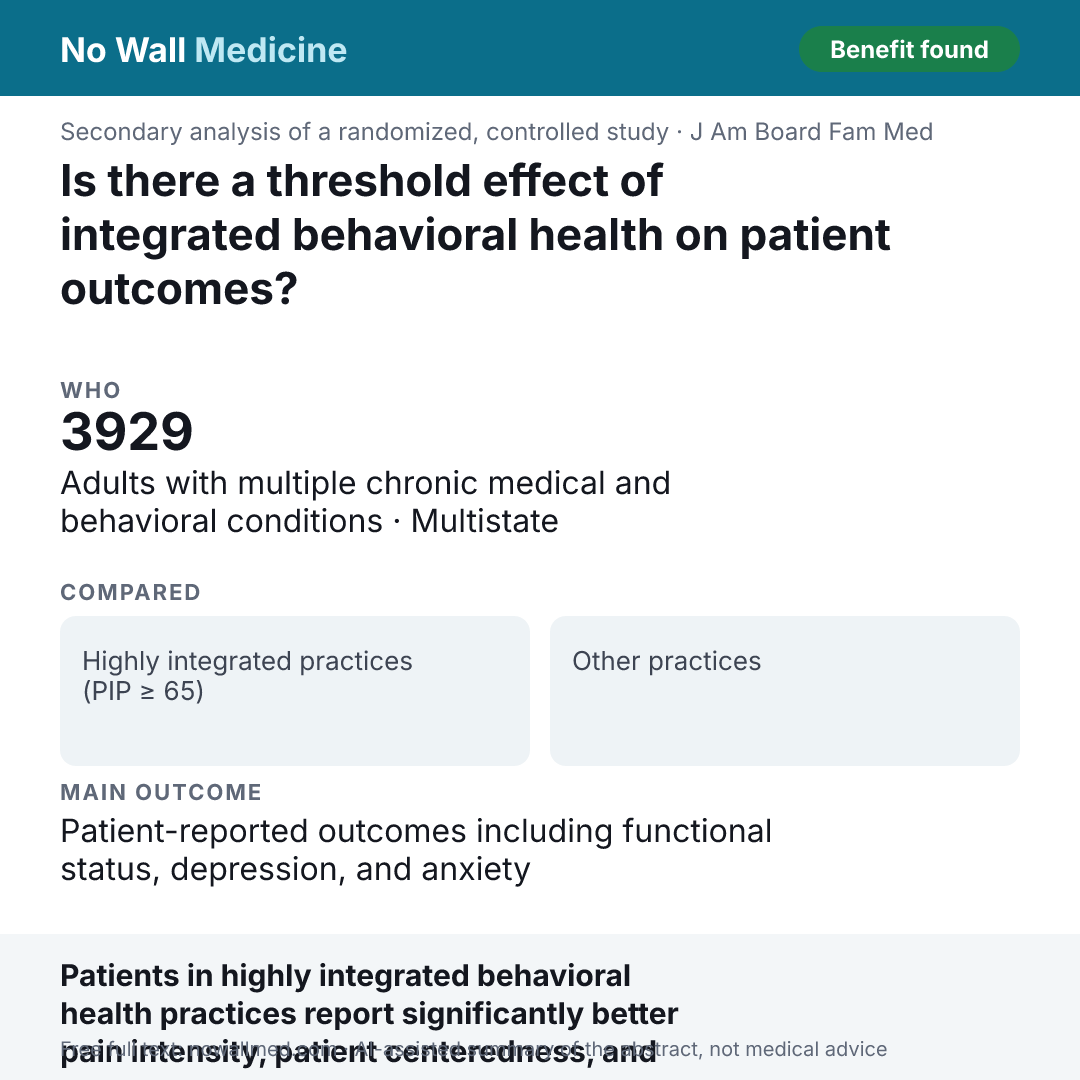
Secondary analysis of a randomized, controlled studyBenefit found
Is there a threshold effect of integrated behavioral health on patient outcomes?
Who
3929
Adults with multiple chronic medical and behavioral conditions · Multistate
Compared
Highly integrated practices (PIP ≥ 65)
Other practices
Main outcome
Patient-reported outcomes including functional status, depression, and anxiety
Result: Pain Intensity -0.51 (95% CI -0.97, 0.04), patient centeredness 2.52 (95% CI 0.88, 4.16), CARE 1.62 (95% CI 0.62, 2.61)
Bottom line: Patients in highly integrated behavioral health practices report significantly better pain intensity, patient centeredness, and empathy outcomes.
J Am Board Fam Med · 2026-01-06 · Save PNG
Key points
- Researchers analyzed 1,237 patients from 44 practices within a larger study of 3,929 adults with chronic medical and behavioral conditions.
- Patients in highly integrated practices, defined by a Practice Integration Profile score of 65 or higher, showed statistically significant improvements in pain intensity, patient centeredness, and empathy.
- The study found that high integration was associated with better scores for depression, anxiety, and functional status, though these specific results were not statistically significant.
Discussion prompts
- Would these patients look like yours? Who was left out?
- Is the main outcome one that matters to patients?
- Is the difference large enough to change what you do?
Cite: Littenberg B, Bonnell L, Callas P, et al. Degree of Behavioral Health Integration and Patient Outcomes. J Am Board Fam Med. 2025;38(5):834-845. doi:10.3122/jabfm.2025.250052R1
Free full text: PubMed Central · Summary and visual abstract: nowallmed.com/a/degree-of-behavioral-health-integration-and-patient-eld5wz/ (AI-assisted from the abstract; check the paper before relying on it).