Post-stroke depression was associated with higher stroke recurrence and cognitive impairment risks
Depression is an independent risk factor for stroke reccurence and cognitive impairment in stroke patients
52-week, randomised, double-blind studyBenefit found
Is post-stroke depression an independent risk factor for stroke recurrence and cognitive impairment?
Who
1059
1059 stroke patients
Compared
untreated depressive persons: increased rate of stroke recurrence
non-depressive
Main outcome
stroke recurrence and cognitive impairment
Result: odds ratio 1.64 (CI 1.14-2.35)
Bottom line: Post-stroke depression is an independent predictor for stroke recurrence and various types of cognitive impairment.
Limitation: further research is needed to demonstrate the efficacy of treatment on stroke recurrence.
Transl Psychiatry · 2025-11-21Download image
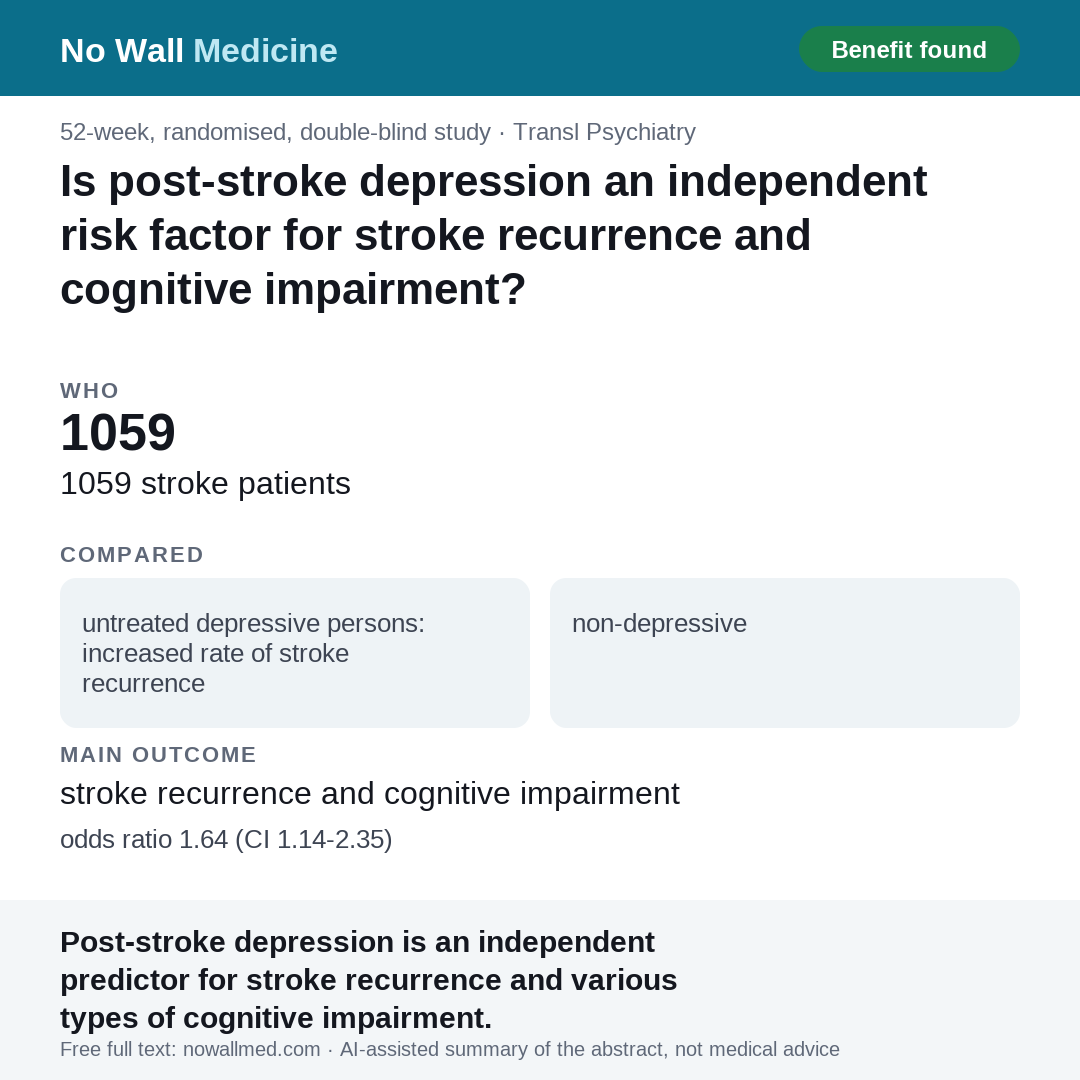
Clinical question: Is post-stroke depression an independent risk factor for stroke recurrence and cognitive impairment?
Why it matters: It is unclear if depression after a stroke is an independent risk factor for stroke recurrence or if cognitive impairment risks relate to the location of the stroke.
Key points
- Researchers studied 1059 stroke patients, including 866 non-depressive and 193 untreated depressive individuals, over 52 weeks.
- Depression was associated with an increased rate of stroke recurrence after 12 months with an odds ratio of 1.64.
- Post-stroke depression was associated with higher risks for impaired executive function (OR 4.51), processing speed (OR 4.29), and visuospatial perception (OR 6.10).
Headline and key points written with AI from the paper’s abstract, with every number checked against it. Read the paper before relying on them.
Was this summary helpful?
Subject terms
Cite this article
Cankaya S, Safa SS, Karakus A, Savcili M, Hanoglu L, Mardinoglu A. Depression is an independent risk factor for stroke reccurence and cognitive impairment in stroke patients. Transl Psychiatry. 2025. doi:10.1038/s41398-025-03706-8
Spotted a mistake? Suggest a correction
Top studies every Monday
The week’s key trials and guidelines in your specialties, plus any topics you follow. By email, free.
Get the weekly digest