Depressive Symptoms and Incident Peripheral Arterial Disease Among Adults With CKD: Findings From the Chronic Renal Insufficiency Cohort (CRIC) Study
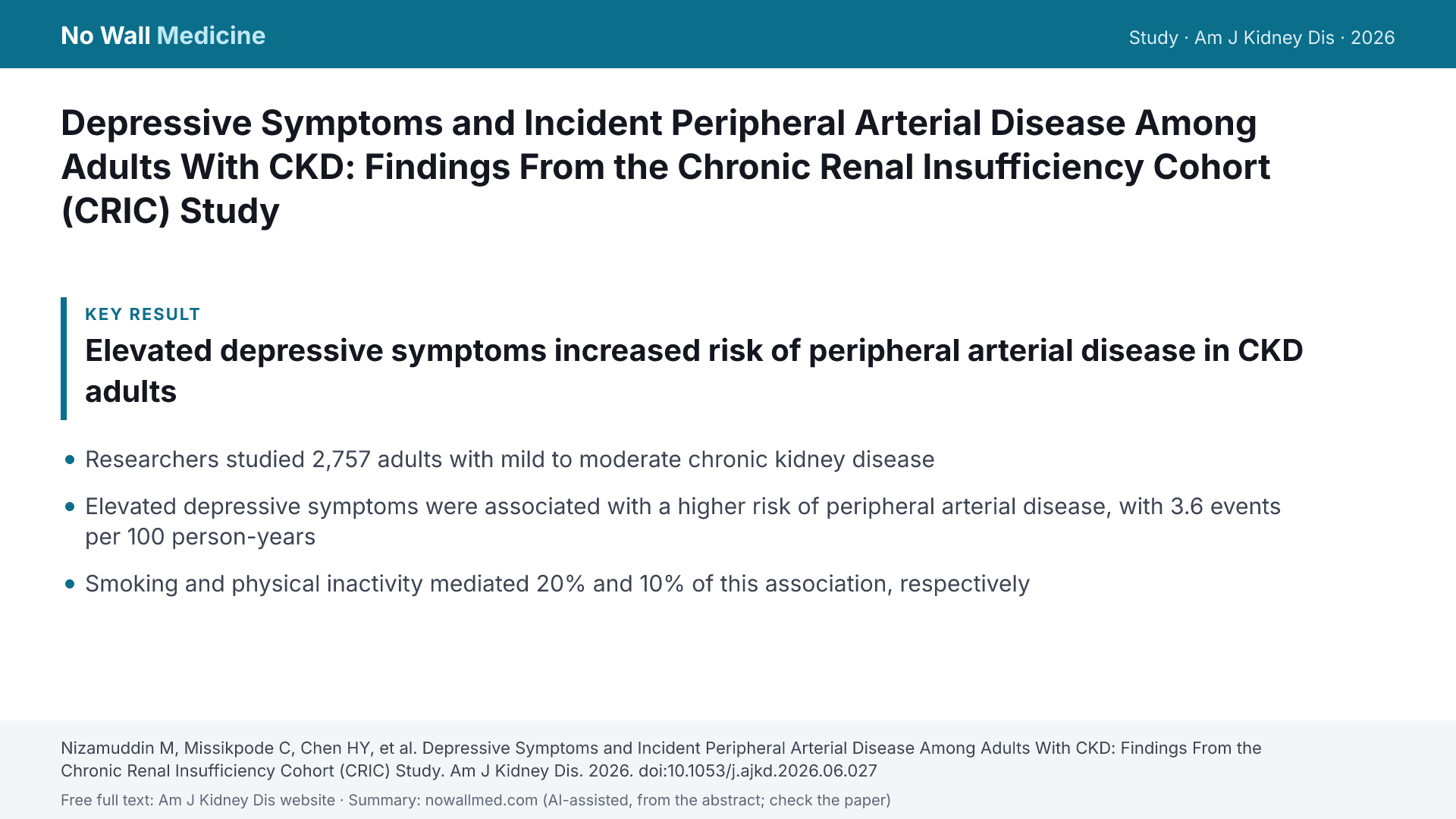
Key result: Elevated depressive symptoms increased risk of peripheral arterial disease in CKD adults
Key points
- Researchers studied 2,757 adults with mild to moderate chronic kidney disease.
- Elevated depressive symptoms were associated with a higher risk of peripheral arterial disease, with 3.6 events per 100 person-years.
- Smoking and physical inactivity mediated 20% and 10% of this association, respectively.
Why it matters: Depression's relationship with peripheral arterial disease in adults with chronic kidney disease has not been thoroughly examined
Limitation the authors note: The study had residual bias and confounding, and lacked a depression diagnosis
Discussion prompts
- Would these patients look like yours? Who was left out?
- Is the main outcome one that matters to patients?
- Is the difference large enough to change what you do?
Cite: Nizamuddin M, Missikpode C, Chen HY, et al. Depressive Symptoms and Incident Peripheral Arterial Disease Among Adults With CKD: Findings From the Chronic Renal Insufficiency Cohort (CRIC) Study. Am J Kidney Dis. 2026. doi:10.1053/j.ajkd.2026.06.027
Free full text: Am J Kidney Dis website · Summary and visual abstract: nowallmed.com/a/depressive-symptoms-and-incident-peripheral-arterial-disease-among-3re0th/ (AI-assisted from the abstract; check the paper before relying on it).