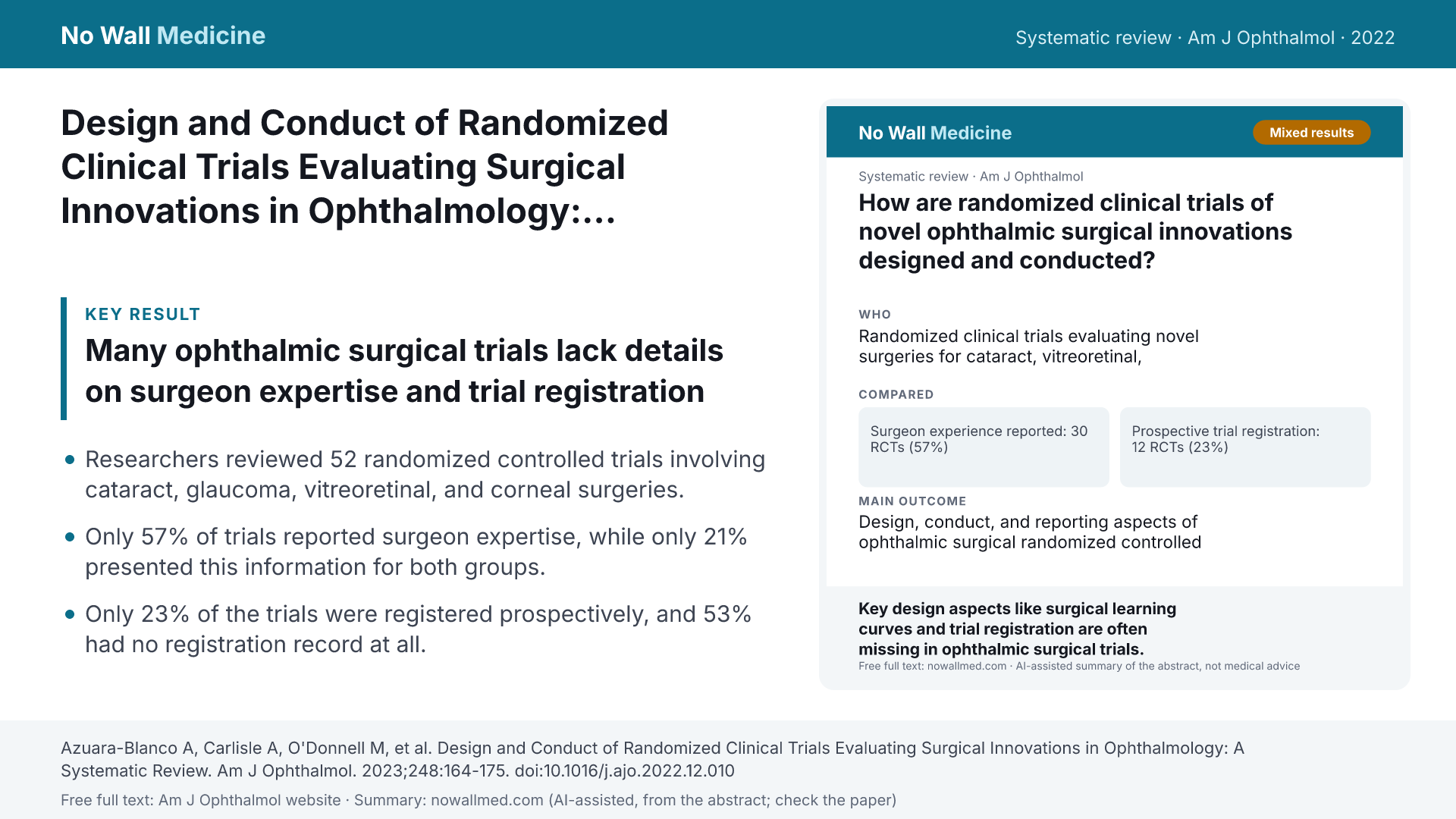
Design and Conduct of Randomized Clinical Trials Evaluating Surgical Innovations in Ophthalmology: A Systematic Review
Key result: Many ophthalmic surgical trials lack details on surgeon expertise and trial registration
Systematic reviewMixed results
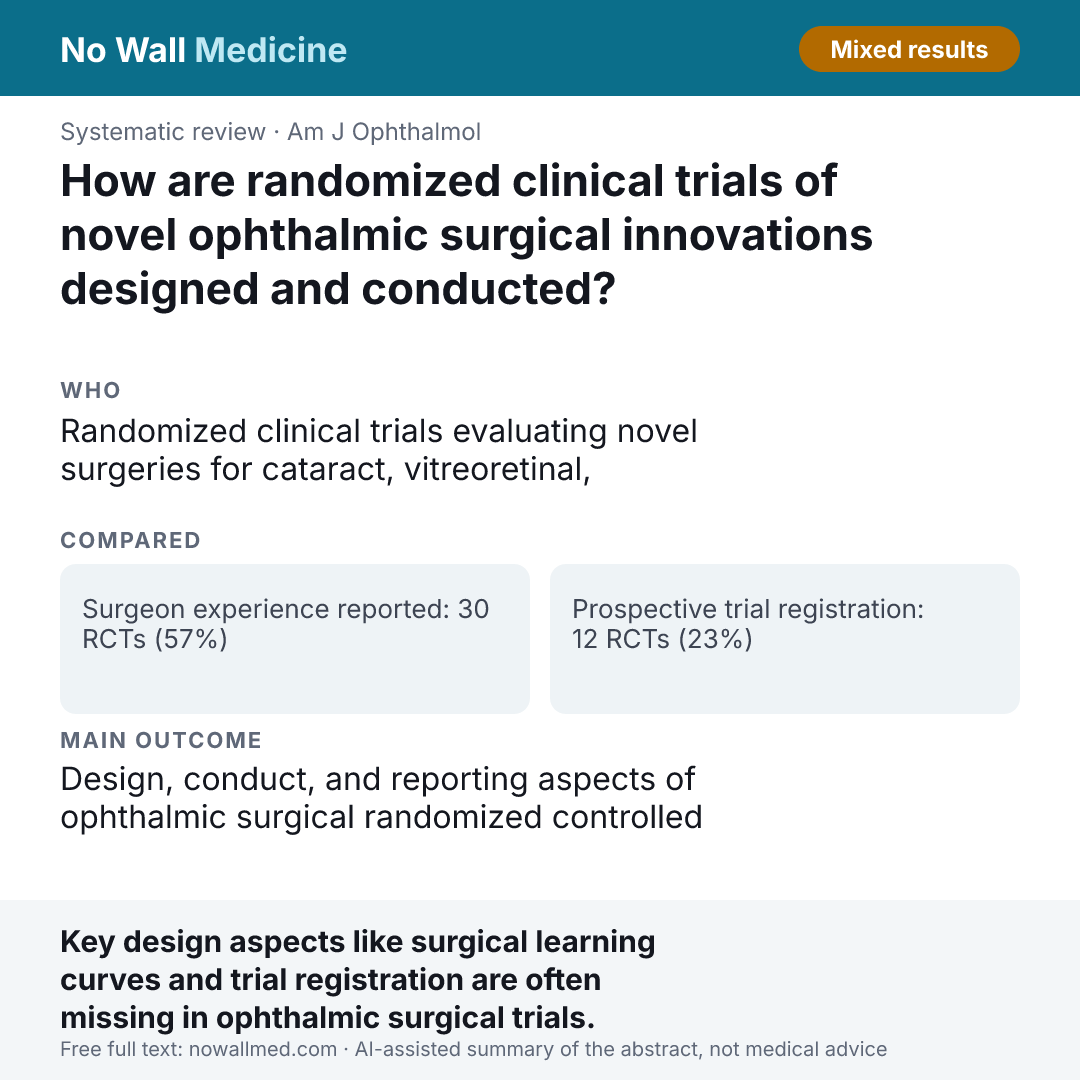
How are randomized clinical trials of novel ophthalmic surgical innovations designed and conducted?
Who
Randomized clinical trials evaluating novel surgeries for cataract, vitreoretinal, glaucoma, and corneal diseases
Compared
Surgeon experience reported: 30 RCTs (57%)
Prospective trial registration: 12 RCTs (23%)
Main outcome
Design, conduct, and reporting aspects of ophthalmic surgical randomized controlled trials
Bottom line: Key design aspects like surgical learning curves and trial registration are often missing in ophthalmic surgical trials.
Am J Ophthalmol · 2022-12-22 · Save PNG
Key points
- Researchers reviewed 52 randomized controlled trials involving cataract, glaucoma, vitreoretinal, and corneal surgeries.
- Only 57% of trials reported surgeon expertise, while only 21% presented this information for both groups.
- Only 23% of the trials were registered prospectively, and 53% had no registration record at all.
Why it matters: Methodological challenges exist when designing and reporting randomized controlled trials that evaluate new surgical techniques in ophthalmology.
Discussion prompts
- Would these patients look like yours? Who was left out?
- Is the main outcome one that matters to patients?
- Is the difference large enough to change what you do?
Cite: Azuara-Blanco A, Carlisle A, O'Donnell M, et al. Design and Conduct of Randomized Clinical Trials Evaluating Surgical Innovations in Ophthalmology: A Systematic Review. Am J Ophthalmol. 2022. doi:10.1016/j.ajo.2022.12.010
Free full text: Am J Ophthalmol website · Summary and visual abstract: nowallmed.com/a/design-and-conduct-of-randomized-clinical-trials-evaluating-surgical-10th2wl/ (AI-assisted from the abstract; check the paper before relying on it).