Desmopressin was associated with less blood loss but did not reduce transfusion risk
Desmopressin to reduce periprocedural bleeding and transfusion: a systematic review and meta-analysis
Meta-analysis of 63 randomized trialsMixed results
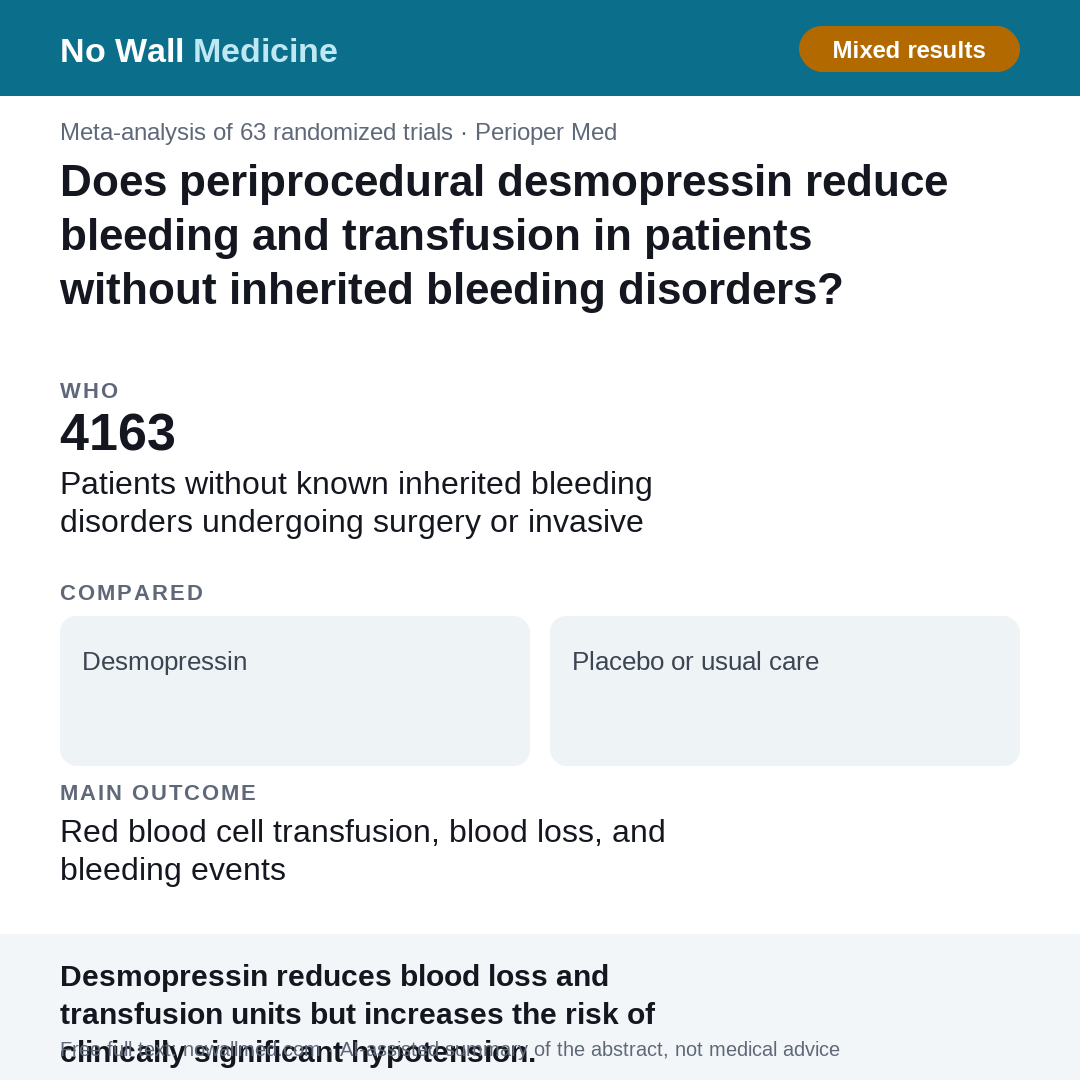
Does periprocedural desmopressin reduce bleeding and transfusion in patients without inherited bleeding disorders?
Who
4163
Patients without known inherited bleeding disorders undergoing surgery or invasive procedures
Compared
Desmopressin
Placebo or usual care
Main outcome
Red blood cell transfusion, blood loss, and bleeding events
Result: mean difference -0.55 units (95% CI -0.94 to -0.15) for red blood cell units
Bottom line: Desmopressin reduces blood loss and transfusion units but increases the risk of clinically significant hypotension.
Limitation: The certainty of evidence for these findings was generally low.
Perioper Med · 2024-01-23Download image
Clinical question: Does periprocedural desmopressin reduce bleeding and transfusion in patients without inherited bleeding disorders?
Why it matters: It was unknown if desmopressin reduces the risk of receiving red blood cell transfusions or needing reoperation due to bleeding during or after procedures.
Key points
- Researchers analyzed 63 randomized trials involving 4163 participants undergoing surgery or invasive procedures without known inherited bleeding disorders.
- Desmopressin was associated with a mean difference of -0.55 units in red blood cell transfusions and a standardized mean difference of -0.40 standard deviations in total blood loss.
- The medication was associated with an increased risk of clinically significant low blood pressure requiring intervention, with a risk ratio of 2.15.
Limitation the authors note: The certainty of evidence for these findings was generally low.
Headline and key points written with AI from the paper’s abstract, with every number checked against it. Read the paper before relying on them.
Was this summary helpful?
Cite this article
Wang C, Lebedeva V, Yang J, Anih J, Park LJ, Paczkowski F. Desmopressin to reduce periprocedural bleeding and transfusion: a systematic review and meta-analysis. Perioper Med. 2024. doi:10.1186/s13741-023-00358-4
Spotted a mistake? Suggest a correction
Top studies every Monday
The week’s key trials and guidelines in your specialties, plus any topics you follow. By email, free.
Get the weekly digest