Developing a patient-specific iPSC-derived monocyte model for familial Mediterranean fever and mevalonate kinase deficiency
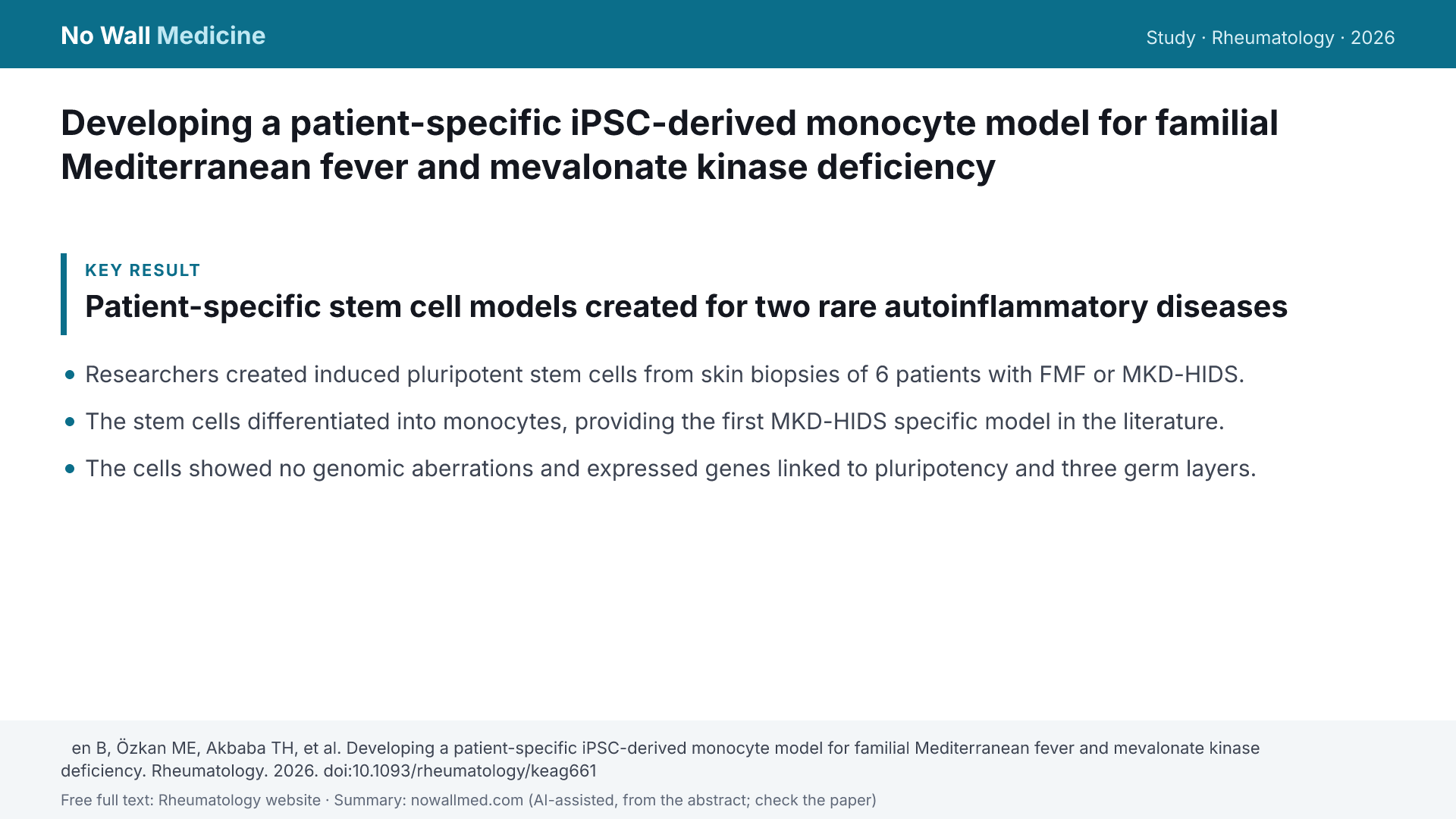
Key result: Patient-specific stem cell models created for two rare autoinflammatory diseases
Key points
- Researchers created induced pluripotent stem cells from skin biopsies of 6 patients with FMF or MKD-HIDS.
- The stem cells differentiated into monocytes, providing the first MKD-HIDS specific model in the literature.
- The cells showed no genomic aberrations and expressed genes linked to pluripotency and three germ layers.
Why it matters: Applies to basic research on FMF and MKD; provides a tool for studying inflammasome activation and therapeutic responses in patient-specific cells.
Discussion prompts
- Would these patients look like yours? Who was left out?
- Is the main outcome one that matters to patients?
- Is the difference large enough to change what you do?
Cite: Şen B, Özkan ME, Akbaba TH, et al. Developing a patient-specific iPSC-derived monocyte model for familial Mediterranean fever and mevalonate kinase deficiency. Rheumatology. 2026. doi:10.1093/rheumatology/keag661
Free full text: Rheumatology website · Summary and visual abstract: nowallmed.com/a/developing-a-patient-specific-ipsc-derived-monocyte-model-for-txr542/ (AI-assisted from the abstract; check the paper before relying on it).