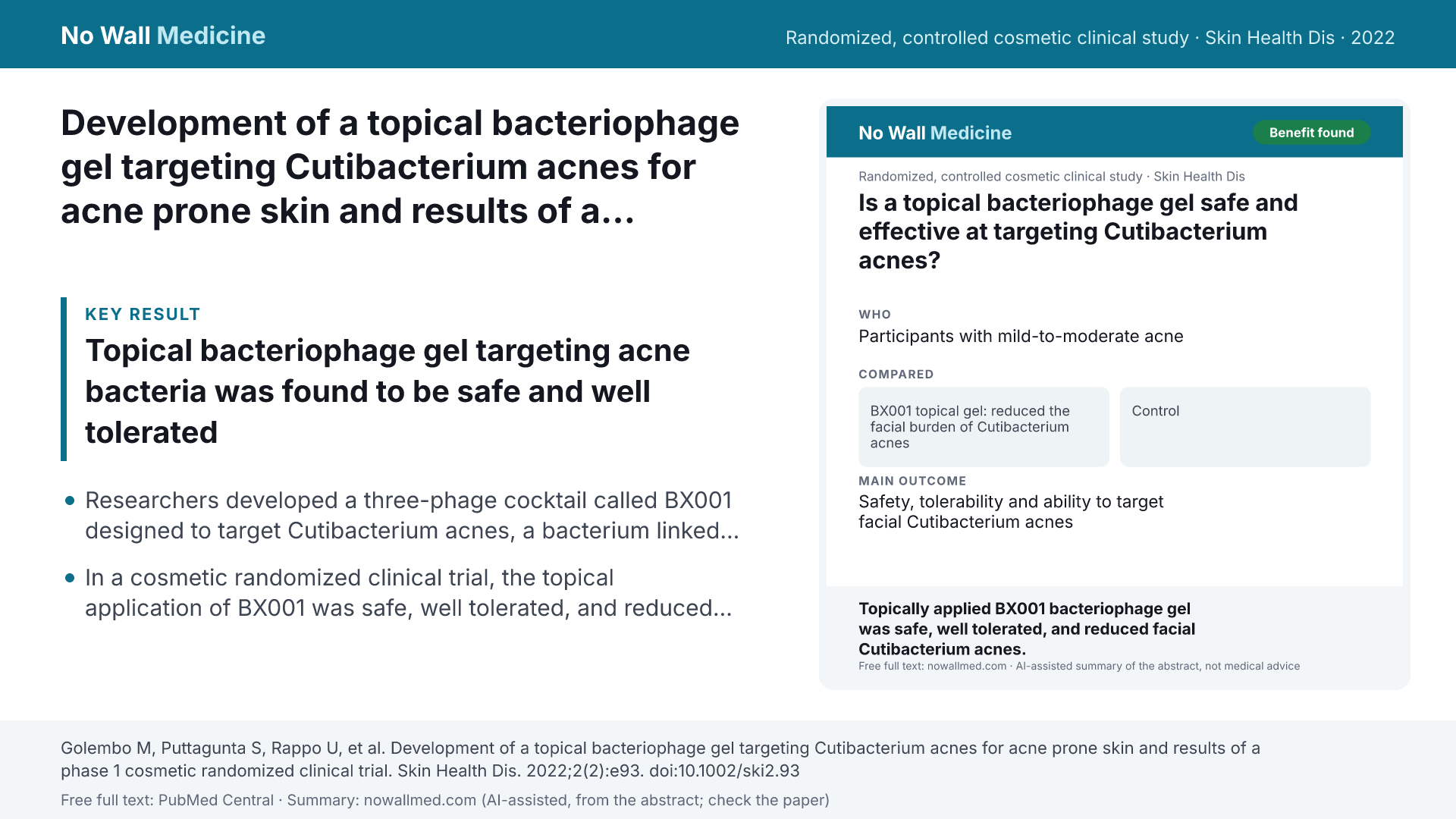
Development of a topical bacteriophage gel targeting Cutibacterium acnes for acne prone skin and results of a phase 1 cosmetic randomized clinical trial
Key result: Topical bacteriophage gel targeting acne bacteria was found to be safe and well tolerated
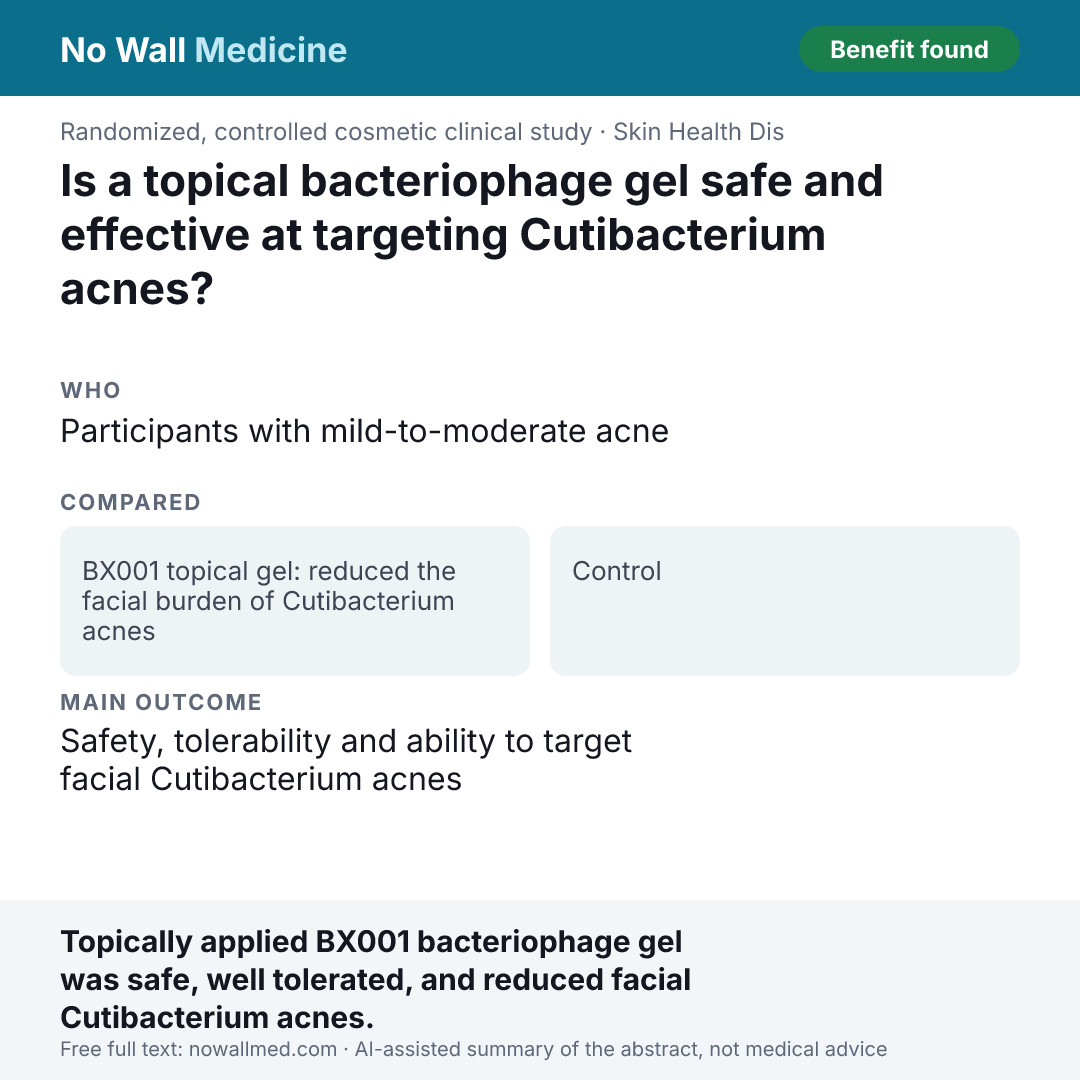
Randomized, controlled cosmetic clinical studyBenefit found
Is a topical bacteriophage gel safe and effective at targeting Cutibacterium acnes?
Who
Participants with mild-to-moderate acne
Compared
BX001 topical gel: reduced the facial burden of Cutibacterium acnes
Control
Main outcome
Safety, tolerability and ability to target facial Cutibacterium acnes
Bottom line: Topically applied BX001 bacteriophage gel was safe, well tolerated, and reduced facial Cutibacterium acnes.
Skin Health Dis · 2022-01-28 · Save PNG
Key points
- Researchers developed a three-phage cocktail called BX001 designed to target Cutibacterium acnes, a bacterium linked to acne.
- In a cosmetic randomized clinical trial, the topical application of BX001 was safe, well tolerated, and reduced the facial burden of Cutibacterium acnes.
- Ex vivo testing showed the cocktail was not an irritant to human skin or eye tissues and did not pass through the outer layer of skin.
Why it matters: Prolonged use of topical antibiotics for acne has led to antibiotic resistance in Cutibacterium acnes, creating a need for alternative treatments.
Discussion prompts
- Would these patients look like yours? Who was left out?
- Is the main outcome one that matters to patients?
- Is the difference large enough to change what you do?
Cite: Golembo M, Puttagunta S, Rappo U, et al. Development of a topical bacteriophage gel targeting Cutibacterium acnes for acne prone skin and results of a phase 1 cosmetic randomized clinical trial. Skin Health Dis. 2022. doi:10.1002/ski2.93
Free full text: PubMed Central · Summary and visual abstract: nowallmed.com/a/development-of-a-topical-bacteriophage-gel-targeting-cutibacterium-y30qbr/ (AI-assisted from the abstract; check the paper before relying on it).