Mechanisms linking pediatric intracranial hypertension and growth plate disorders change during puberty
Developmental transition in pathophysiological mechanisms of pediatric idiopathic intracranial hypertension and growth plate disorders: A multi-level structural equational modeling systematic review and meta-analysis
Systematic review and meta-analysisBenefit found
What are the age-dependent pathophysiological mechanisms of pediatric idiopathic intracranial hypertension and growth plate disorders?
Who
2293
Pediatric individuals with idiopathic intracranial hypertension and growth plate disorders
Compared
Prepubertal children: venous pressure β = 0.68, vitamin D/hormonal pathways β = 0.56
Postpubertal patients: obesity pathway β = 0.76
Main outcome
Age-dependent mediating effects of obesity and hormonal factors
Bottom line: A puberty-associated shift from venous/hormonal to obesity-dominant mechanisms allows for targeted precision treatment strategies.
Brain Spine · 2026-07-10Download image
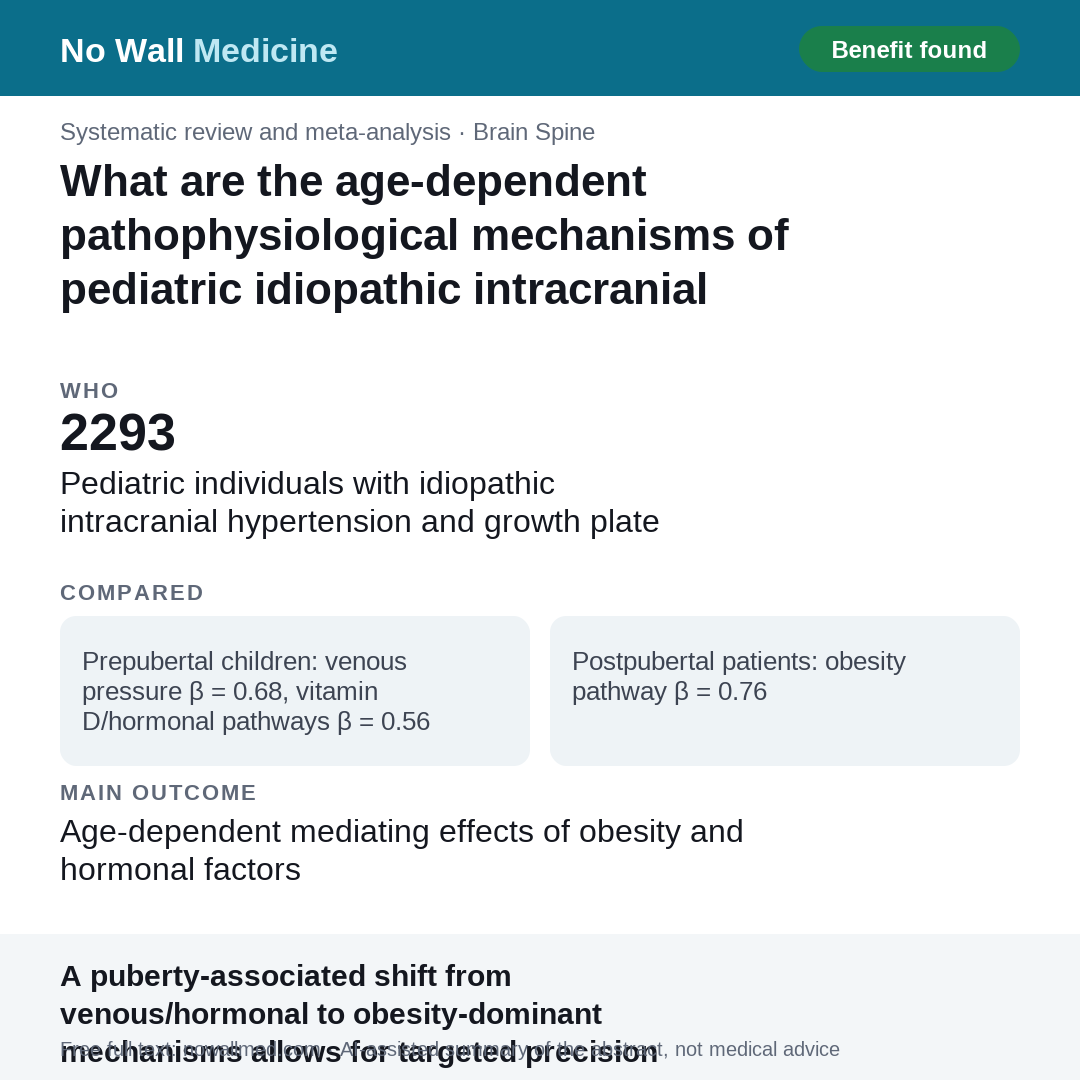
Clinical question: What are the age-dependent pathophysiological mechanisms of pediatric idiopathic intracranial hypertension and growth plate disorders?
Why it matters: The relationship between pediatric idiopathic intracranial hypertension and growth plate disorders may involve age-dependent mechanisms involving obesity and hormonal dysregulation.
Key points
- Researchers analyzed 22 studies involving 2293 individuals to examine how obesity and hormones link pediatric idiopathic intracranial hypertension and growth plate disorders.
- In prepubertal children, venous pressure (β = 0.68, P-value < 0.001) and vitamin D/hormonal pathways (β = 0.56, P-value < 0.001) were dominant.
- In postpubertal patients, the obesity pathway predominated (β = 0.76, P-value < 0.001) while venous (β = 0.29, P-value = 0.003) and hormonal (β = 0.16, P-value = 0.038) contributions were reduced.
Headline and key points written with AI from the paper’s abstract, with every number checked against it. Read the paper before relying on them.
Cite this article
Alalwani YJ, Alhashim ES, Alqahtani LN, Albogami RM, Almana KAA, Raffaa AS. Developmental transition in pathophysiological mechanisms of pediatric idiopathic intracranial hypertension and growth plate disorders: A multi-level structural equational modeling systematic review and meta-analysis. Brain Spine. 2026. doi:10.1016/j.bas.2026.106164
Spotted a mistake? Suggest a correction
Top studies every Monday
The week’s key trials and guidelines in your specialties, plus any topics you follow. By email, free.
Get the weekly digest