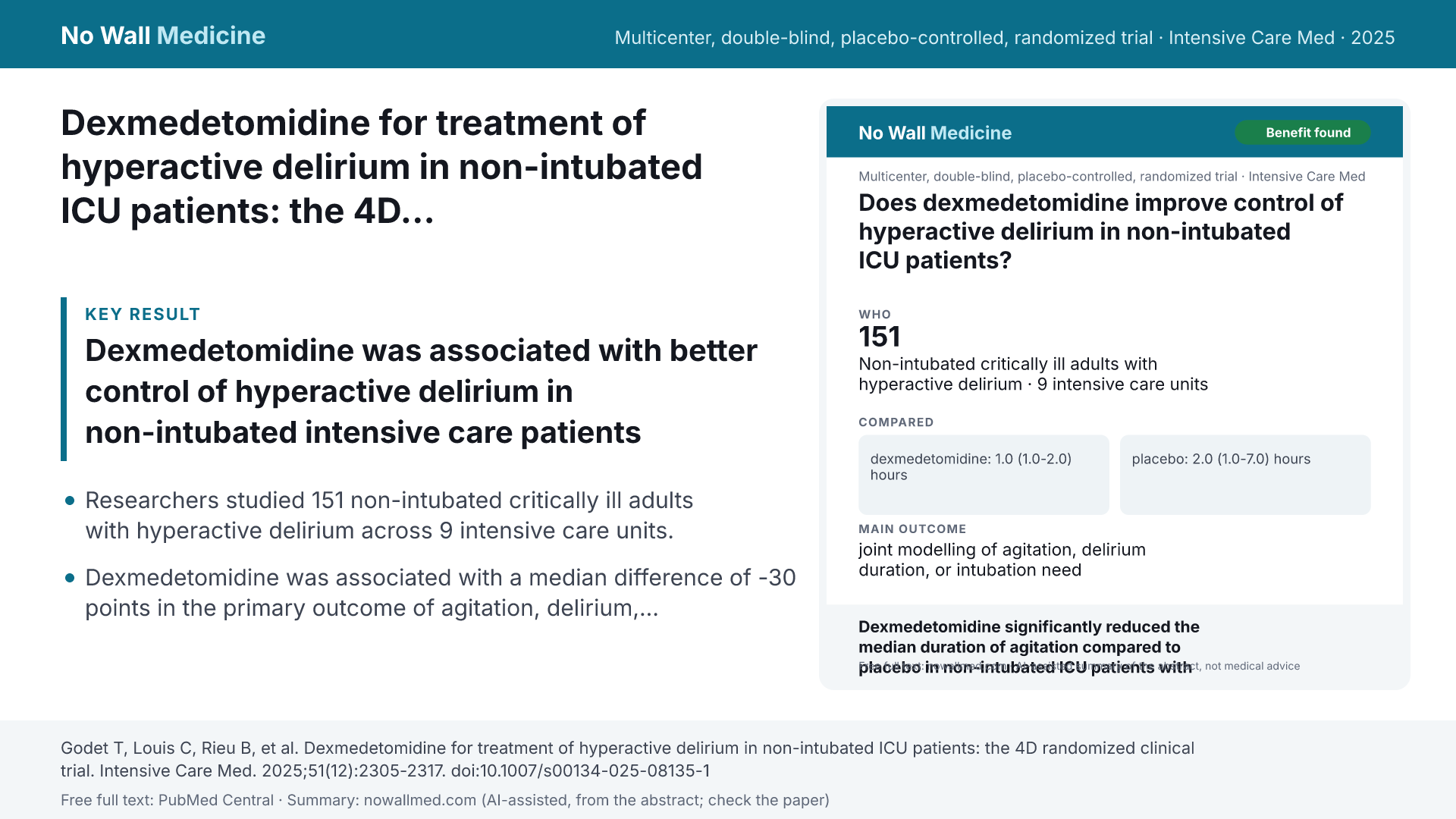
Dexmedetomidine was associated with better control of hyperactive delirium in non-intubated intensive care patients
Dexmedetomidine for treatment of hyperactive delirium in non-intubated ICU patients: the 4D randomized clinical trial
Multicenter, double-blind, placebo-controlled, randomized trialBenefit found
Does dexmedetomidine improve control of hyperactive delirium in non-intubated ICU patients?
Who
151
Non-intubated critically ill adults with hyperactive delirium · 9 intensive care units
Compared
dexmedetomidine: 1.0 (1.0-2.0) hours
placebo: 2.0 (1.0-7.0) hours
Main outcome
joint modelling of agitation, delirium duration, or intubation need
Result: median difference, -30 points; 95% CI, -49 to -12
Bottom line: Dexmedetomidine significantly reduced the median duration of agitation compared to placebo in non-intubated ICU patients with hyperactive delirium.
Intensive Care Med · 2025-10-29 · Save PNG
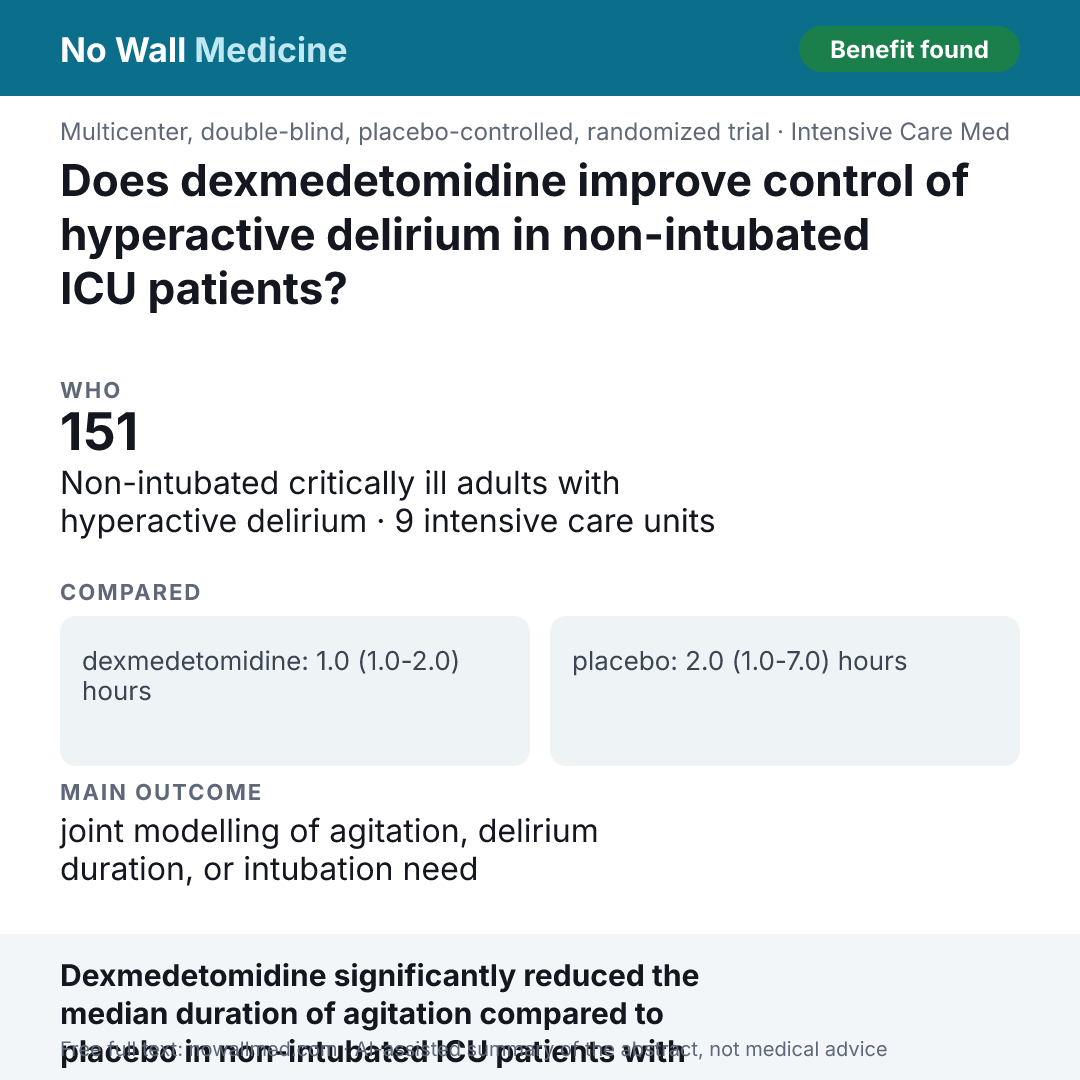
Clinical question: Does dexmedetomidine improve control of hyperactive delirium in non-intubated ICU patients?
Key points
- Researchers studied 151 non-intubated critically ill adults with hyperactive delirium across 9 intensive care units.
- Dexmedetomidine was associated with a median difference of -30 points in the primary outcome of agitation, delirium, and intubation needs compared to placebo.
- The median duration of agitation was 1.0 (1.0-2.0) hours in the dexmedetomidine group versus 2.0 (1.0-7.0) hours in the placebo group.
Headline and key points written with AI from the paper’s abstract, with every number checked against it. Read the paper before relying on them.
Was this summary helpful?
Subject terms
Headline, design, result, key points, caveat and citation as plain text.
Cite this article
Godet T, Louis C, Rieu B, et al. Dexmedetomidine for treatment of hyperactive delirium in non-intubated ICU patients: the 4D randomized clinical trial. Intensive Care Med. 2025;51(12):2305-2317. doi:10.1007/s00134-025-08135-1
Spotted a mistake? Suggest a correction