Touchscreen-based tests show high accuracy for diagnosing major neurocognitive disorders in older adults
Diagnosis accuracy of touchscreen-based testings for major neurocognitive disorders: a systematic review and meta-analysis
Systematic review and meta-analysisBenefit found
What is the diagnostic accuracy of touchscreen-based assessments for major neurocognitive disorders?
Who
Participants over 65 years with major neurocognitive disorders
Compared
Touchscreen-based assessments
Conventional assessment
Main outcome
Diagnostic accuracy for major neurocognitive disorders
Result: sensitivity 0.89 (95% CI: 0.86-0.91) and specificity 0.88 (95% CI: 0.82-0.92)
Bottom line: Brief and self-assessment touchscreen-based cognitive tests are appropriate tools to screen major cognitive disorders in primary care.
Limitation: Multiplicity and diversity of methods make comparison difficult.
Age Ageing · 2025-07-31Download image
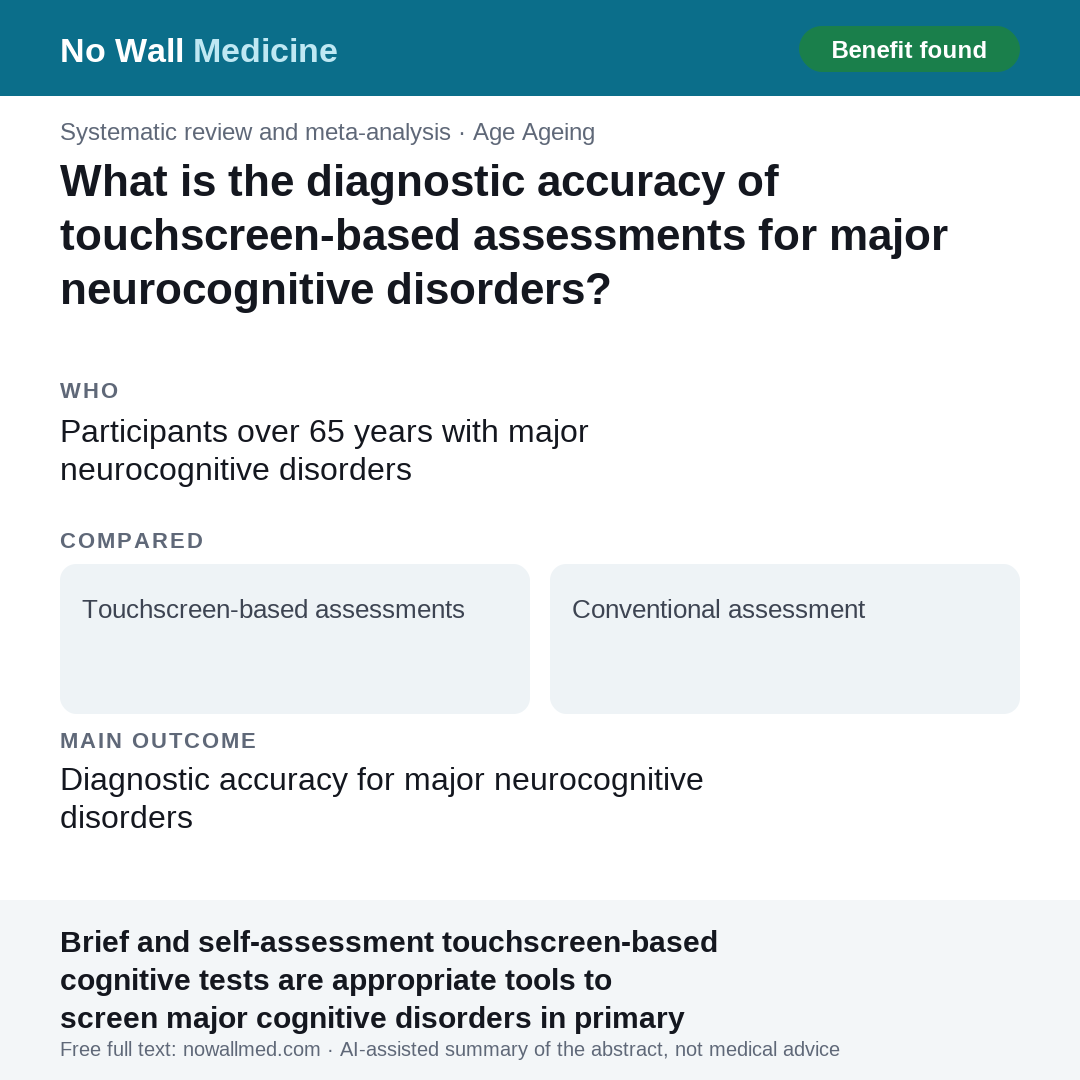
Clinical question: What is the diagnostic accuracy of touchscreen-based assessments for major neurocognitive disorders?
Why it matters: The increasing prevalence of dementia creates a global health challenge regarding how to effectively diagnose and manage neurocognitive disorders.
Key points
- Researchers analyzed 35 studies involving participants over 65 years old to evaluate touchscreen-based assessments for major neurocognitive disorders.
- The meta-analysis of 24 studies found a pooled sensitivity of 0.89 and a pooled specificity of 0.88 for these digital tools.
- Performance was similar between tests that were self-administered or brief compared to those administered by an assessor or lasting longer.
Limitation the authors note: The authors state that the multiplicity and diversity of methods, including different tools and types of neurocognitive disorders, make comparison difficult.
Headline and key points written with AI from the paper’s abstract, with every number checked against it. Read the paper before relying on them.
Was this summary helpful?
Subject terms
Cite this article
Um Din N, Maronnat F, Zolnowski-Kolp V, Otmane S, Belmin J. Diagnosis accuracy of touchscreen-based testings for major neurocognitive disorders: a systematic review and meta-analysis. Age Ageing. 2025. doi:10.1093/ageing/afaf204
Spotted a mistake? Suggest a correction
Top studies every Monday
The week’s key trials and guidelines in your specialties, plus any topics you follow. By email, free.
Get the weekly digest