Diagnostic Performance of Imaging-Based AI vs Radiologists for Preoperative Lymph Node Metastasis in Esophageal Cancer: Systematic Review and Meta-Analysis
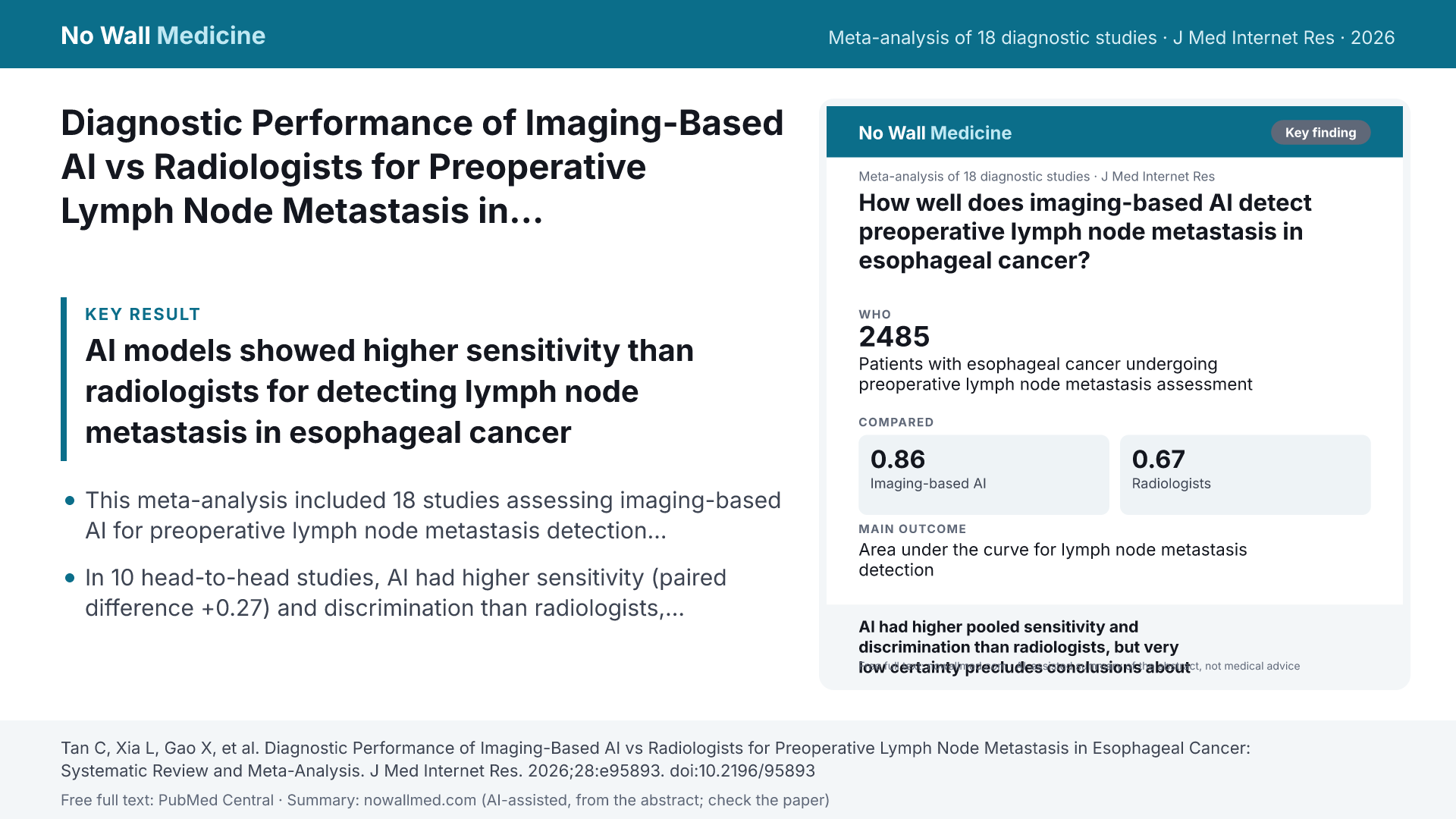
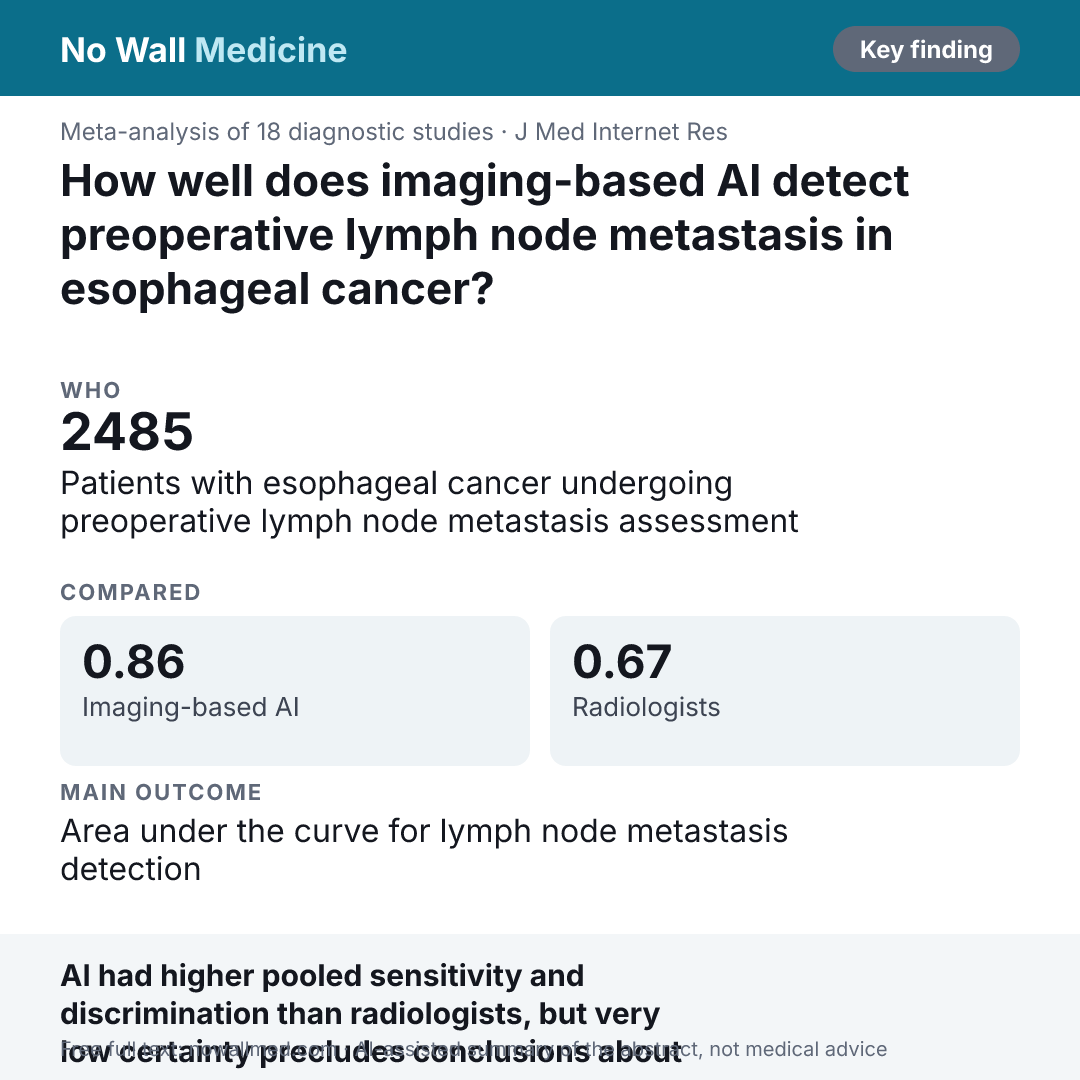
Key result: AI models showed higher sensitivity than radiologists for detecting lymph node metastasis in esophageal cancer
Key points
- This meta-analysis included 18 studies assessing imaging-based AI for preoperative lymph node metastasis detection in esophageal cancer patients.
- In 10 head-to-head studies, AI had higher sensitivity (paired difference +0.27) and discrimination than radiologists, while specificity did not differ significantly.
- Pooled sensitivity for AI was 0.77 in internal validation and 0.66 in external validation, with substantial heterogeneity noted across studies.
Why it matters: Applies to preoperative assessment of esophageal cancer; supports AI as a decision-support tool rather than a replacement for radiologists.
Limitation the authors note: The authors state that selective extraction of the model with the highest AUC and very low certainty of evidence precludes conclusions about clinical superiority.
Discussion prompts
- Would these patients look like yours? Who was left out?
- Is the main outcome one that matters to patients?
- Is the difference large enough to change what you do?
Cite: Tan C, Xia L, Gao X, et al. Diagnostic Performance of Imaging-Based AI vs Radiologists for Preoperative Lymph Node Metastasis in Esophageal Cancer: Systematic Review and Meta-Analysis. J Med Internet Res. 2026;28:e95893. doi:10.2196/95893
Free full text: PubMed Central · Summary and visual abstract: nowallmed.com/a/diagnostic-performance-of-imaging-based-ai-vs-radiologists-for-15irjqd/ (AI-assisted from the abstract; check the paper before relying on it).