Machine learning models distinguished glioblastoma from brain metastasis with 88.9% sensitivity
Diagnostic Performance of Radiomics-Based Machine Learning in Differentiating Glioblastoma From Brain Metastasis: Systematic Review and Meta-Analysis
Meta-analysis of 39 studiesBenefit found
Can machine learning differentiate glioblastoma from brain metastasis?
Who
11558
Patients with glioblastoma or brain metastasis
Compared
88.9%Glioblastoma (95% CI 84.1%-92.4%)
83.0%Brain Metastasis (95% CI 76.8%-87.9%)
Main outcome
Diagnostic accuracy
Result: sensitivity 88.9% (95% CI 84.1%-92.4%) and specificity 83.0% (95% CI 76.8%-87.9%)
Bottom line: Machine learning can differentiate glioblastoma from brain metastasis
Limitation: Methodological limitations and scarce evidence
J Med Internet Res · 2026-11-19Download image
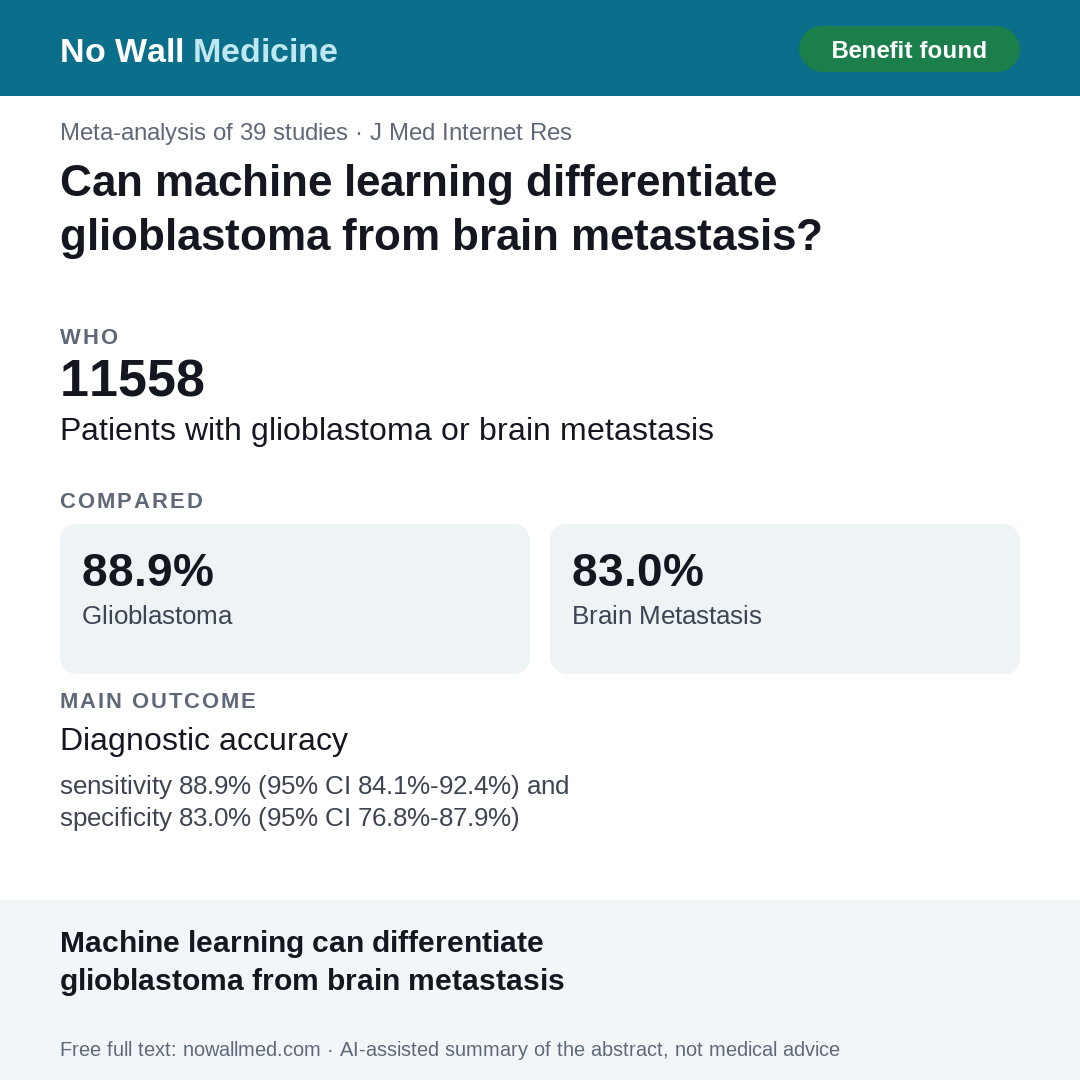
Clinical question: Can machine learning differentiate glioblastoma from brain metastasis?
Why it matters: Noninvasive differentiation between glioblastoma and brain metastasis remains challenging
Key points
- 11,558 patients were studied across 39 research studies to evaluate machine learning models.
- Pooled sensitivity and specificity were 88.9% and 83.0% in internal validation.
- Multiclass analyses showed 84.4% sensitivity for glioblastoma and 70.6% for brain metastasis.
Limitation the authors note: Methodological limitations and scarce evidence affect generalizability and clinical utility
Headline and key points written with AI from the paper’s abstract, with every number checked against it. Read the paper before relying on them.
Topics
Spotted a mistake? Suggest a correction