Diagnostic yield of exome sequencing in fetuses with multisystem malformations: systematic review and meta-analysis
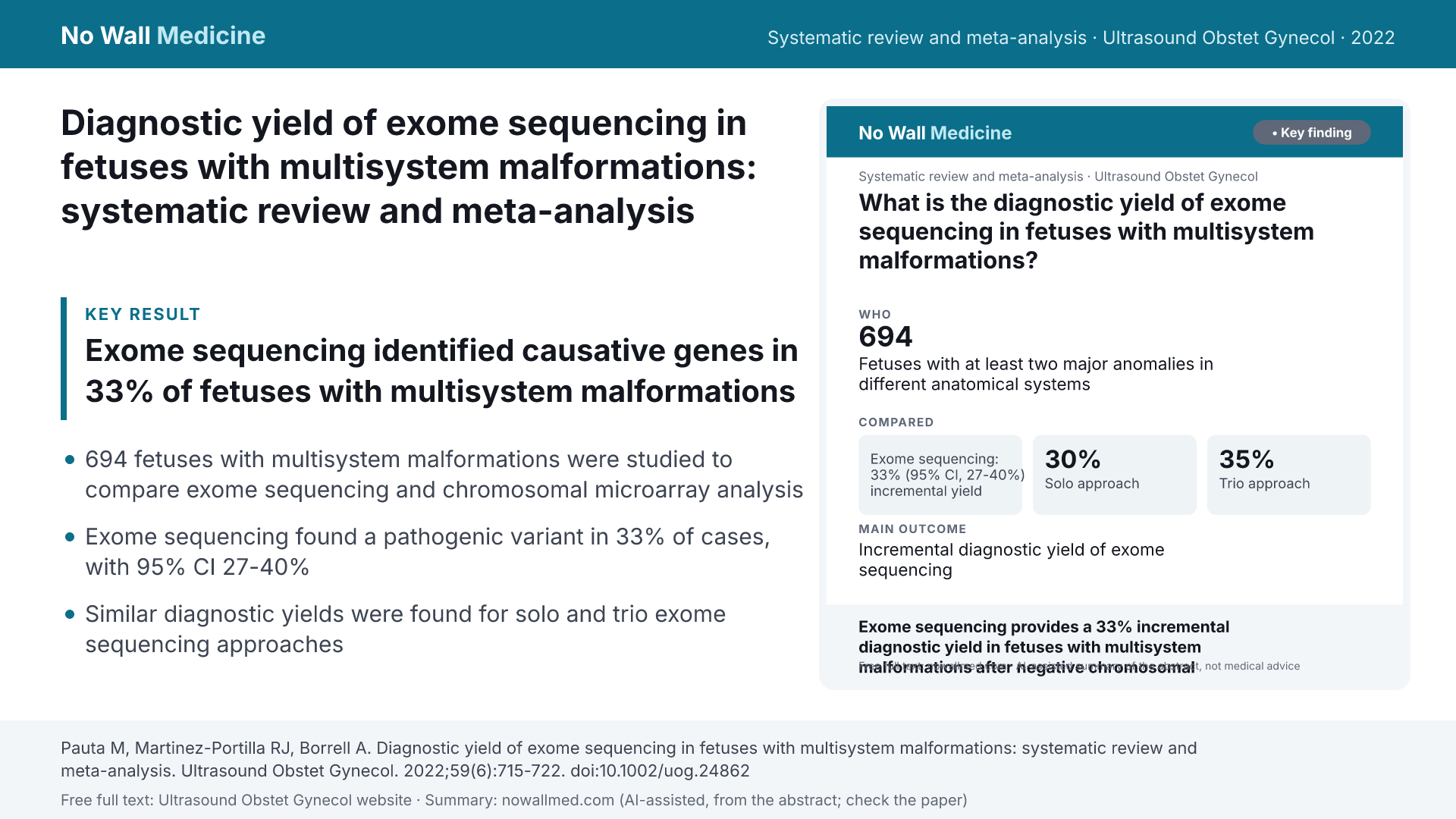
Key result: Exome sequencing identified causative genes in 33% of fetuses with multisystem malformations
Systematic review and meta-analysisKey finding
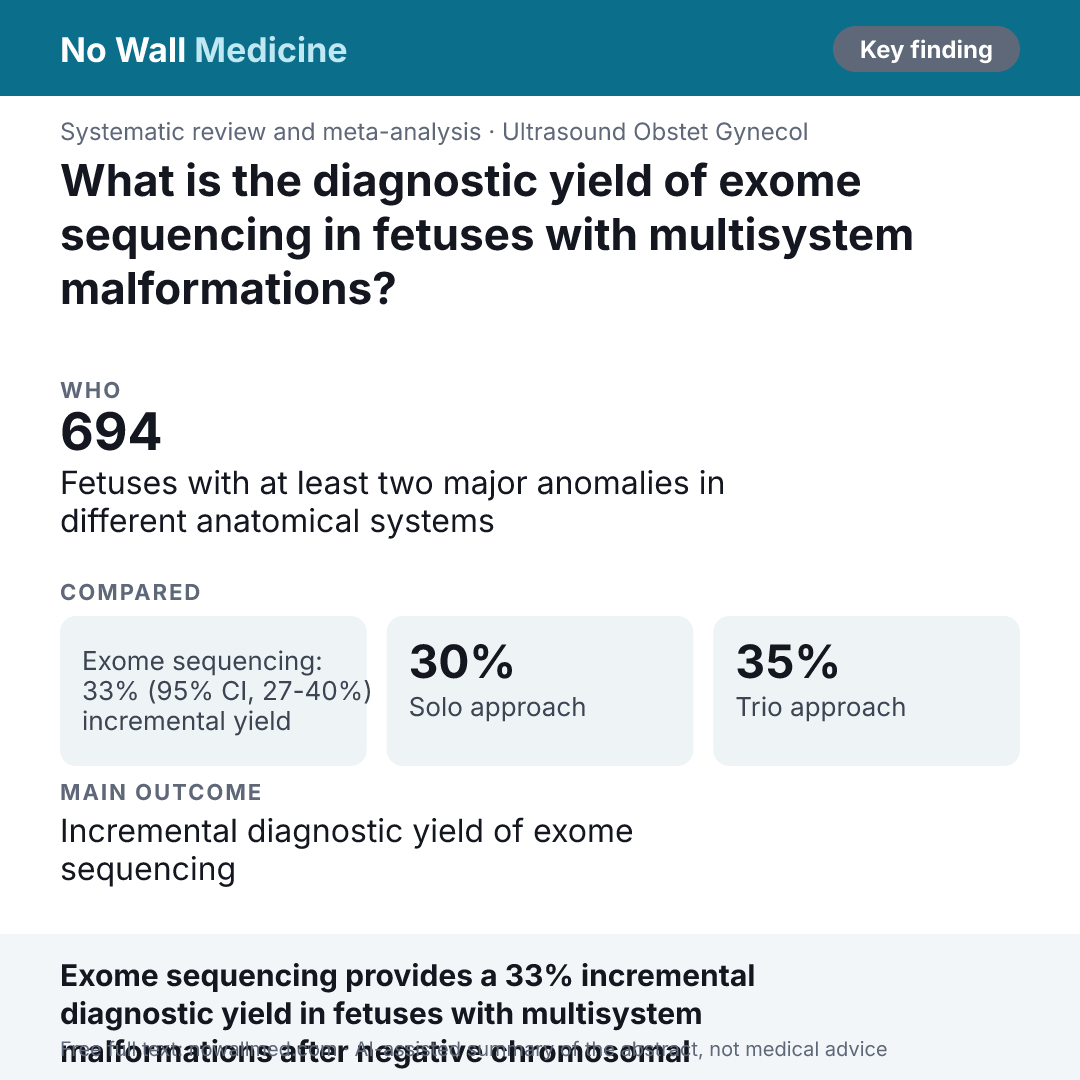
What is the diagnostic yield of exome sequencing in fetuses with multisystem malformations?
Who
694
Fetuses with at least two major anomalies in different anatomical systems
Compared
Exome sequencing: 33% (95% CI, 27-40%) incremental yield
30%Solo approach (95% CI, 11-52%)
35%Trio approach (95% CI, 26-44%)
Main outcome
Incremental diagnostic yield of exome sequencing
Result: 33% (95% CI, 27-40%)
Bottom line: Exome sequencing provides a 33% incremental diagnostic yield in fetuses with multisystem malformations after negative chromosomal microarray or karyotyping.
Ultrasound Obstet Gynecol · 2022-01-19 · Save PNG
Key points
- 694 fetuses with multisystem malformations were studied to compare exome sequencing and chromosomal microarray analysis.
- Exome sequencing found a pathogenic variant in 33% of cases, with 95% CI 27-40%.
- Similar diagnostic yields were found for solo and trio exome sequencing approaches.
Limitation the authors note: The study was a systematic review and meta-analysis of observational studies, which may have limitations
Discussion prompts
- Would these patients look like yours? Who was left out?
- Is the main outcome one that matters to patients?
- Is the difference large enough to change what you do?
Cite: Pauta M, Martinez-Portilla RJ, Borrell A. Diagnostic yield of exome sequencing in fetuses with multisystem malformations: systematic review and meta-analysis. Ultrasound Obstet Gynecol. 2022;59(6):715-722. doi:10.1002/uog.24862
Free full text: Ultrasound Obstet Gynecol website · Summary and visual abstract: nowallmed.com/a/diagnostic-yield-of-exome-sequencing-in-fetuses-with-multisystem-mxh8cr/ (AI-assisted from the abstract; check the paper before relying on it).