Low-dose oral diazoxide did not reduce time to resolution of severe neonatal hypoglycemia
Diazoxide for Severe or Recurrent Neonatal Hypoglycemia: A Randomized Clinical Trial
Placebo-controlled randomized clinical trialNo clear difference
Does early, low-dose oral diazoxide reduce time to resolution of neonatal hypoglycemia?
Who
74
Neonates born at 35 or more weeks' gestation with severe or recurrent hypoglycemia · 2 New Zealand hospitals
Compared
Diazoxide
Placebo
Main outcome
Time to resolution of hypoglycemia
Result: adjusted hazard ratio 1.39 (95% CI 0.84 to 2.23)
Bottom line: Low-dose oral diazoxide did not reduce time to resolution of hypoglycemia compared to placebo.
Limitation: possibly due to increased episodes of elevated blood glucose concentration and longer time to normoglycemia
JAMA Netw Open · 2024-06-03Download image
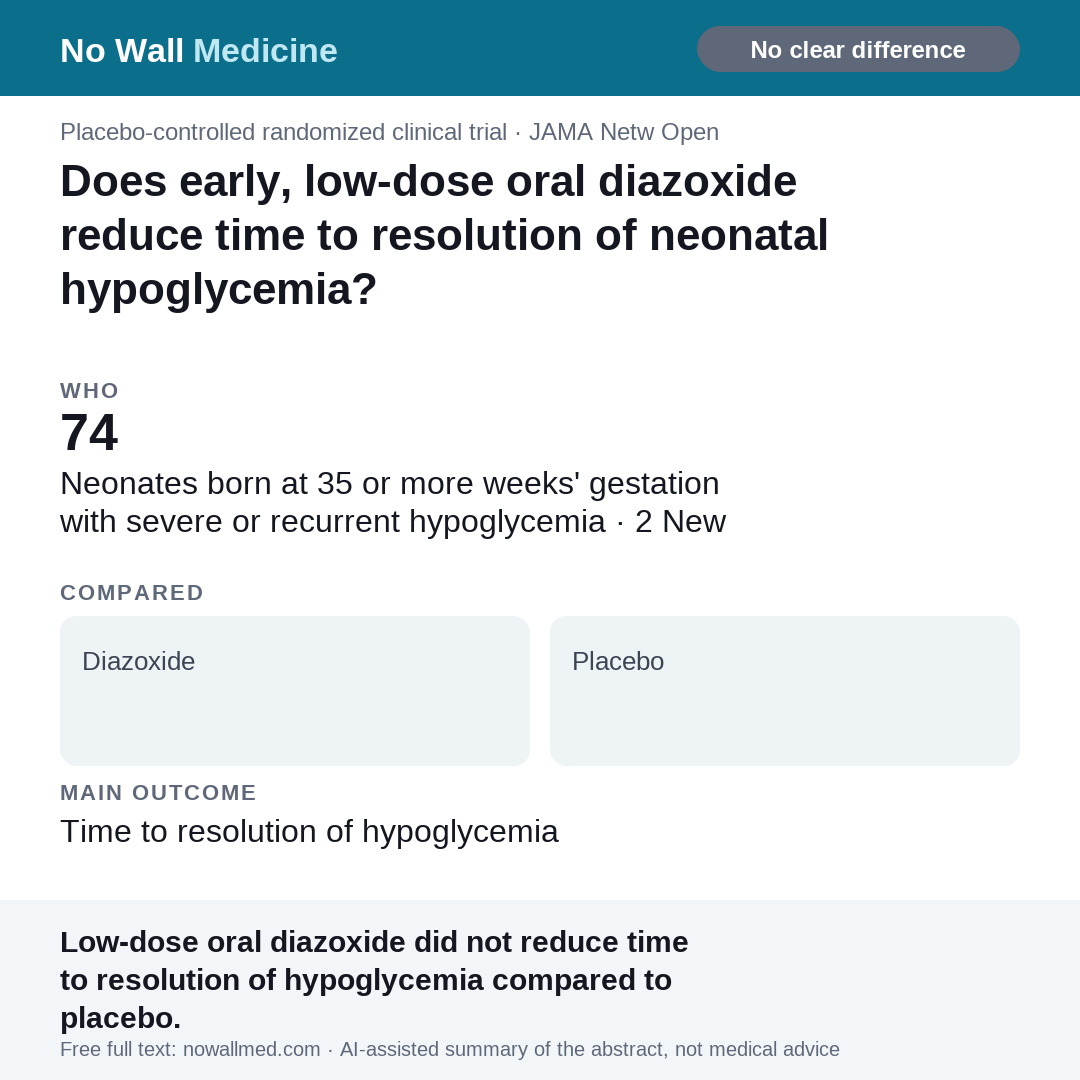
Clinical question: Does early, low-dose oral diazoxide reduce time to resolution of neonatal hypoglycemia?
Why it matters: There is a lack of evidence to guide whether early, low-dose oral diazoxide is effective for treating severe or recurrent low blood sugar in newborns.
Key points
- In this randomized trial, 74 newborns with severe or recurrent low blood sugar were assigned to receive either diazoxide or a placebo.
- There was no significant difference in the time to resolution of hypoglycemia between the diazoxide group and the placebo group (adjusted hazard ratio, 1.39; 95% CI, 0.84-2.23).
- The diazoxide group was associated with fewer blood glucose tests (adjusted count ratio, 0.63; 95% CI, 0.56-0.71) and a shorter duration of hypoglycemia (adjusted ratio of geometric means, 0.18; 95% CI, 0.06-0.53).
Headline and key points written with AI from the paper’s abstract, with every number checked against it. Read the paper before relying on them.
Was this summary helpful?
Subject terms
Cite this article
Laing D, Walsh EPG, Alsweiler JM, Hanning SM, Meyer MP, Ardern J. Diazoxide for Severe or Recurrent Neonatal Hypoglycemia: A Randomized Clinical Trial. JAMA Netw Open. 2024. doi:10.1001/jamanetworkopen.2024.15764
Spotted a mistake? Suggest a correction
Top studies every Monday
The week’s key trials and guidelines in your specialties, plus any topics you follow. By email, free.
Get the weekly digest