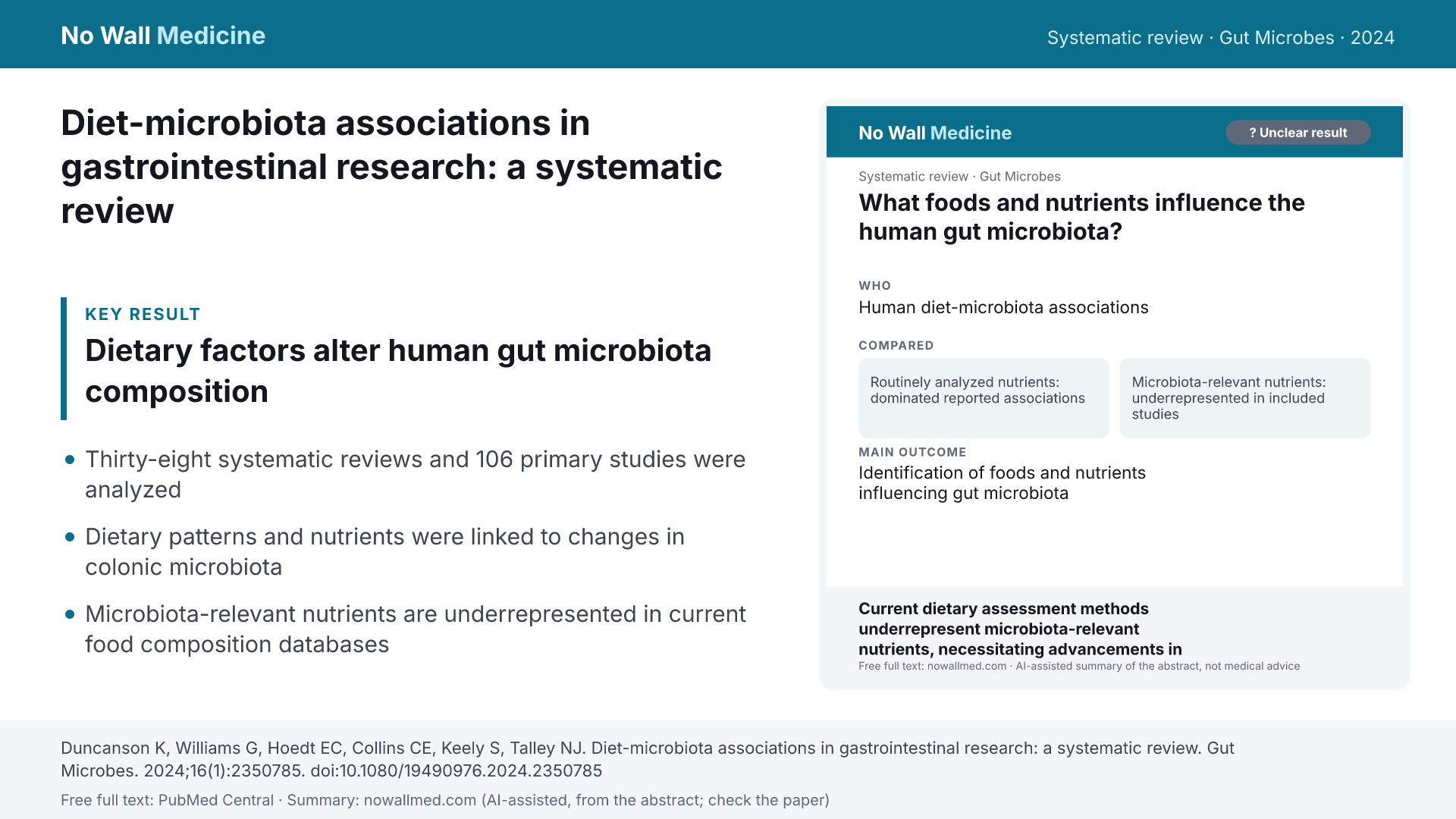
Diet-microbiota associations in gastrointestinal research: a systematic review
Key result: Dietary factors alter human gut microbiota composition
Systematic reviewUnclear result
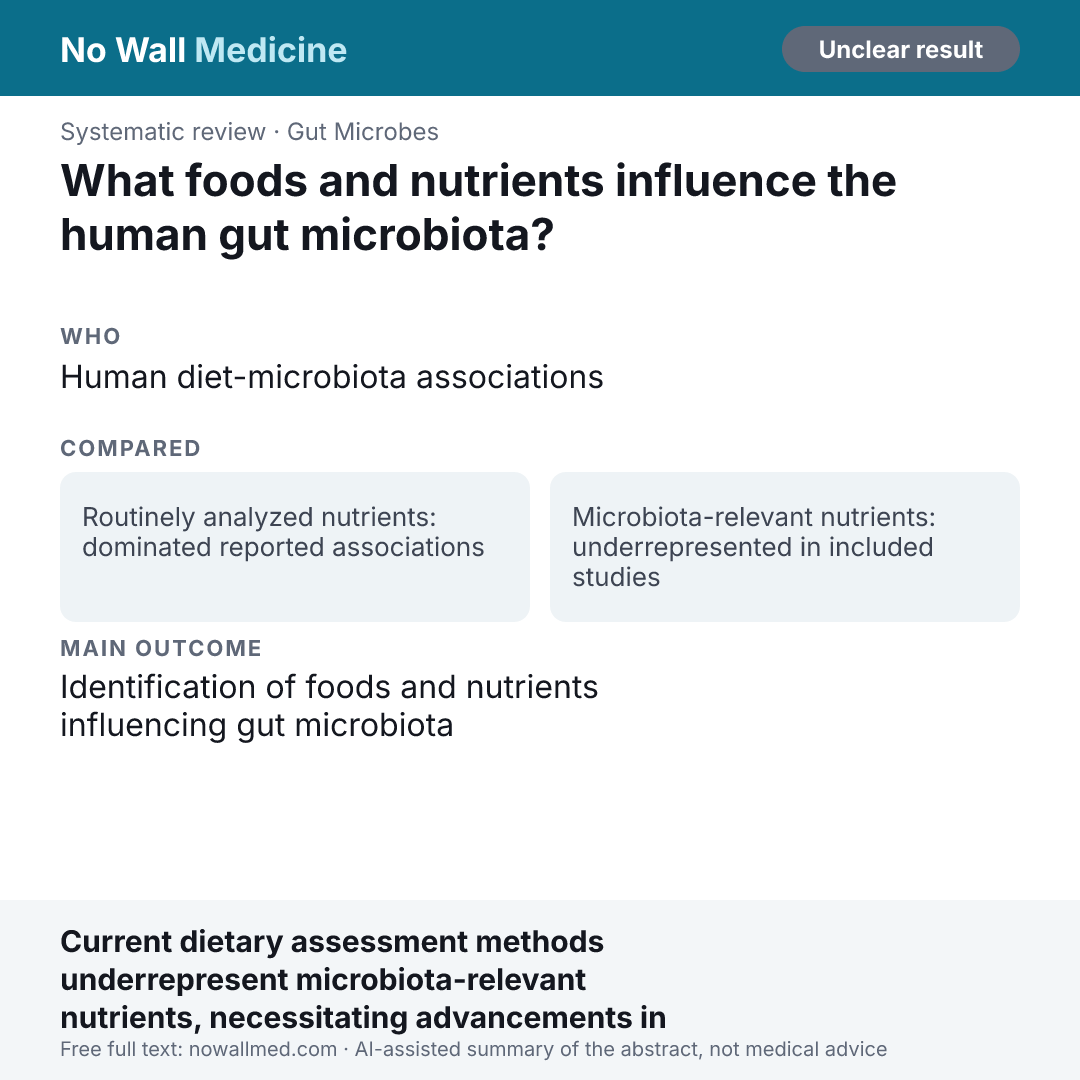
What foods and nutrients influence the human gut microbiota?
Who
Human diet-microbiota associations
Compared
Routinely analyzed nutrients: dominated reported associations
Microbiota-relevant nutrients: underrepresented in included studies
Main outcome
Identification of foods and nutrients influencing gut microbiota
Bottom line: Current dietary assessment methods underrepresent microbiota-relevant nutrients, necessitating advancements in food composition databases.
Limitation: Current dietary assessment methods focus on components relevant to human digestion only.
Gut Microbes · 2024-05-09 · Save PNG
Key points
- Thirty-eight systematic reviews and 106 primary studies were analyzed.
- Dietary patterns and nutrients were linked to changes in colonic microbiota.
- Microbiota-relevant nutrients are underrepresented in current food composition databases.
Why it matters: Current dietary assessment methods focus on human digestion only
Limitation the authors note: Dietary derived microbiota-relevant nutrients are challenging to quantify
Discussion prompts
- Would these patients look like yours? Who was left out?
- Is the main outcome one that matters to patients?
- Is the difference large enough to change what you do?
Cite: Duncanson K, Williams G, Hoedt EC, Collins CE, Keely S, Talley NJ. Diet-microbiota associations in gastrointestinal research: a systematic review. Gut Microbes. 2024;16(1):2350785. doi:10.1080/19490976.2024.2350785
Free full text: PubMed Central · Summary and visual abstract: nowallmed.com/a/diet-microbiota-associations-in-gastrointestinal-research-a-1rovsr5/ (AI-assisted from the abstract; check the paper before relying on it).