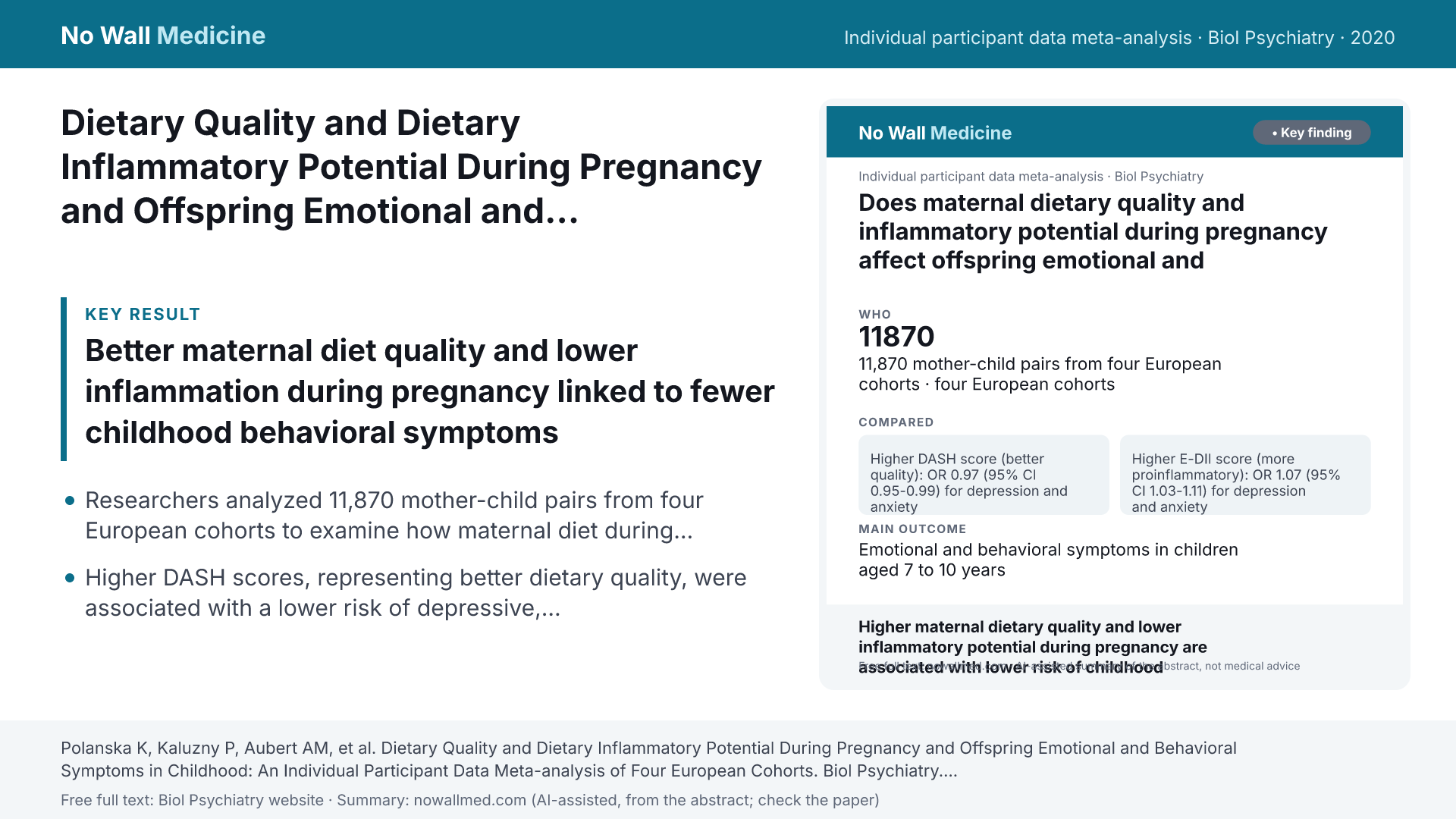
Better maternal diet quality and lower inflammation during pregnancy linked to fewer childhood behavioral symptoms
Dietary Quality and Dietary Inflammatory Potential During Pregnancy and Offspring Emotional and Behavioral Symptoms in Childhood: An Individual Participant Data Meta-analysis of Four European Cohorts
Individual participant data meta-analysisBenefit found
Does maternal dietary quality and inflammatory potential during pregnancy affect offspring emotional and behavioral symptoms?
Who
11870
11,870 mother-child pairs from four European cohorts · four European cohorts
Compared
Higher DASH score (better quality): OR 0.97 (95% CI 0.95-0.99) for depression and anxiety
Higher E-DII score (more proinflammatory): OR 1.07 (95% CI 1.03-1.11) for depression and anxiety
Main outcome
Emotional and behavioral symptoms in children aged 7 to 10 years
Result: OR 0.97 (95% CI 0.95-0.99) for DASH; OR 1.07 (95% CI 1.03-1.11) for E-DII
Bottom line: Higher maternal dietary quality and lower inflammatory potential during pregnancy are associated with lower risk of childhood emotional and behavioral symptoms.
Biol Psychiatry · 2020-10-24Download image
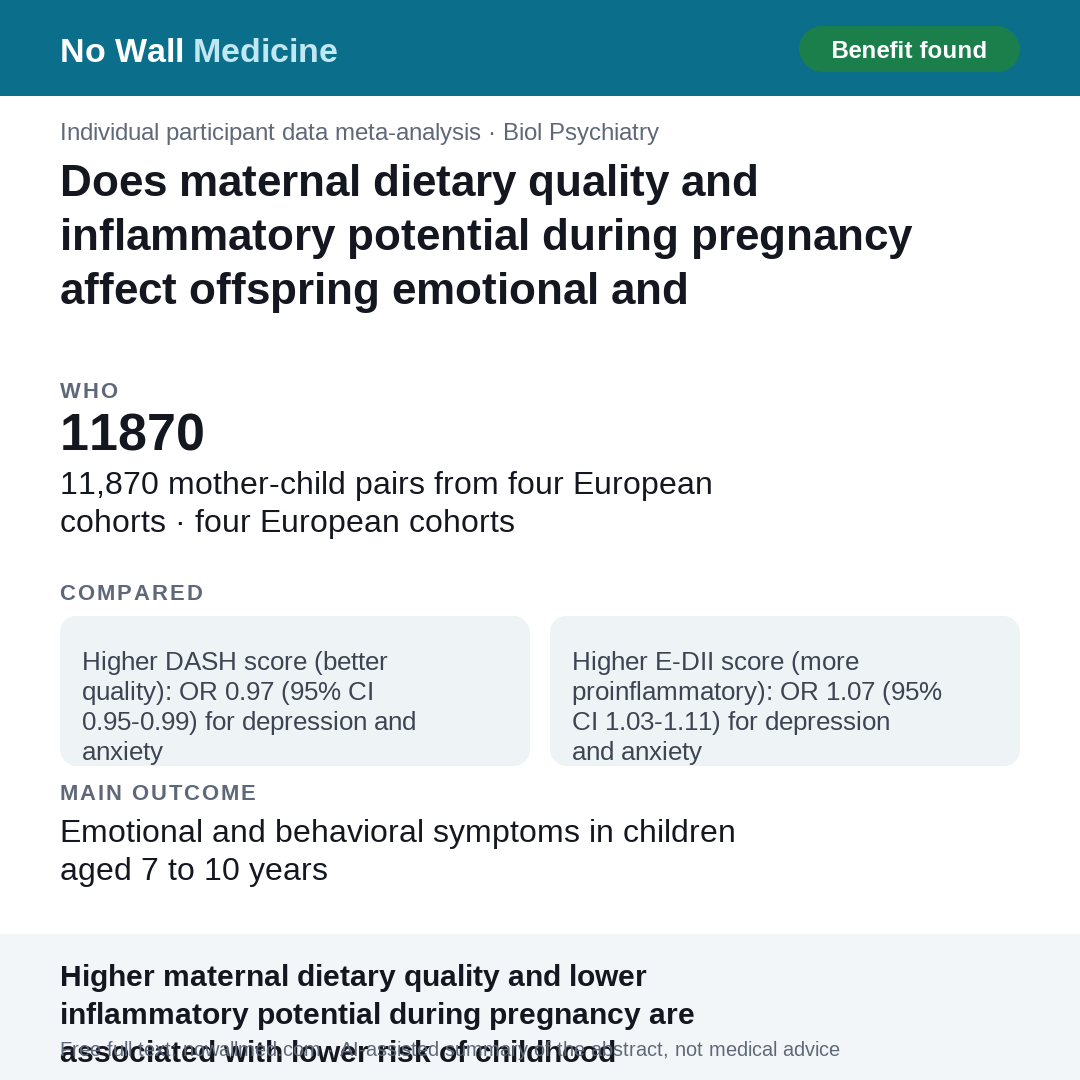
Clinical question: Does maternal dietary quality and inflammatory potential during pregnancy affect offspring emotional and behavioral symptoms?
Why it matters: It is unknown how maternal dietary quality and inflammatory potential during pregnancy influence the emotional and behavioral development of offspring in childhood.
Key points
- Researchers analyzed 11,870 mother-child pairs from four European cohorts to examine how maternal diet during pregnancy relates to child symptoms at 7 to 10 years of age.
- Higher DASH scores, representing better dietary quality, were associated with a lower risk of depressive, anxiety, aggressive, and attention-deficit/hyperactivity disorder symptoms.
- A one-unit increase in the energy-adjusted Dietary Inflammatory Index, representing a more proinflammatory diet, was associated with a 7% increased risk for all three symptom categories.
Headline and key points written with AI from the paper’s abstract, with every number checked against it. Read the paper before relying on them.
Was this summary helpful?
Subject terms
Cite this article
Polanska K, Kaluzny P, Aubert AM, Bernard JY, Duijts L, El Marroun H. Dietary Quality and Dietary Inflammatory Potential During Pregnancy and Offspring Emotional and Behavioral Symptoms in Childhood: An Individual Participant Data Meta-analysis of Four European Cohorts. Biol Psychiatry. 2020. doi:10.1016/j.biopsych.2020.10.008
Spotted a mistake? Suggest a correction
Top studies every Monday
The week’s key trials and guidelines in your specialties, plus any topics you follow. By email, free.
Get the weekly digest