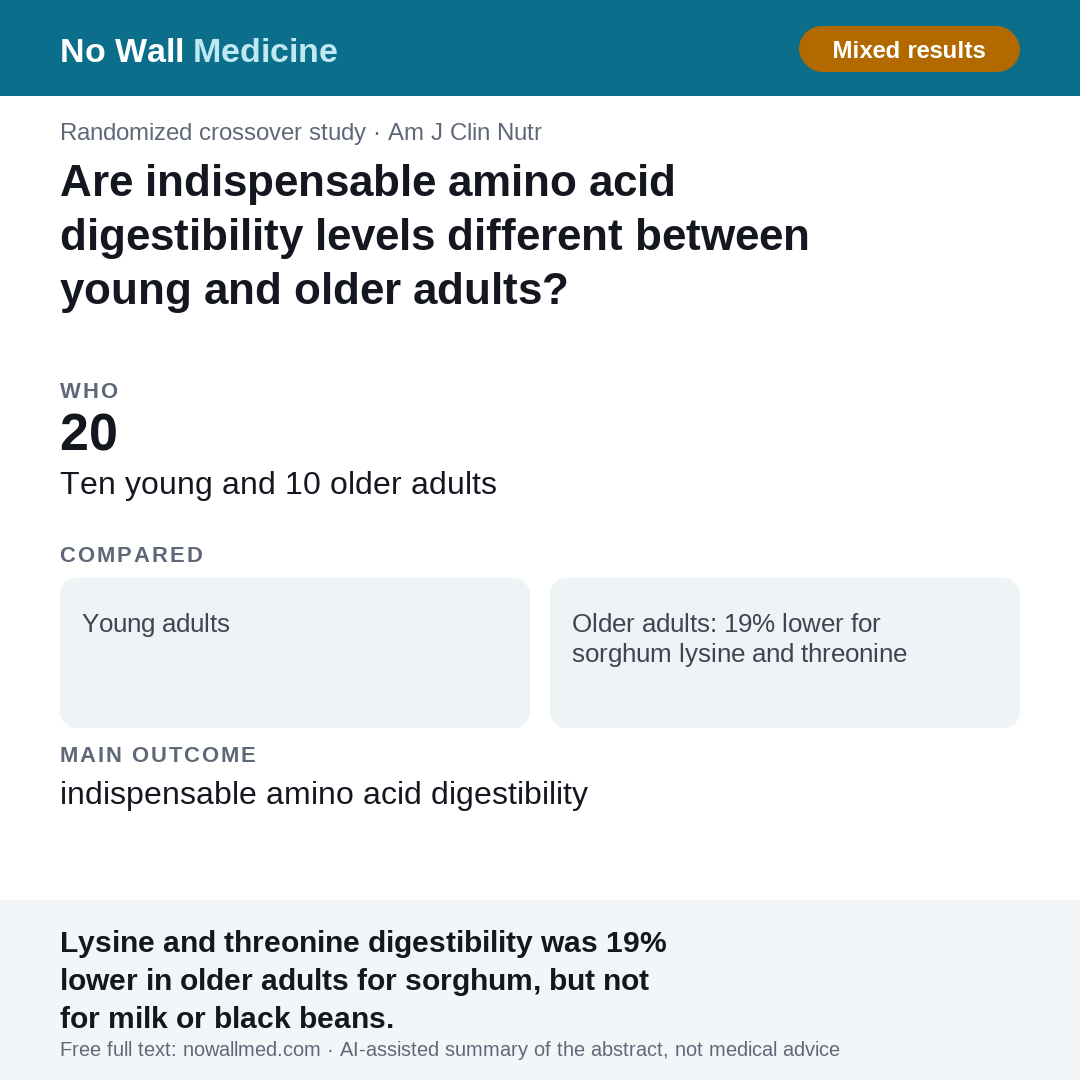
Clinical question: Are indispensable amino acid digestibility levels different between young and older adults?
Why it matters: Quantification of reduced amino acid digestibility in humans is lacking despite potential physiological changes in the digestive tract during aging.
Key points
Ten young adults and 10 older adults were studied using a dual tracer method to measure how well they digested specific amino acids from milk, sorghum, and black beans.
The ratio for lysine and threonine was 19% lower in older adults than in young adults for sorghum, but no significant differences were found for milk or black beans.
The study used a plateau feeding protocol where participants ingested 20 g of labeled protein and blood was sampled over an 8-h period.
Headline and key points written with AI from the paper’s abstract, with every number checked against it. Read the paper before relying on them.
Natural-abundance carbon isotope profiling of long-chain polyunsaturated fatty acid supplement incorporation in extremely preterm infants: a sub-study of the Mega Donna Mega randomized clinical trial
From Obesity to Cancer Cachexia: PI3K/AKT/MTOR Signaling Across the Energy Balance Spectrum - A Scoping Review of Body Size, Composition, and Cancer Outcomes
Reduced Erythropoietic Signalling may be responsible for anemia without iron deficiency among Indian Pregnant Women: findings from a cross-sectional study