Polycystic ovary syndrome diagnostic criteria are associated with different risks for pregnancy complications
Different pregnancy outcomes according to the polycystic ovary syndrome diagnostic criteria: a systematic review and meta-analysis of 79 studies
Key points
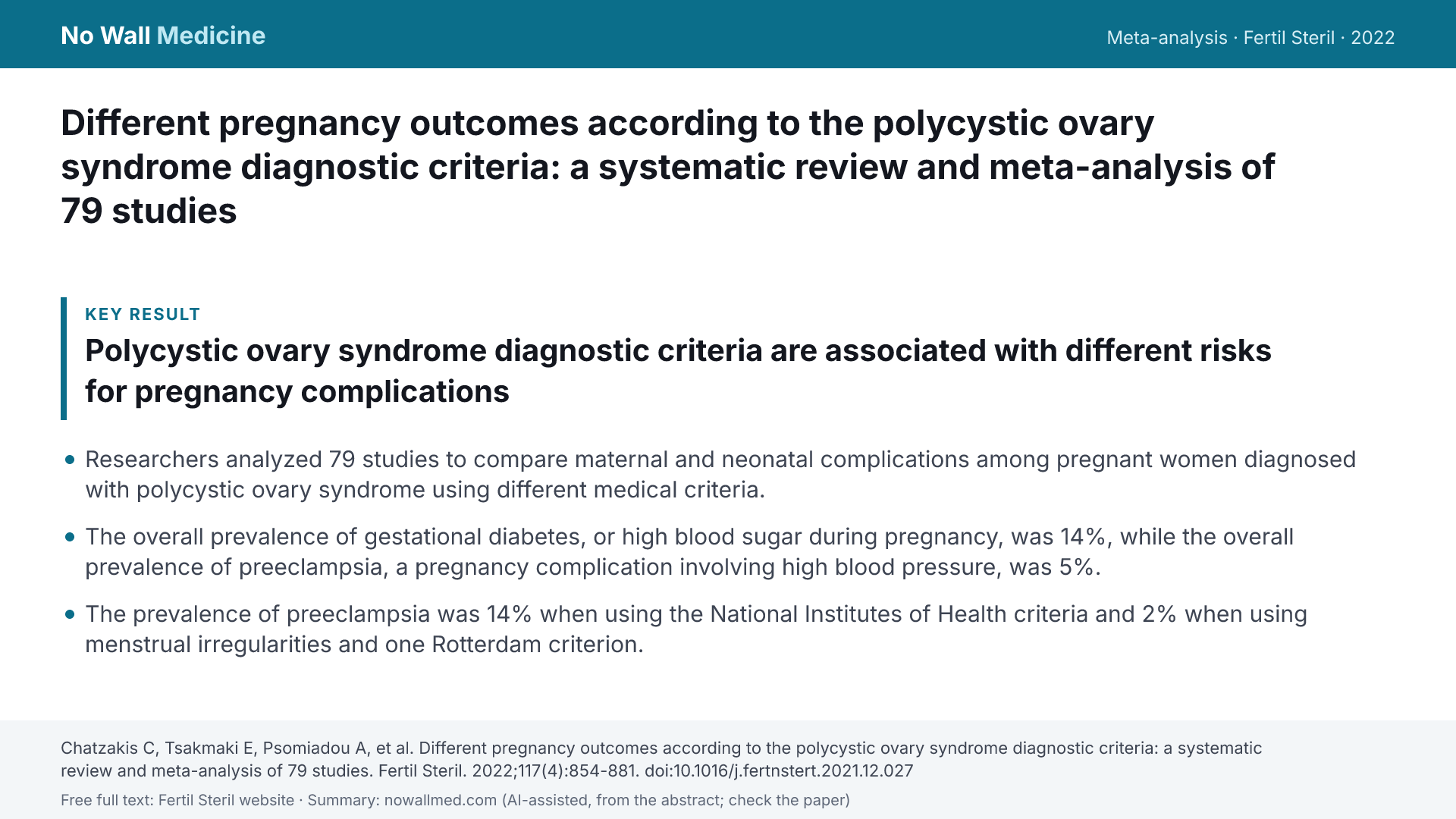
- Researchers analyzed 79 studies to compare maternal and neonatal complications among pregnant women diagnosed with polycystic ovary syndrome using different medical criteria.
- The overall prevalence of gestational diabetes, or high blood sugar during pregnancy, was 14%, while the overall prevalence of preeclampsia, a pregnancy complication involving high blood pressure, was 5%.
- The prevalence of preeclampsia was 14% when using the National Institutes of Health criteria and 2% when using menstrual irregularities and one Rotterdam criterion.
Headline and key points written with AI from the paper’s abstract, with every number checked against it. Read the paper before relying on them.
Was this summary helpful?
Subject terms
Headline, design, result, key points, caveat and citation as plain text.
Cite this article
Chatzakis C, Tsakmaki E, Psomiadou A, et al. Different pregnancy outcomes according to the polycystic ovary syndrome diagnostic criteria: a systematic review and meta-analysis of 79 studies. Fertil Steril. 2022. doi:10.1016/j.fertnstert.2021.12.027
Spotted a mistake? Suggest a correction