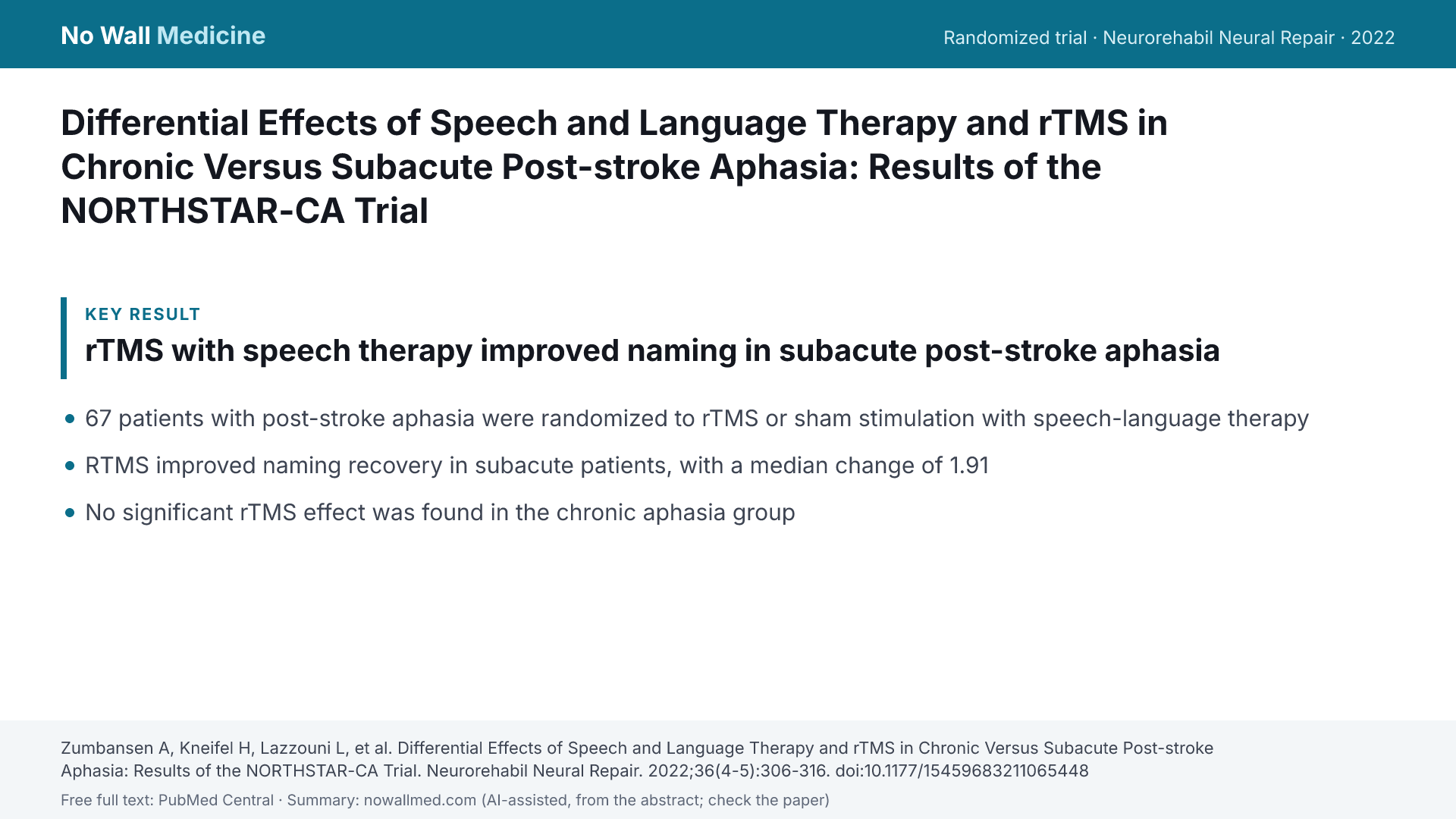
rTMS with speech therapy improved naming in subacute post-stroke aphasia
Differential Effects of Speech and Language Therapy and rTMS in Chronic Versus Subacute Post-stroke Aphasia: Results of the NORTHSTAR-CA Trial
Why it matters: Effectiveness of rTMS in chronic versus subacute post-stroke aphasia was unknown
Key points
- 67 patients with post-stroke aphasia were randomized to rTMS or sham stimulation with speech-language therapy.
- RTMS improved naming recovery in subacute patients, with a median change of 1.91.
- No significant rTMS effect was found in the chronic aphasia group.
Headline and key points written with AI from the paper’s abstract, with every number checked against it. Read the paper before relying on them.
Was this summary helpful?
Subject terms
Cite this article
Zumbansen A, Kneifel H, Lazzouni L, Ophey A, Black SE, Chen JL. Differential Effects of Speech and Language Therapy and rTMS in Chronic Versus Subacute Post-stroke Aphasia: Results of the NORTHSTAR-CA Trial. Neurorehabil Neural Repair. 2022. doi:10.1177/15459683211065448
Spotted a mistake? Suggest a correction
Top studies every Monday
The week’s key trials and guidelines in your specialties, plus any topics you follow. By email, free.
Get the weekly digest